
Integrated Pest Management
Carpenter Ants
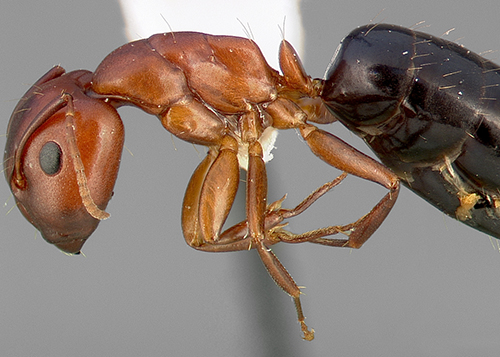
Carpenter ant (April Nobile, Antweb.org)

Carpenter ant damage (Edward H. Holsten, USDA Forest Service, Bugwood.org)

Carpenter ant damage (Joseph O'Brien, USDA Forest Service, Bugwood.org)
Pest Description
- one node (bump between middle and rear body sections)
- black or black with a reddish-brown body
- abdomen covered in yellowish hairs
- worker ants of many sizes
- evenly rounded thorax
- sawdust outside of nests/galleries
Host Plants, Diet & Damage
- invade hollow landscape trees, log piles, etc.
- feed on living and dead insects, protein, sweets and honeydew excreted by aphids and other insects
- chew and remove wood to create galleries and tunnels
Biology, Life Cycle & Damaging Life Stage
- one queen housed in the primary nest, typically outdoors
- nest in wood, especially moist or decaying wood
- have a primary nest and separate satellite nests
- adult worker ants are the damaging life stage
IPM Recommendations
- Identify ants to determine species.
- Find nesting locations by following workers back to their nest, if possible.
- Remove and replace water-damaged or decaying wood or severely infested landscape trees.
- Prune vegetation away from structures to eliminate contact.
- Remove food and water sources.
- Seal potential ant entryways if ants are entering a structure.
- Use ant baits to help eliminate nests that are hard to find.
- Destroy nests using an appropriately labeled liquid, dust or bait insecticide.
For more information, see our Carpenter Ants fact sheet.