
Integrated Pest Management
Leafhoppers
 Leafhopper adult on honeylocust.
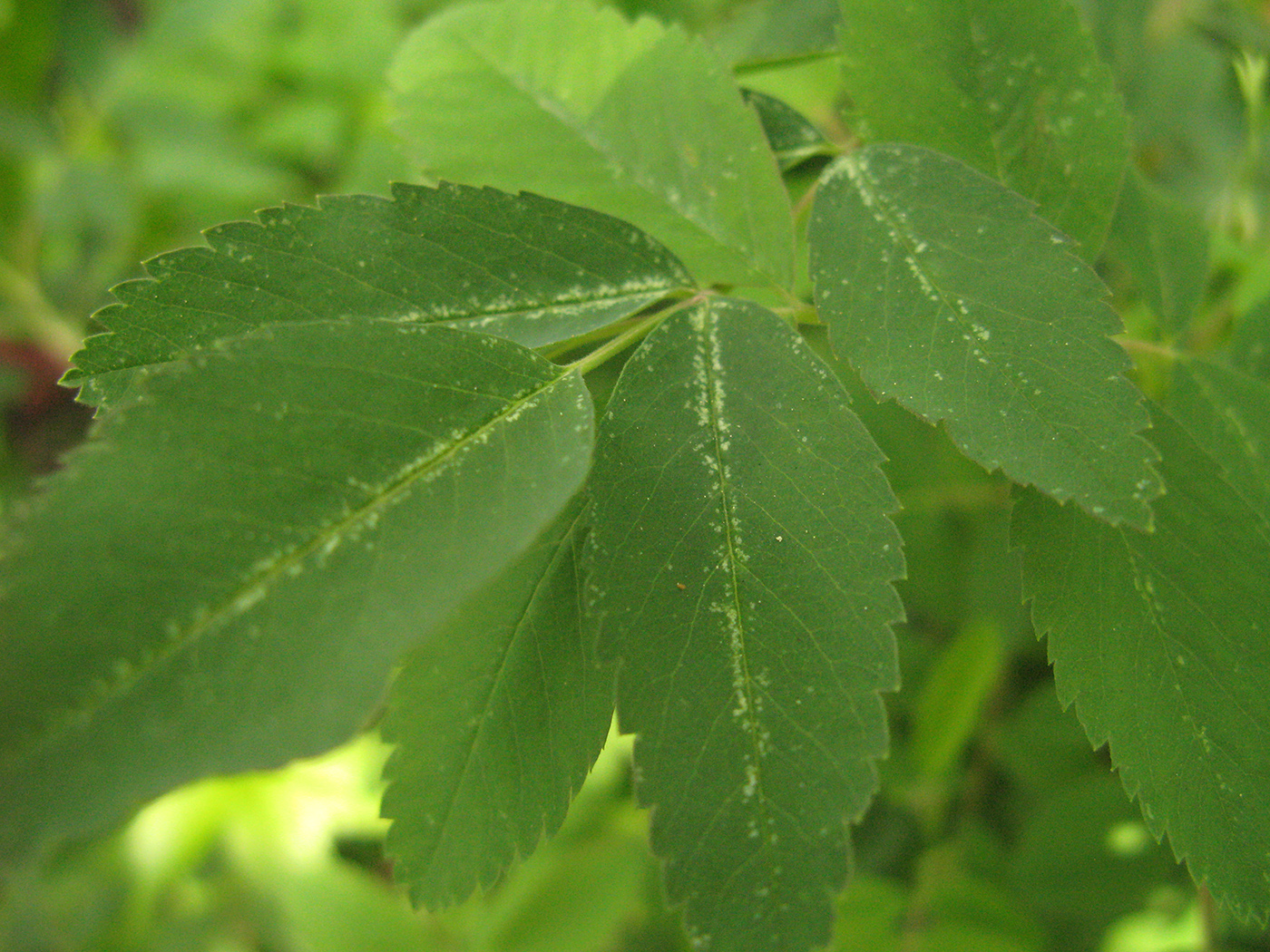 Leafhopper eggs on rose leaves.
 Leafhopper adults on underside of leaves.
HOSTS
- Apples
- Roses
- Grapes
- Potatoes
- Cottonwood
DESCRIPTION
Leafhoppers are common problems in home gardens and orchards throughout the state of Utah. There are many species of leafhoppers. Most species overwinter in the egg stage in the bark of the host plant or among the fallen host plant leaves.
BIOLOGY
Eggs hatch in the spring and 5 nymphal stages are passed before the adult stage is reached. Adults are generally less than 0.1 inch long and are similar in shape to the immature forms except the wings are fully developed. There are commonly 2 generations per year, with the second generation emerging about early to mid-August.
SYMPTOMS
- Sap on leaves
- White stippled areas
- Speckled with dark excrement
GENERAL MANAGEMENT
Control of the various leafhoppers depends upon monitoring their development. Sprays should be applied before adults appear. Sprays applied after adults are present are less likely to be effective.
INSECTICIDES
Numerous formulations of the following are labeled for leafhopper control on various ornamental plants: acephate, azadirachtin, bifenthrin, chlorpyrifos, cyfluthrin, deltamethrin, diazinon, disulfoton, endosulfan, imidacloprid, lambda-cyhalothrin, malathion, neem oil, permethtrin, phenothrin, pyrethrins, resmethrin, and tetramethrin. Consult the label of specific products to be sure the plant or other site you want to treat is listed on the label. Systemic insecticides (those taken into the plant directly) are sometimes more effective against sap-feeding insects such as leafhoppers. Systemic insecticides included above are acephate, disulfoton, and imidacloprid. Uses of systemic insecticides are often limited to ornamental plants.