
Integrated Pest Management
Boxelder Bugs
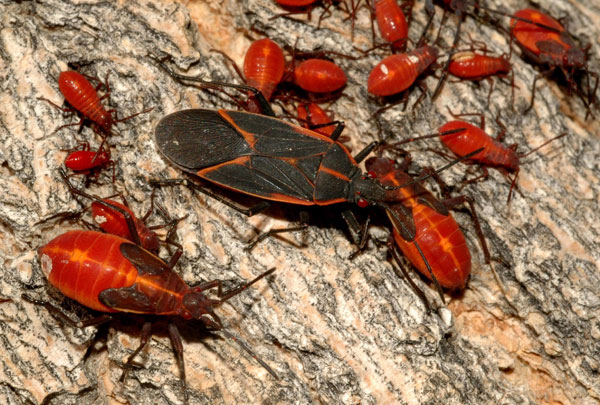
Boxelder Adults and Nymphs
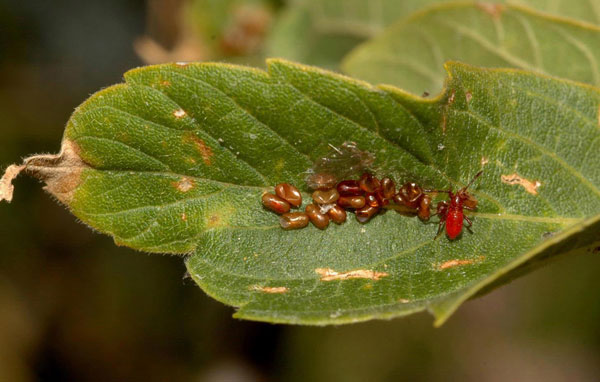
Boxelder Eggs and Nymphs
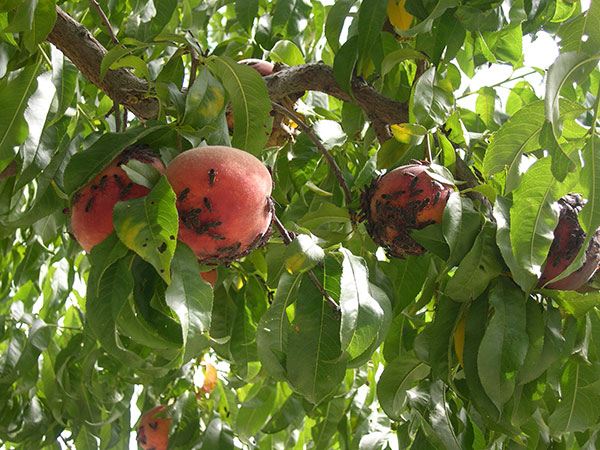
Boxelder Adults on Peaches
HOSTS
- Apple (ripe fruits)
- Ash
- Boxelder
- Maple
- Peach, Nectarine, Apricot (ripe fruits)
- Pear (ripe fruits)
DESCRIPTION
Boxelder bug (Boisea trivittata) is a common insect associated with boxelder, ash, and maple trees that is more of a nuisance than a plant pest. These insects have oval-shaped bodies, measuring about ½ inch when fully grown. They are dull black with red markings along the edges of their front wings. Adults and nymphs feed with piercing-sucking mouthparts. Their primary food source is seeds (racemes) of maples (boxelder), but they can also consume sap from the new foliage of maple, ash, stone fruits (cherry, plum, peach), apple, grape, strawberry, and grass, as well as from ripe fruit, especially peaches in Utah.
BIOLOGY
In spring, overwintered females emerge from their protective locations and lay eggs in the cracks and crevices of boxelder bark. The nymphs hatch in a few days and increase in size through various stages during the summer, becoming adults by late July. These adults then mate and lay eggs, which hatch into the nymphs of a second generation that carries into fall. As temperatures drop, adult boxelder bugs seek warmth and often congregate on building exteriors
SYMPTOMS
- Spots on stems and new growth
- Spots on maple seeds
- Ripe fruits with soft areas from feeding
MANAGEMENT
Boxelder bugs are minor nuisance pests and not a threat to plant health. An effective management strategy includes washing nymphs off plants and buildings with a strong jet of water. If chemical control is warranted (especially on fruit trees), options include insecticidal soap or pyrethrin (which can be applied up to the day of harvest). On buildings, a stronger chemical such as a pyrethroid is effective..