
Integrated Pest Management
Balsam Woolly Adelgid
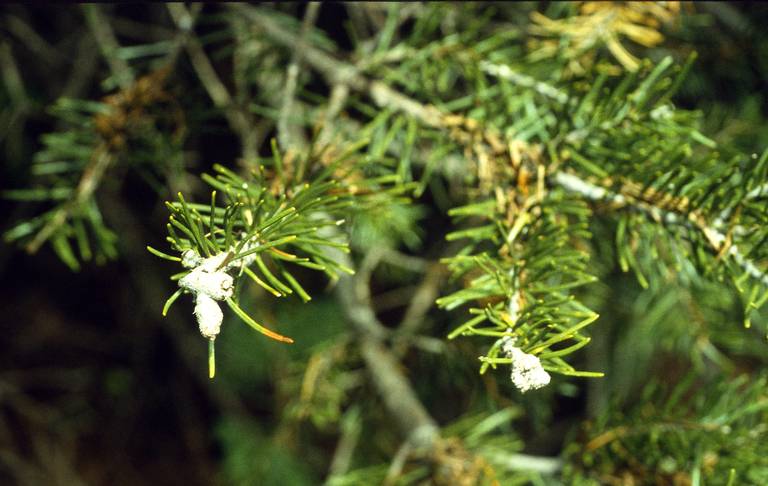 Balsam Woolly adelgid gouting (USDA Forest Service, Bugwood.org)
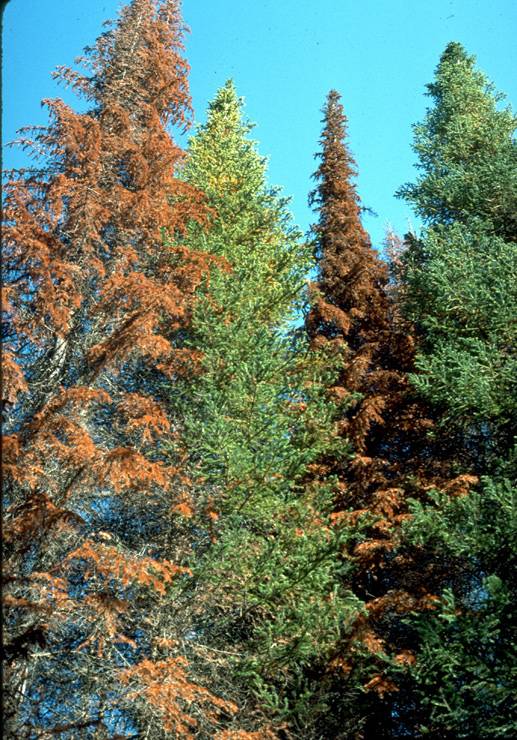 Balsam woolly adelgid damage (David Beckman, ID Dept. of Lands, Bugwood.org)
HOSTS
- True firs such as grand fir and subalpine fir
DESCRIPTION
The balsam woolly adelgid (Adelges piceae) is a tiny sap-sucking insect native to Europe. It primarily infests true firs in forests, landscapes, and Christmas tree production. Balsam woolly adelgid was discovered in Utah in 2017 on subalpine fir (Abies lasiocarpa), which is a highly susceptible host. It now occurs on this host in 10 counties in the state, impacting tree health, causing canopy decline in forests.
BIOLOGY
The balsam woolly adelgid life cycle includes the egg, three nymph stages (crawlers), and adult (wingless females only). They overwinter as nymphs on tree bark and develop to adults by late May. In late spring, females lay up to 200 eggs under a white, cottony sack. Eggs hatch within a month and crawlers move within and between host trees, find a location to feed on tree sap, and, remain immobile for the remainder of their lives. They then molt into adults by late summer, which continue to feed and reproduce, giving rise to a second generation which includes the overwintering nymphs.
SYMPTOMS
- Canopy decline
- Branch and node swelling
- Woolly material on the lower trunk
MANAGEMENT
The most effective management option is removing infested trees. For individual or small groups of trees, insecticides including horticultural oil or insecticidal soap can be applied when crawlers are active during late spring and fall. Use of a systemic insecticide may provide control but has not been confirmed by research.