
Integrated Pest Management
European Elm Scale
Gossyparia spuria
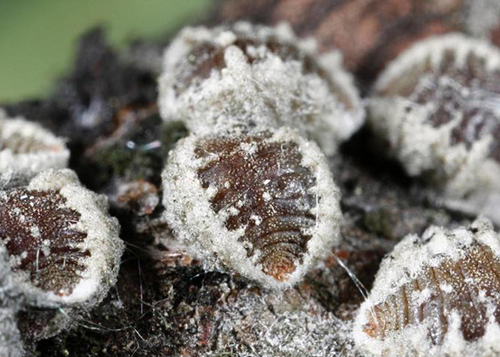
European elm scales (Joseph Berger, Bugwood.org)

European elm scale crawlers/nymphs (Whitney Cranshaw, Colorado State University, Bugwood.org)

European elm scale male cocoons (Whitney Cranshaw, Colorado State University, Bugwood.org)
Pest Description
- females: ~ 5/16 inch; oval; brown with a white fringe
- males: smaller than females; male cocoons appear as white, puffed rice
- immatures: crawlers (mobile stage) ~ 3/64 inch, yellow orange; wingless
- immatures: nymphs flattened and oval; translucent yellowish
- overwintering immatures with a light gray-white waxy coating
Host Plants, Diet & Damage
- elm; common on ‘Camperdown’ elm in Utah
- feed on plant sap from twigs, small branches and leaves
- leaf yellowing and premature leaf drop
- severe infestations may kill branches
- honeydew production leads to sooty mold on leaves and branches
Biology, Life Cycle & Damaging Life Stage
- overwinter as 2nd instar nymphs in bark cracks or twig notches
- ]reach maturity and mate from mid-April to late-May
- egg hatch occurs from mid-June to mid-July
- crawlers settle on the undersides of leaves along main veins
- one generation per year
- nymphs and adults are the damaging stages
IPM Recommendations
- Manage trees to improve or maintain health.
- Monitor scale populations on host plants.
- Apply an insecticide (carbamate; horticultural oil; insecticidal soap; organophosphate; pyrethroid) to coincide with scale crawler activity.
- Apply a systemic neonicitinoid in spring after leaves have expanded.
For more information, see our Soft Scales in Utah Landscapes fact sheet.