
Integrated Pest Management
Cicadas
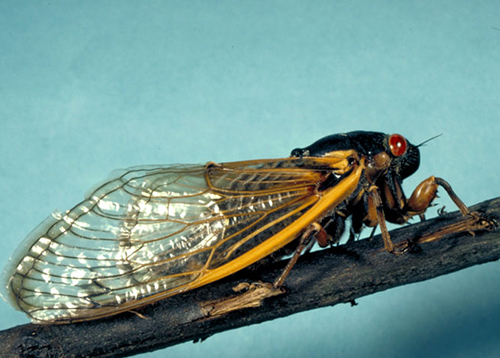
Periodical cicada (John Ghent, Bugwood.org)

Slits in branch created by egg-laying females (Pennsylvania Department of Conservation and Natural Resources, Bugwood.org)

Periodical cicada emergence holes (Jim Occi, BugPics, Bugwood.org)
Pest Description
- adults: 1 – 2 inches; clear, lacy wings held tent-like over body; make a telltale clicking or buzzing noise
- immatures: live underground
- shed skins from immatures can be found on the sides of host trees
Host Plants, Diet & Damage
- many deciduous trees and shrubs
- adults suck sap from plant branches, but damage is minimal
- immatures suck sap from plant roots
- most damage occurs when large populations of egg-laying females wound trees
- excessive egg laying can score and kill small branches
Biology, Life Cycle & Damaging Life Stage
- overwinter as immatures in the soil
- require few to many years to develop
- immature development occurs underground
- pupate above ground on the sides of host plants
- leave cast pupal skin stuck to tree
- adults are active throughout summer
- females lay eggs in slits cut in branches
- mmatures drop from eggs to the soil and feed on underground roots
- adult, egg-laying females are the damaging stage
IPM Recommendations
- Damage to plants and trees is usually minimal; tolerate this insect.
- The mobility of this insect makes insecticidal control difficult.
- Cover small trees to exclude large populations of cicadas.