
Consider Japanese Wisteria Vines for Utah Landscapes
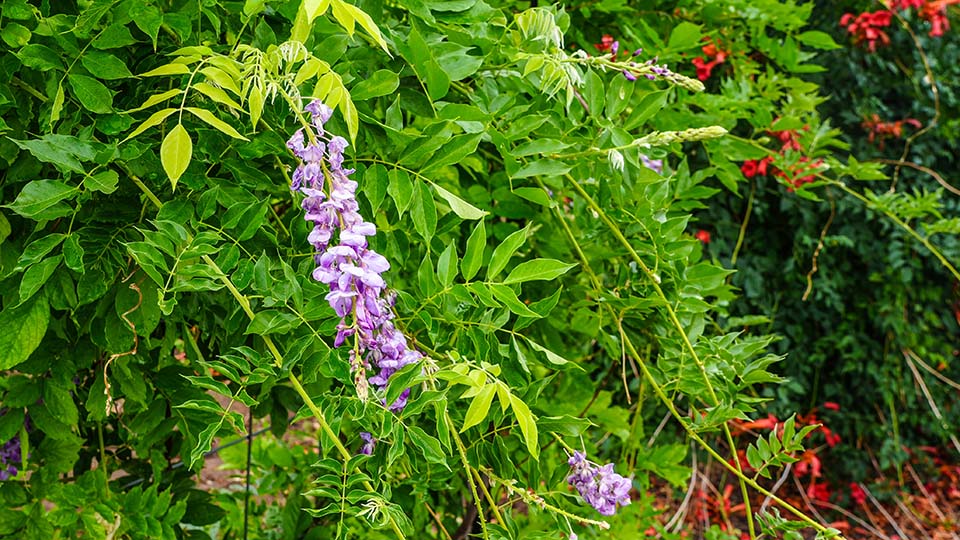
Triple-digit temperature days and drought have many Utahns looking for attractive landscaping alternatives. Japanese Wisteria (Wisteria floribunda “Texas Purple”) could be the answer. The dramatic flowering vine thrives in Utah's climate and can add cooling shade to yards.
The fast-growing vine can reach 20 to 25 feet in length, making it an excellent choice for pergolas, arbors, fences, and other sturdy landscape structures. It performs best in full sun. Once established, it provides dense summer shade while also adding seasonal color and fragrance to the landscape.
According to a fact sheet by Utah State University Extension researchers Youping Sun, Shital Poudyal, and graduate student Saroj Burlakoti, it is considered invasive in many humid regions of the eastern United States, but Utah's arid climate greatly limits its natural spread. Utah gardeners should, however, regularly monitor the vine and prune it to prevent unwanted spread to nearby plants or structures.
Japanese wisteria offers spectacular spring flowers and attractive foliage throughout the growing season. Young leaves emerge with a coppery-bronze tint before maturing to rich green and eventually turning bright golden-yellow in autumn.
Successful establishment begins with proper planting. Researchers recommend planting in spring or fall in locations that receive at least 6 hours of direct sunlight each day. Because the vine becomes heavy and woody with age, it should be supported by durable structures such as steel, stone, or heavy timber. Researchers advise consistent watering during the first growing season to help develop a deep, resilient root system. Established plants require relatively little supplemental irrigation.
Twenty-four Japanese wisteria plants were evaluated under low, medium, and high irrigation treatments at USU’s Greenville Research Farm. Despite varying irrigation levels, above-average snowfall one winter, and unusually hot, dry summer conditions, researchers observed no significant differences in plant growth or performance. The findings suggest that Japanese wisteria can thrive in northern Utah's semiarid climate when planted in well-drained soil and provided with sturdy support.
Once established, Japanese wisteria is moderately drought-tolerant, attracts hummingbirds, bees, and butterflies, and is generally resistant to deer and rabbits, making it a valuable addition to patios, trellises, rock walls, and pollinator-friendly gardens. With thoughtful site selection, routine pruning, and proper maintenance, Japanese wisteria can provide decades of spectacular spring blooms in Utah landscapes.
The USU Extension researchers remind gardeners that the plant's seeds and seed pods are toxic if ingested, and recommend removing mature pods to reduce potential risks.
For more information, a new USU Extension fact sheet highlights the ornamental vine's striking appearance, adaptability to northern Utah conditions, and the management practices needed to keep it healthy and under control.