
Ask an Expert — Simple Steps to Maximize Personal Safety
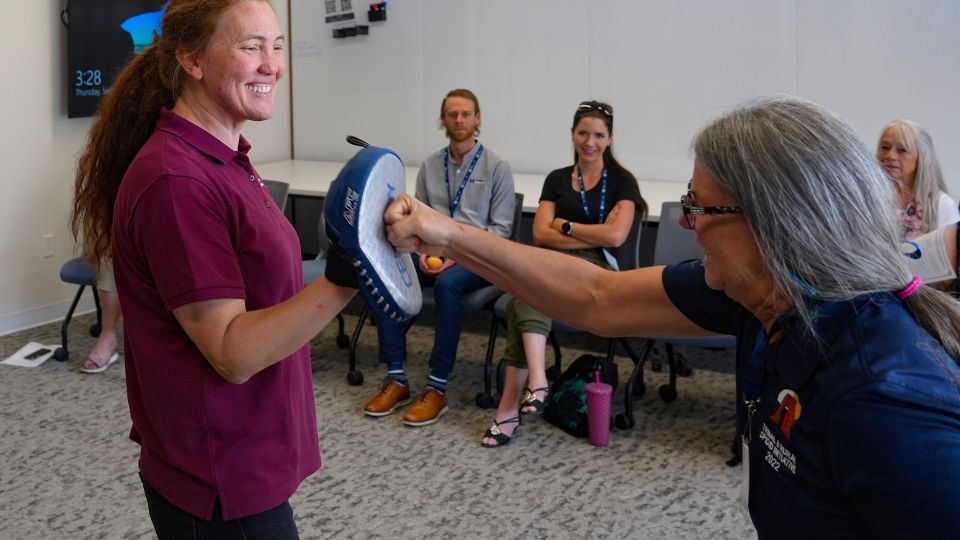 USU Extension Assistant Professor Stephanie Carlson (left) teaches self-defense.
Violence is a significant public health concern that can impact individuals across the lifespan and lead to emotional, physical, and economic challenges. Its effects often extend well beyond the incident itself, influencing personal safety, health, and overall well-being. The frequency and lasting impact of violence make it important to discuss how to recognize, prevent, and respond to conflict.
Research shows:
- Assault is the most common violent crime in the United States. It is an unlawful physical attack or threat of attack that may result in injury or death.
- Of those attacked, an average of 64% of females and 40% of males report knowing their attacker.
- Approximately 28% of individuals report that they or someone in their household was a victim of a crime in the past year.
Attackers usually do not want a fight; they are looking for an easy target. They generally seek out individuals who appear weak, vulnerable, distracted, confused, or frightened. Reduce your chances of becoming a victim by looking confident, strong, and alert.
Research also suggests that learning self-defense can be an effective way to avoid and respond to conflict. Self-defense education has been shown to increase assertiveness, confidence, self-esteem, self-efficacy, perceived control, and physical competence, while also helping reduce anxiety, helplessness, and fear.
Consider these practical steps to help you be better prepared to respond to conflict and reduce risk:
- Look confident.
- Remain alert and aware of your surroundings.
- Leave an unsettling situation, if possible, and avoid situations that feel unsafe.
- Trust your instincts.
- Tell someone where you are going and when you expect to return.
- Minimize distractions in public places. Avoid wearing headphones or earbuds, talking on the phone, or looking at an electronic device.
- Map out the safest route to your destination.
- Walk in well-lit areas, and avoid unpopulated areas such as vacant lots, alleys, and parks.
- Avoid being out alone at night.
- Use de-escalation strategies whenever possible before choosing to make physical contact with an aggressor.
USU Extension offers self-defense videos on the crossed-wrist grab escape and wrist release.
Being prepared does not mean living in fear, it means building awareness, confidence, and skills to make safer choices and respond effectively when faced with potential conflict.
For more information about self-defense or to request a class, contact Stephanie Carlson, Utah State University Extension assistant professor, at stephanie.carlson@usu.edu.