
A Brief History of Irrigation in Utah
Background
Irrigation is essential for most crop production in Utah. With an ever-increasing population, regular drought cycles, and environmental concerns, there is a public discourse about agricultural irrigation water use. This fact sheet is an effort to step back in time to consider the heritage of irrigated agriculture in Utah, from prehistory to the present, and the modernization of irrigation driven by global industrialization and the information age.
Global Irrigation Development
The earliest known uses of irrigation globally were in the Middle East (Jordan Valley) and Egypt around 6000 B.C. (Hillel, 1994; Hoffman et al., 1990; Sojka et al., 2002). Early irrigation practices were gravity-fed versions of surface or flood irrigation, including using berms or dikes to control the water (Hoffman et al., 1990). In the Fertile Crescent of Mesopotamia, irrigation was practiced around 4000 B.C. (Hoffman et al., 1990). By 2500 B.C., irrigation was practiced in China (near the Yellow River) and India near the Indus River (Hoffman et al., 1990; Jensen, 1980). Irrigation was used in Peru by about 1000 B.C. (Jensen, 1980). The first known irrigation in North America occurred about 100 B.C. in the Southwest U.S. (Hoffman et al., 1990).
Early Irrigation in Utah
Irrigation was not extensive in what is present-day Utah before European settlement (Simms, 2008). However, clear evidence of irrigation predates European settlement:
- The Fremont people were perhaps the first to irrigate in Utah. The oldest archeological evidence is ditches dating from 250–400 A.D. in Uintah County, near Vernal (Simms, 2008; Talbot & Richins, 1996).
- Another area with evidence of early irrigation is a Fremont village at the Nawthis site in Sevier County, where people lived from 800–1150 A.D. (Metcalfe & Larrabee, 1985; Simms, 2008). By at least 1460–1640 A.D, an active irrigation canal existed in Garfield County between Torrey and Boulder (Simms, 2020). Some other areas with evidence of irrigation by Fremont people are between Loa and Torrey and in the Parowan Valley (Simms, 2008).
- The Paiute people are believed to have come to Utah around 1100–1200 A.D., and evidence suggests they irrigated in the Virgin River drainage in Washington County (Holt, 1994). For example, early Utah European pioneer, Parley P. Pratt, noted existing irrigation on the Santa Clara River (Fuller, 1994).
- Evidence also shows irrigation by the Navajo (Diné) people long before European settlement, including control and strategic use of floodwater from floodplains and alluvial drainages (Goldfrank, 1945; Gregory, 1917).
What is perhaps most impressive about these early irrigation systems is that they were constructed without the aid of large livestock or iron tools. Further detail of historical tribal irrigation methods, including archeological evidence, will be published in a forthcoming companion fact sheet.
Early European Settlements
Spanish Explorers reached parts of the Southwest U.S. and expanded traditional types of irrigation in the region (e.g., New Mexico) by at least the late 1500s (Simmons, 1974). However, in Utah, it is widely known that irrigation by European settlers began in 1847 with the arrival of the first pioneer members of the Church of Jesus Christ of Latter-Day Saints in the Salt Lake Valley. As Orson Israelsen, a former irrigation engineering professor at the Utah Agricultural College (now Utah State University [USU]) retold, the diversion of water from City Creek to aid in cultivation first occurred on July 23, 1847. The following day, celebrated as Pioneer Day in Utah, they planted some potatoes (Israelsen, 1954). While the specifics of who first plowed ground may be debated (Brough, 1898), it is recognized that irrigation by European settlers in Utah began in July 1847.
The history of Utah is one of hard work, perseverance, and cooperative effort as demonstrated by Brough (1898), who called the labors and irrigation development of early Utah pioneers ca. 1847 “… one of the most wonderful strides of civilization.” This heritage certainly adds a shared societal value to irrigation farming in Utah.
So began the extensive development of irrigation throughout Utah and the surrounding areas. As pioneers explored and settled different areas, it was common to make early efforts to divert and convey water for irrigation. For example, in a History of Kaysville, Davis County, by Carr (1971) the following is related: “The first settlers built their own ditches from the large streams on which they settled. As more settlers arrived, there was a need for a united effort, and the settlers cooperated in making the ditches.” Irrigation expansion in Utah can reasonably be tracked using the permanent settlement dates for the various communities throughout the region. This cooperative effort, necessary to support the size of the pioneer society, likely led Sjoka et al. (2002) to refer to pioneer settlement as the beginning of “modern irrigation technology.”
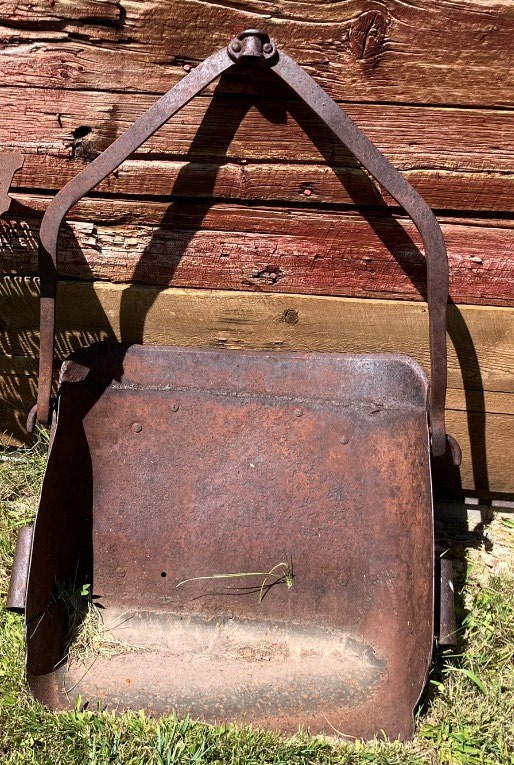
These early efforts (and those in prehistory) were carried out through cooperation (Brough, 1898) as opposed to large projects built later with capital funded by the state and federal governments. The shared interests of the early Utah pioneers and their adherence to common religious leaders created the early system of cooperation. For these people, the only form of capital available was one’s own ability to work, and so irrigation ditches were dug by hand and animal power (Figure 1). One telling description of methods used by early pioneers was recorded near the turn of the last century by Utah State Engineer Robert C. Gemmell (Gemmell & Swendsen, 1899):
"None of these canals and ditches [referring to those on Big Cottonwood Creek], except the Upper Canal, were surveyed or constructed by an engineer, and there is no regularity or uniformity in their cross sections or grades. Frequently, the principal instrument used in laying out the ditches was the plow. Starting at the stream, a furrow would be plowed, following as nearly as possible a grade contour. After a short length of furrow had been plowed, water would be turned in from the creek. If the water ran to the lower end of the furrow, it was assumed that the grade was all right, and the furrow was continued. If the water would not run the full length of the furrow, it was easy to locate and cut down the high points.”
Early canals were constructed using hand tools and livestock (Figure 1). The challenges and physical effort required to build these canals are exemplified in the story of the Hurricane Canal construction in Washington County. That canal was built mostly by hand, including hauling materials, building elevated flumes, and blasting tunnels (Comp, 1972).
During the first 50 years of settlement, up until Utah became a state in 1896, most irrigation infrastructure development focused on canal and diversion construction (Israelsen, 1954). Israelsen provides a concise summary of these efforts. Settlement typically started in the lower portions of valleys that were easy to settle. Development, including canal construction, was slowly worked up to higher elevations in the valley as communities’ capital increased.
According to Israelsen (1954), the first significant interest in developing surface water storage in Utah was in the 1870s. However, little was done until the turn of the century. In the 1920s, the state made a significant effort to increase water storage. In 1921, the Utah State Legislature created the Utah Water Storage Commission. The following year, the commission entered into an agreement with the U.S. Reclamation Service (later the U.S. Bureau of Reclamation [USBR]), formed in 1902 by the Reclamation Act to develop water for irrigation to settle the Western U.S. (USBR, 2023).
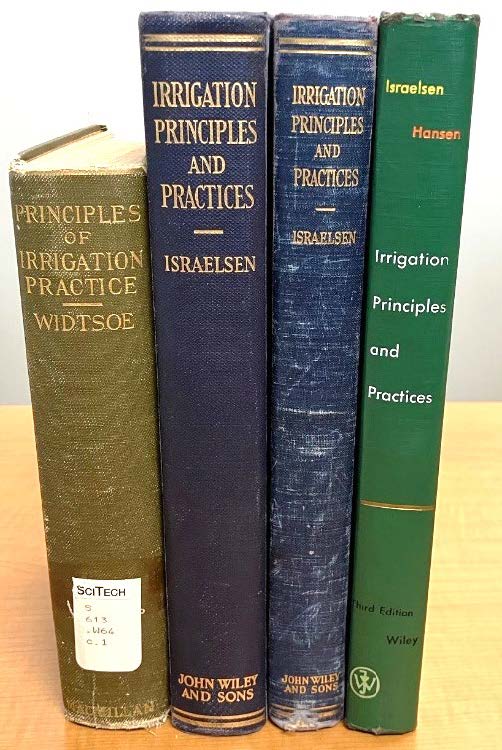
Early irrigation development led to the appropriation of much of Utah’s surface water and made settlement of many valleys in the state possible. For many communities, local histories contain irrigation development details, and no attempt is made here to summarize those efforts. It is, however, notable to mention that a significant amount of early work in irrigation science and engineering occurred at the Utah Agricultural College (now USU), established as Utah’s land-grant institution in 1888. For example, an early professor, college president, and notable historical figure in Utah, John A. Widtsoe, published a comprehensive textbook on irrigated agriculture (Widtsoe, 1914; Figure 2). While not the first text on the subject, it was certainly an important contribution. Later, a well-known irrigation engineering professor, Orson Israelsen, would comment on the value of the Utah Agricultural College and its Agricultural Experiment Station for advancements in the field of irrigation (Israelsen, 1954). His published textbook was in print long enough to predate significant adoption of sprinkler irrigation, and a late edition was one of the earliest textbooks to cover the subject (Israelsen, 1932; Israelsen & Hansen, 1962).
Advances in Irrigation Technology
Settlement and the need to irrigate most crops in Utah drove much expansion and innovation in irrigation in the 19th century. However, by the early 20th century, these advancements were driven by technology during the industrialization of the early 1900s. But first, let’s consider some technologies that predated that period and would contribute to irrigation expansion later.
Water Well Construction
By about 600 B.C., there is evidence of drilling deep wells constructed using percussion techniques, in principle similar to modern cable drill rigs, in China’s Gobi Desert (Hardcastle, 1987; Campbell & Lehr, 1973). These technologies were developed for salt brine and natural gas production and were only later used for water wells. Well construction methods continued to improve over time. Of note is the invention of rotary drilling for water wells in the 1880s by two brothers in South Dakota (Mau & Edmundson, 2015). A couple of decades later, in 1900, two other brothers in California and their associates introduced drilling mud (Mau & Edmundson, 2015); mud rotary drilling is a common, modern well-drilling method.
Pump Technologies
Large production irrigation wells require large, efficient pumps. While pump technologies developed over a long period, three inventions illustrate the advancement.
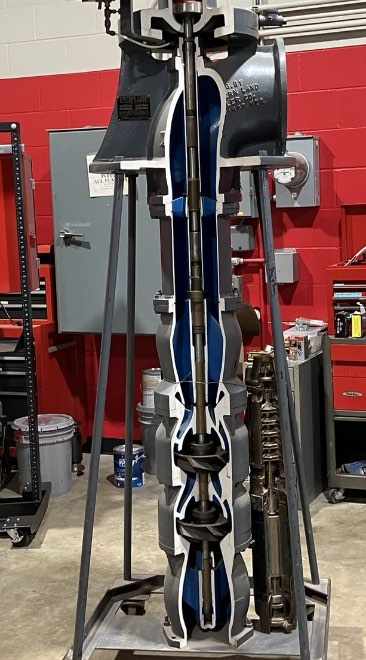
- First, the invention of the centrifugal pump (a pump that moves water by spinning) seems to have begun as early as the 400s A.D. and continued through the 1800s (Engeda, 1999).
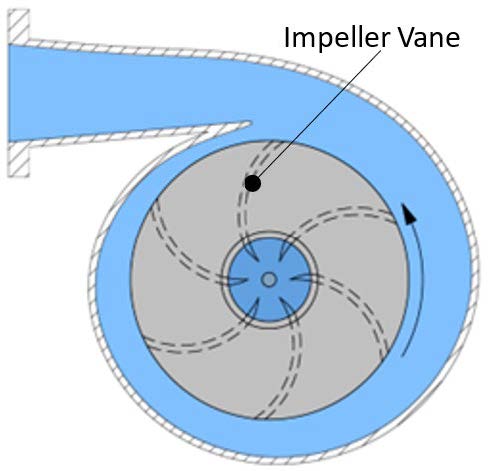
- Second, in 1851, John Appold made an important contribution by adding curved vanes, which greatly improved pump efficiency by more than triple other contemporary designs (Engeda, 1999; Figure 3). This efficiency in pumping would eventually facilitate and expand pressurized irrigation methods (i.e., sprinkler and drip).
- Third, relating to well construction, the Byron Jackson company introduced the first deep-well, vertical turbine pump in 1901 (Borg-Warner, 1984; Figure 4).
Pressurized Irrigation Makes Its Major Debut
Until the 20th century, irrigation was nearly all gravity-fed, surface irrigation (sometimes called flood irrigation). Water flowed through ditches or tunnels and spread across a field. For modern irrigation, that changed in the late 1800s and early 1900s. The first documented use of piped drip irrigation, for example, was in Germany, using buried clay pipe in the 1860s and perforated pipe in the 1920s (Goyal, 2012).
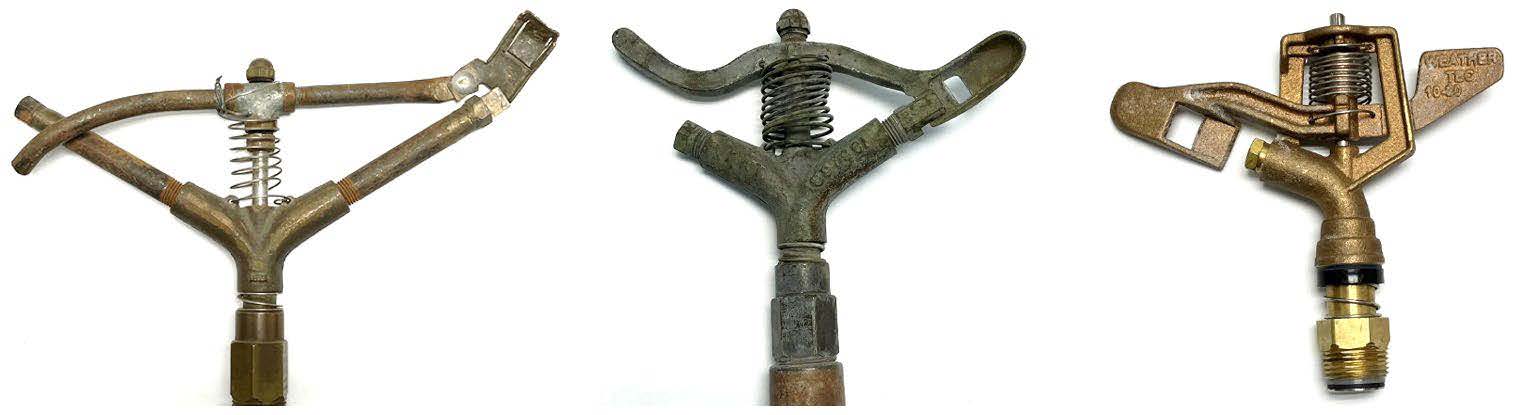
In California, sprinkler irrigation began around 1900 (Christiansen, 1942). Christiansen relates that around 1930, portable steel sprinkler pipes were in use. In 1933, a California orchard farmer named Orson Englehart invented the rotating impact sprinkler (Landers, 2001; Figure 5). He sold the patent to Clement and Mary Elizabeth “Betty” LaFetra, who began manufacturing the device starting in 1935 and called it Rain Bird. These types of sprinklers are still often referred to as “birds” today. One advantage of impact sprinklers was the distance they could throw water, and while not the only early rotating sprinkler (Christiansen, 1942), they are still common today.
A World in Turmoil Leads to Innovation
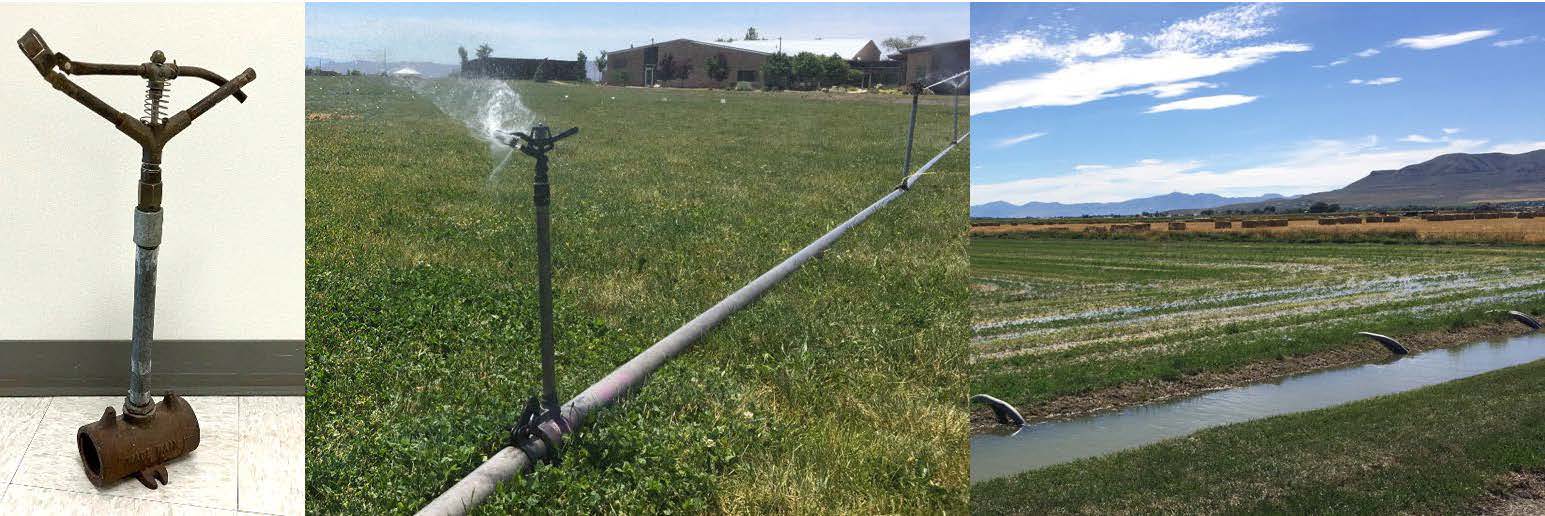
As in other industries, technology available for irrigation innovation increased during the two world wars, particularly World War II (WWII; 1939–1945). This led to significant innovations in the post-war decades of the 1950s and 1960s. Three general advances of note during WWII that enabled post-war innovation were the development and availability of materials (especially plastics and aluminum), increased manufacturing capacity, and general mechanization. For example, Bagley and Criddle (1956) state that increased access to aluminum tubing allowed for widespread adoption of sprinkler irrigation in the U.S. Aluminum made portable hand-line sprinkler systems more practical and was used for portable pressurized mainlines and for gated pipe and siphon tubes in surface irrigation (Ganzel, 2006a; Figure 6). Plastic production increased significantly in the war years (Science History Institute, 2025) and later became a major material in all kinds of irrigation systems. For example, it is reported that Hannis Thill, an Australian inventor, was using plastic in drip irrigation following WWII (Goyal et al., 2017; Learn About Garden Irrigation, 2010).
Advances in the Postwar Era
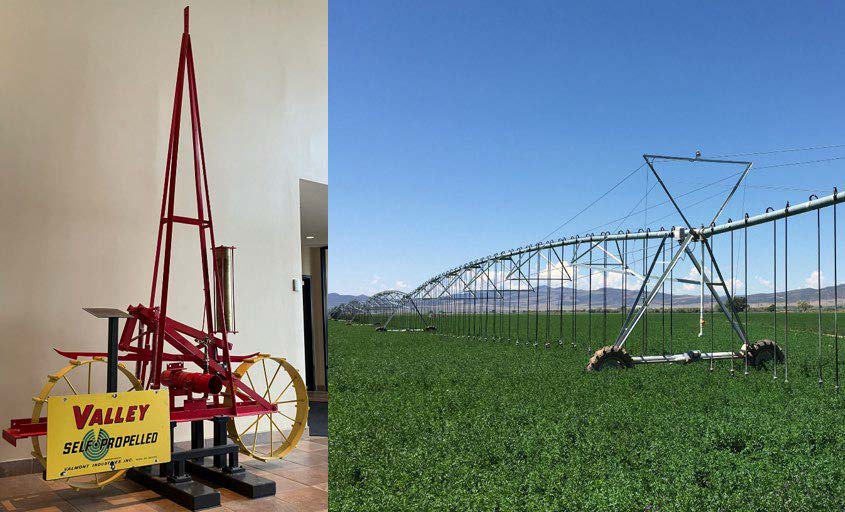
Many modern irrigation devices trace their origins to the first few decades following WWII. In 1952, Frank Zybach, a farmer in Colorado, patented what would become known as the center pivot sprinkler system (National Inventors Hall of Fame, 2025). Zybach sold his patent to Valley Manufacturing, owned by Robert Daugherty, in Nebraska in 1954. Daugherty’s company refined the design and sold the systems as Valley Center Pivots ( Figure 7). The company is now Valmont Industries. The first center pivots were driven by water hydraulics.
In the following years, scores of companies began manufacturing center pivots (Ganzel, 2006b). The curators of Wessels Living History Farm in York, Nebraska, have published additional innovations made by other center pivot manufacturers (Ganzel, 2006b). These include using a truss system rather than suspension to support the lateral pipe, reversible drive systems, electric drive motors, and oil hydraulic drive motors. Later, in the 1970s, a modification of center pivot technology, the lateral-move irrigation system, which moves in a line rather than a circle, was developed (Reinke, 2025; Valmont, 2025).
A contemporary invention of the center pivot was the wheel line (sometimes called sideroll or wheelmove) system. Glee John Melcher invented wheel lines under commission from Washington State College in Pullman, Washington (Horn & Prouty, 2023). The commission aimed to develop irrigation methods for the relatively new USBR Columbia Basin Project, which distributes water from Grand Coulee Dam throughout a large swath of southeastern Washington. Wheel lines were patented in 1956 and owned by Pierce Manufacturing, Eugene, Oregon.
Another key post-war invention was the modern drip emitter (sometimes called a dripper). In 1959, Simcha Blass was testing what would become the first real drip emitter in Israel (Goyal, 2012). Blass’s concept for the drip emitter reportedly came from observing the significant growth of a tree inadvertently watered by a leaky pipe coupler (Gilmer, 2014). This would become the foundation of modern drip irrigation. In the following decade, an American, Richard Chapin, developed Dew Hose, the original drip tape (Goyal, 2012). During this same time, subsurface drip irrigation (SDI; i.e., buried driplines) using plastic tubing began to be used in the U.S., though it would be some time before technologies improved to address issues like installation, clogging, and root intrusion (Camp et al., 2000).
Energy, Energy, Energy
With increased irrigation well production and then the growth of pressurized irrigation (mostly sprinkler) following WWII came the connection between irrigation and energy consumption. The energy crisis of the 1970s led to innovations to reduce energy consumption across all types of industries, including irrigation. For example, the development of low-pressure sprinklers for center pivots, now universal in Utah, began in the 1970s (King & Kincaid, 1997). Another such technology was Low-Energy Precision Application (LEPA) for center pivots, which was developed around 1978 (Bordovsky, 2019). In this method, center pivots are applied through low-pressure bubblers or plastic socks onto the ground. This reduces the pressure (and energy) needed to operate sprinklers, which were originally mounted atop the center pivot. LEPA also reduces evaporation losses from the water droplets before they reach the ground, which is generally the motivation for using it today. In 1974, the concept of dragging drip lines behind a center pivot was developed (Molaei et al., ca. 2020). This technology has recently seen increased interest as it is now known as mobile drip irrigation (Dragon-Line company) and precision mobile drip irrigation (PMDI by Netafim).
In the 1970s, surface irrigation saw significant improvements. One that quickly became widespread was the advent of laser-controlled land grading for fields (Chen et al., 2024). Precision land grading remains an important component of efficient surface irrigation and has continued to improve as additional technologies have been developed. Another method, adopted and then practically abandoned before a modern resurgence, is surge irrigation. Surge irrigation is a form of surface or flood irrigation in which water is intermittently turned out onto a field and allowed to infiltrate into the soil between surges to improve irrigation efficiency. Irrigation engineering professors at USU first documented the method in the late 1970s when they discovered it while trying to automate surface irrigation (Stringham & Keller, 1979). Early surge systems typically used gated pipe. However, it can now be practiced with many types of surface irrigation supply systems.
Information Age Innovations
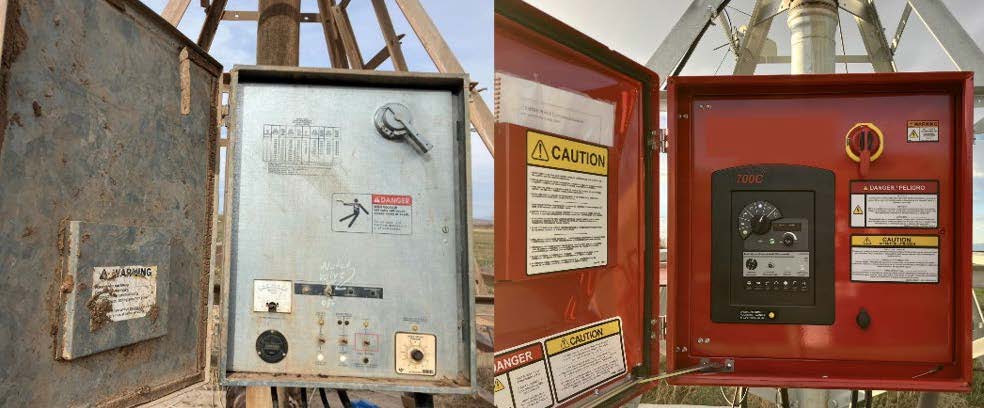
In the last few decades, innovations and improvements to irrigation system components have continued. However, the most notable improvements have been in automation and control. While automation in surface irrigation has been a focus of innovation since at least the 1960s (Bondurant et al., 1962; Stringham & Keller, 1979), in recent decades, automation technology and remote control have improved greatly. One example is the innovations in center pivot control panels (Lindsay, 2025; Valmont, 2025; Figure 8). In the 1980s, manufacturers began increasing control panel capabilities, including remote control. However, only in the last 10 to 20 years, with the universal adoption of mobile technologies and the affordability of microchips and electronics, have automation and remote control become ubiquitous. Remotely controlling irrigation systems using mobile devices is possibly the single greatest innovation in agricultural irrigation since the development of the center pivot. Mobile technologies can now be integrated into all kinds of irrigation systems, including surface irrigation systems where valves and head gates can be automated and remotely operated, once again revolutionizing an 8,000-year-old method.
Summary Timeline
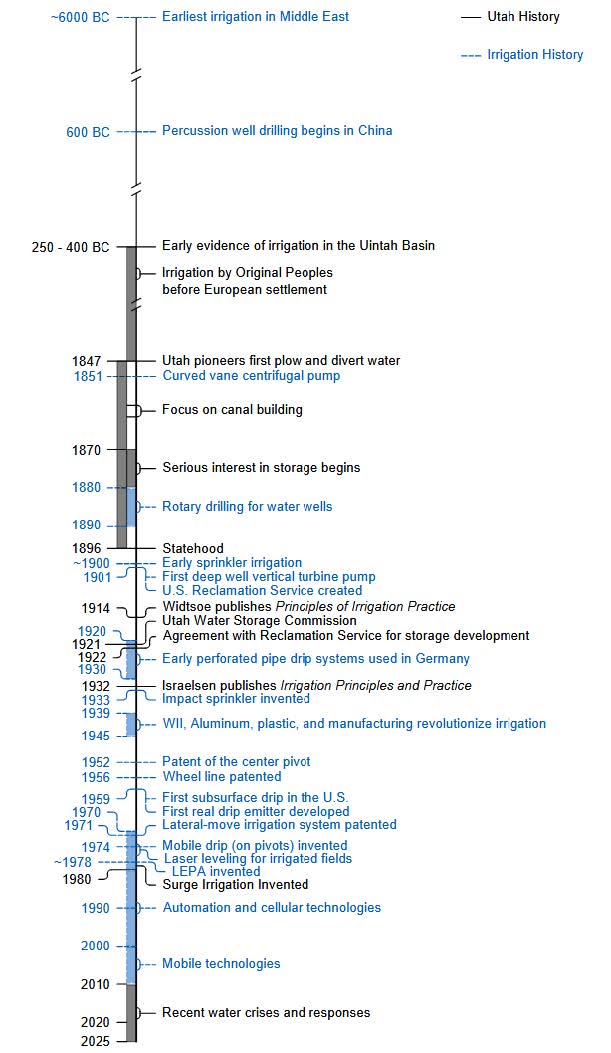
Figure 9 displays a timeline summarizing the major events and innovations discussed above. Utah historical events are in black, and irrigation innovations are in blue. Given the rapid increase in irrigation innovations over the past century, we have good reason to hope that society will be able to meet the challenges facing water resource management and food production in the future.
Conclusion
Irrigation has been practiced in Utah for over a thousand years. However, extensive irrigation development did not occur until after European settlers arrived in the mid-1800s. Those settlers laid a state heritage in hard work, perseverance, and unity that continues to make irrigated agriculture of significant societal benefit today. Many early modern innovations in irrigation practice and science occurred in Utah and grew from the necessities of large-scale settlement in the semi-arid Intermountain Region. Global industrialization facilitated much of the innovation that has led to modern irrigation technologies. The information age and mobile devices continue to introduce new possibilities in irrigated agriculture. Many innovations we now consider standard were first developed by farmers. Only time will tell what advances irrigators in Utah and the world will make to continue producing food into the future.
Acknowledgments
The authors did not use generative AI in creating this content, and it is solely the work of the authors.
We are grateful to Molly Cannon, who provided sources and summary information for the Early Irrigation in Utah section.
References

September 2026
Utah State University Extension
Peer-reviewed fact sheet
Authors
Burdette Barker and Reagan Wytsalucy

Burdette Barker
Irrigation Specialist
Civil and Environmental Engineering

Reagan Wytsalucy
Extension Associate Professor | Agriculture & Natural Resources | San Juan County Director
Agriculture and Natural Resources