
Utah Surface Irrigation Water Optimization Opportunities and Barriers Quickguide

Surface irrigation systems remain dominant in many parts of Utah, covering nearly half of the state’s irrigated farmland. While modern pressurized systems are increasing, surface methods like furrow and basin irrigation still play a critical role, especially in the Great Salt Lake watershed. To maintain their viability, it's essential to understand the barriers to water optimization and explore opportunities for improvement.
Survey Overview
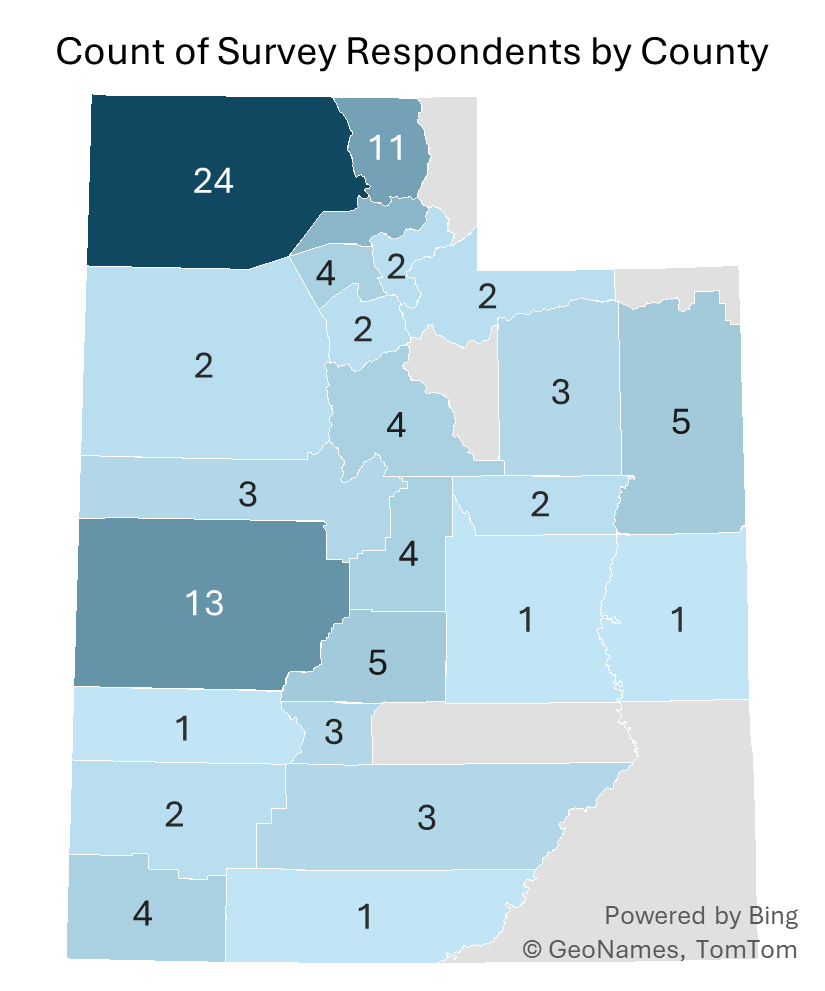
To better understand how Utah farmers manage surface irrigation and what might help them improve efficiency, Utah State University surveyed 126 irrigators across 26 counties. The survey revealed that most rely on traditional systems using open ditches and schedule irrigation based on soil feel, crop condition, or preset water delivery times. Only a small number use advanced tools like soil moisture sensors or evapotranspiration data.
Water Optimization Practices
The most common water-saving practice among respondents was precision land leveling, used by 27% of farmers. Others reported limiting irrigation set times or using field-end dikes to reduce runoff, but more technical approaches—such as tailwater recovery or zero grading—were rarely adopted. The primary barriers to implementing these practices included high costs, uncertainty about crop impacts, and limited access to information.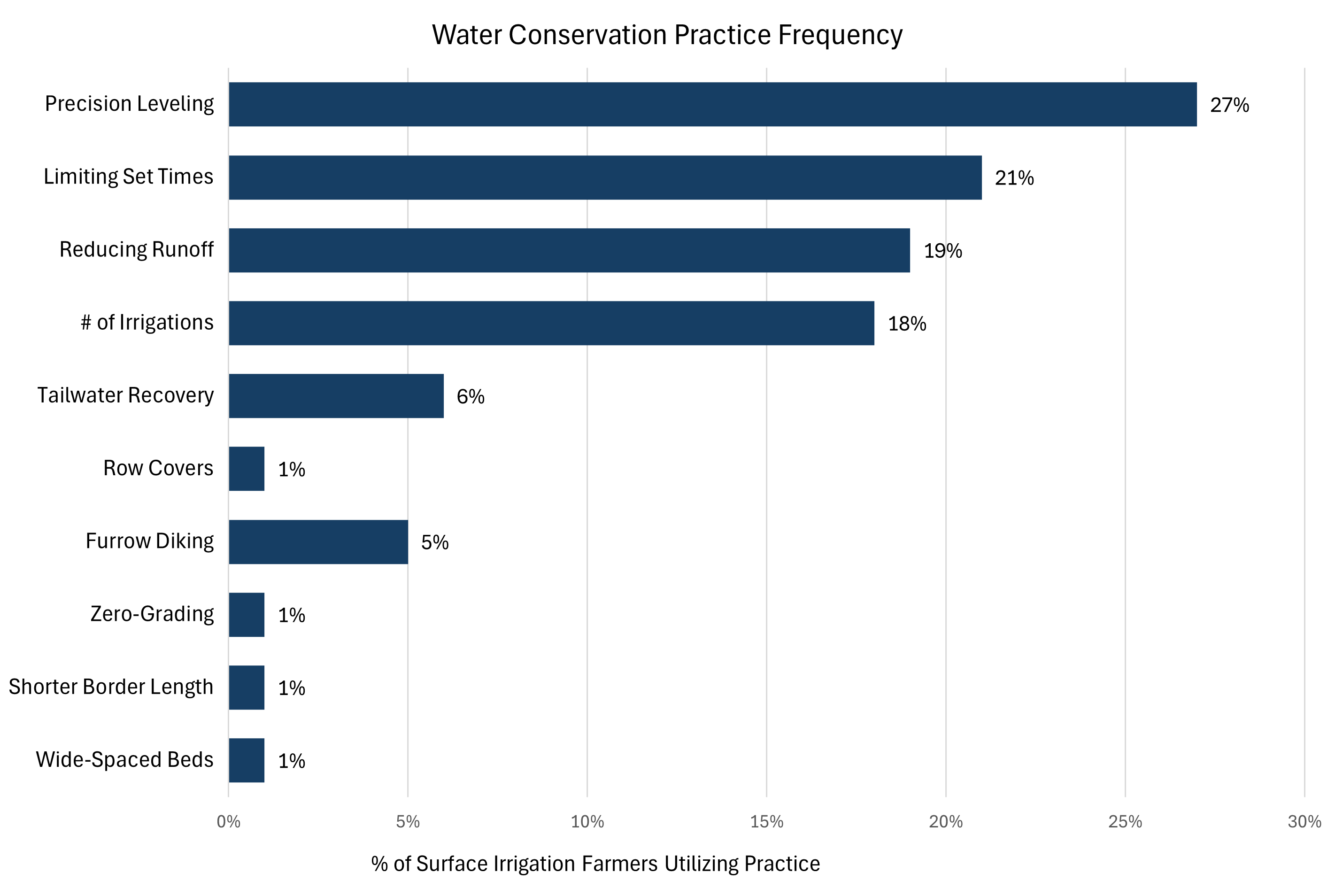
Barriers and Opportunities
Despite these challenges, many producers expressed a willingness to adopt more efficient methods if the cost were lower or if financial support were available. In fact, 64% said they would consider conservation technologies if provided through state or federal programs, and 57% would be more likely to adopt them if the cost were cut in half. Rising water or labor costs were also motivating factors for some.
Support Programs
To help address these barriers, the Utah Agricultural Water Optimization Program—launched in 2022—now offers 50% to 75% cost-sharing for key improvements, such as automating surface systems or converting open ditches to pipelines. This program directly responds to the needs identified by producers in the survey.
Information Sources
When it comes to seeking advice, most farmers turn to neighboring producers and Utah State University Extension. Strengthening these peer networks and education programs will be critical to supporting efficient surface irrigation across the state.
Utah State University is an affirmative action/equal opportunity institution and is committed to a learning and working environment free from discrimination, including harassment. For USU’s non-discrimination notice, see equity.usu.edu/non-discrimination
References
Authors
Matthew Reyes, Matt Yost, Clara Anderson, Burdette Barker, Justin Clawson, Kalen Taylor, and Michael Place
Utah State University Extension, June 2025