
Deficit Irrigation of Pastures Quickguide

Deficit Irrigation

Any irrigation level that does not meet the crop’s full evapotranspiration demand. This strategy is often a last resort for optimizing water use as opposed to those that will not limit production. Useful strategy to save water during drought periods when water is limited.
Deficit Irrigation Method
Research conducted in Southern and Northern Utah fields discovered that the best method for deficit irrigation is to fully irrigate through June and then cut off irrigation as opposed to limiting water supply throughout the whole season. This strategy pairs well with Utah’s water availability as the early season has snow melt runoff. Depending on the level of use, deficit irrigation allowed for an estimated 6 to 16 inches ET water savings per acre.
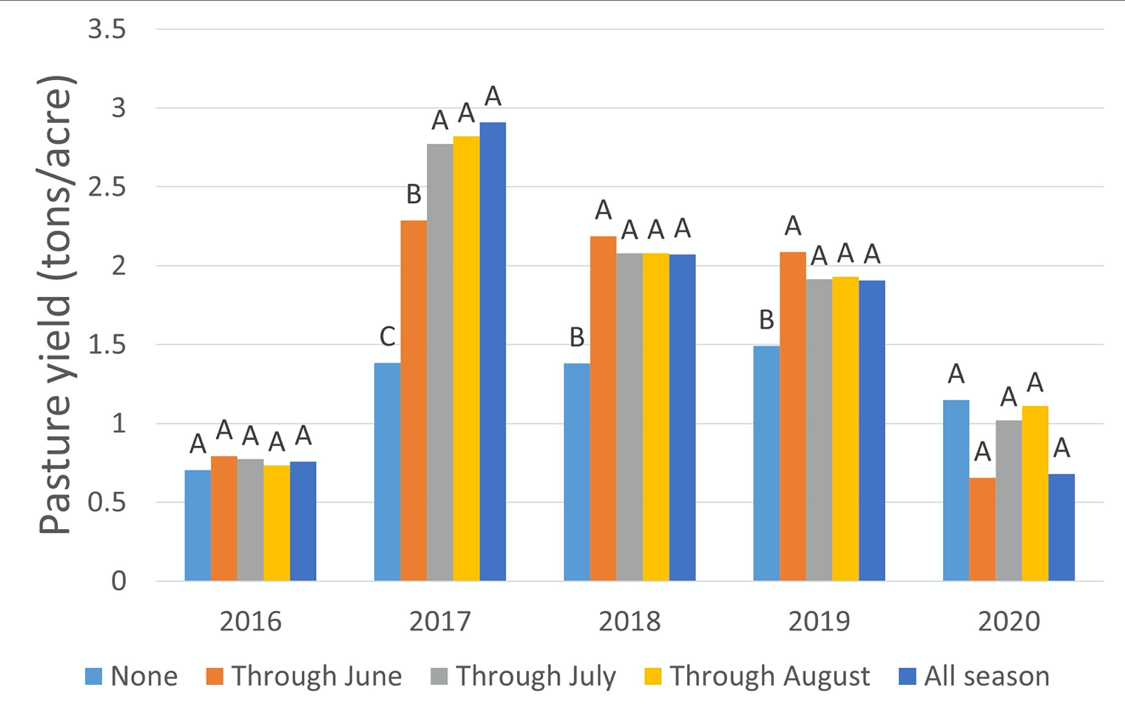
This figure shows Average Pasture Dry Matter Yield for Tall Fescue and Cache Meadow Brome (No Difference in Response) in Panguitch From 2016–2020 by Irrigation Level
Note. Within each year, yields with the same letter above the bar were statistically similar.
Deficit irrigation is a last resort for optimizing water use, but when done correctly can effectively lower water use while maximizing pasture performance. It is important to note that different crops may react differently to deficit irrigation. Orchard grass was found to do well after one season of deficit irrigation, but crop yield diminished over a few years of deficit irrigation, so while it is not a long-term solution for some crops, it is effective during years of drought.
References
Download PDF
Authors
Katelyn Parker, Matt Yost, Tina Sullivan, Niel Allen, Boyd Kitchen, Megan Baker, and Earl Creech