
FREES
Free Roaming Equids and Ecosystem Sustainability Network
JOIN THE FREES COMMUNITY
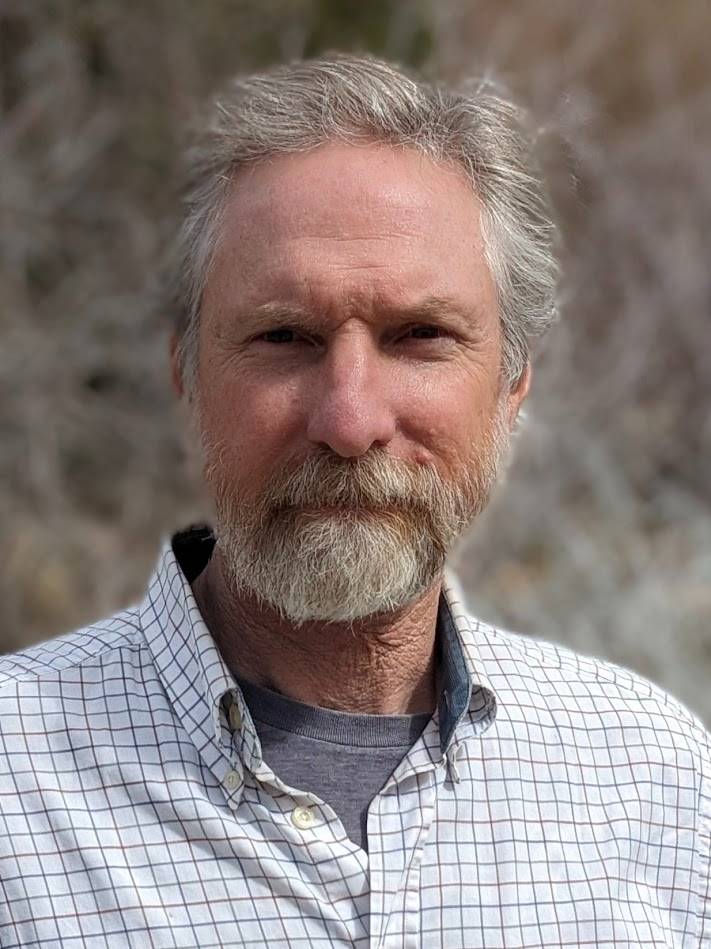 Dr. David Stoner, FREES Director
The Free Roaming Equid and Ecosystem Sustainability Network (FREES) is an organization comprised of citizens from all sectors of the natural resource community working collectively to achieve the goals of maintaining healthy herds and livelihoods through scientific rangeland stewardship. The FREES Network was initiated by Utah State University Extension in response to conflicts over how best to accommodate the needs of equids, wildlife, livestock, and human well-being on fragile western landscapes. Unfortunately, current management practices are surrounded in controversy over how best to promote animal welfare on multiple-use lands. Our aim is to disseminate science-based approaches to management and provide an objective clearinghouse for information, tools, and open discussions on these challenges. Partners include land grant universities, tribal nations, and 70 other agencies and organizations representing every cross-section of perspectives on this issue. You can join our community too and receive the latest news, event announcements, and ongoing research surrounding wild horse and burro managementYou can join our community too and receive the latest news, event announcements, and ongoing research surrounding wild horse management
Join our community here
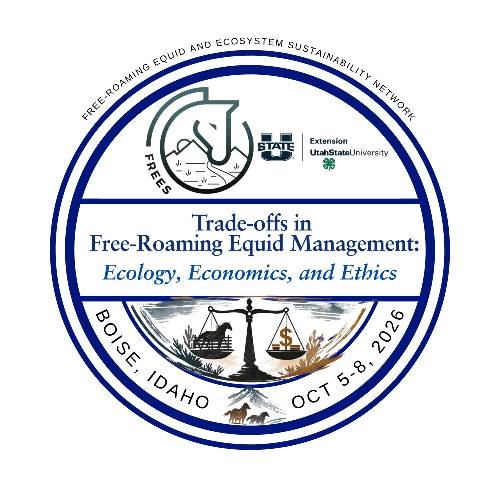
Trade-offs in Free-Roaming Equid Management: Ecology, Economics, and Ethics
This three day conference explores the complex trade-offs inherent in managing free-roaming wild horse and burro populations, with a focus on the interconnected dimensions of ecology, economics, and ethics. Bringing together researchers, land managers, policymakers, and other stakeholders, the event will examine how management decisions impact rangeland health, public resources, and animal welfare. Through diverse perspectives and evidence-based discussions, participants will engage in meaningful dialogue aimed at identifying balanced, sustainable approaches to one of the West’s most challenging and enduring issues. The event includes a full-day field trip to BLM-managed horse facilities.

Why We Care
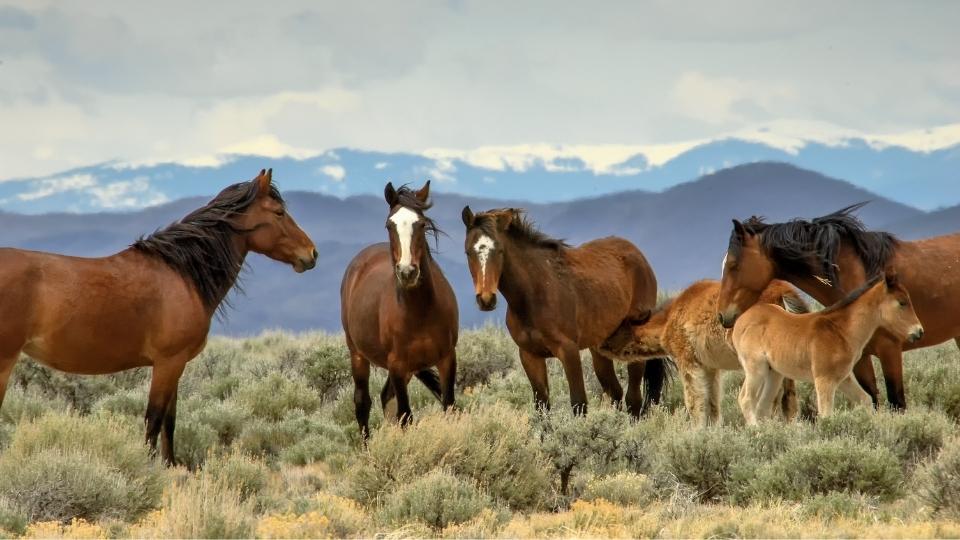
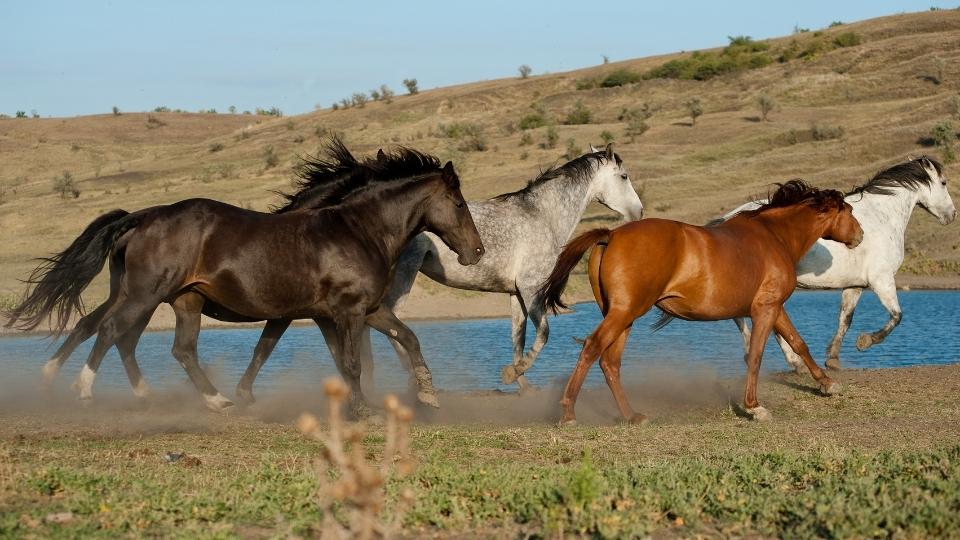
As of March 1, 2021, the BLM estimated that there were 86,189 free-roaming equids in BLM-administered herd management areas (HMAs). This is considered to be three times more equids than the habitat can support. Not every HMA is affected adversely, but where there is an overabundance of free-roaming equids, they impact the overall health of the U.S. western public rangelands by degrading ecosystem functions and reducing the forage and water available for themselves, domestic livestock, and native wildlife species.
HOW TO BRING HOME A WILD HORSE OR BURRO
|
Upcoming Meetings
Updates
Announcements
-
FREES Webinar Replays
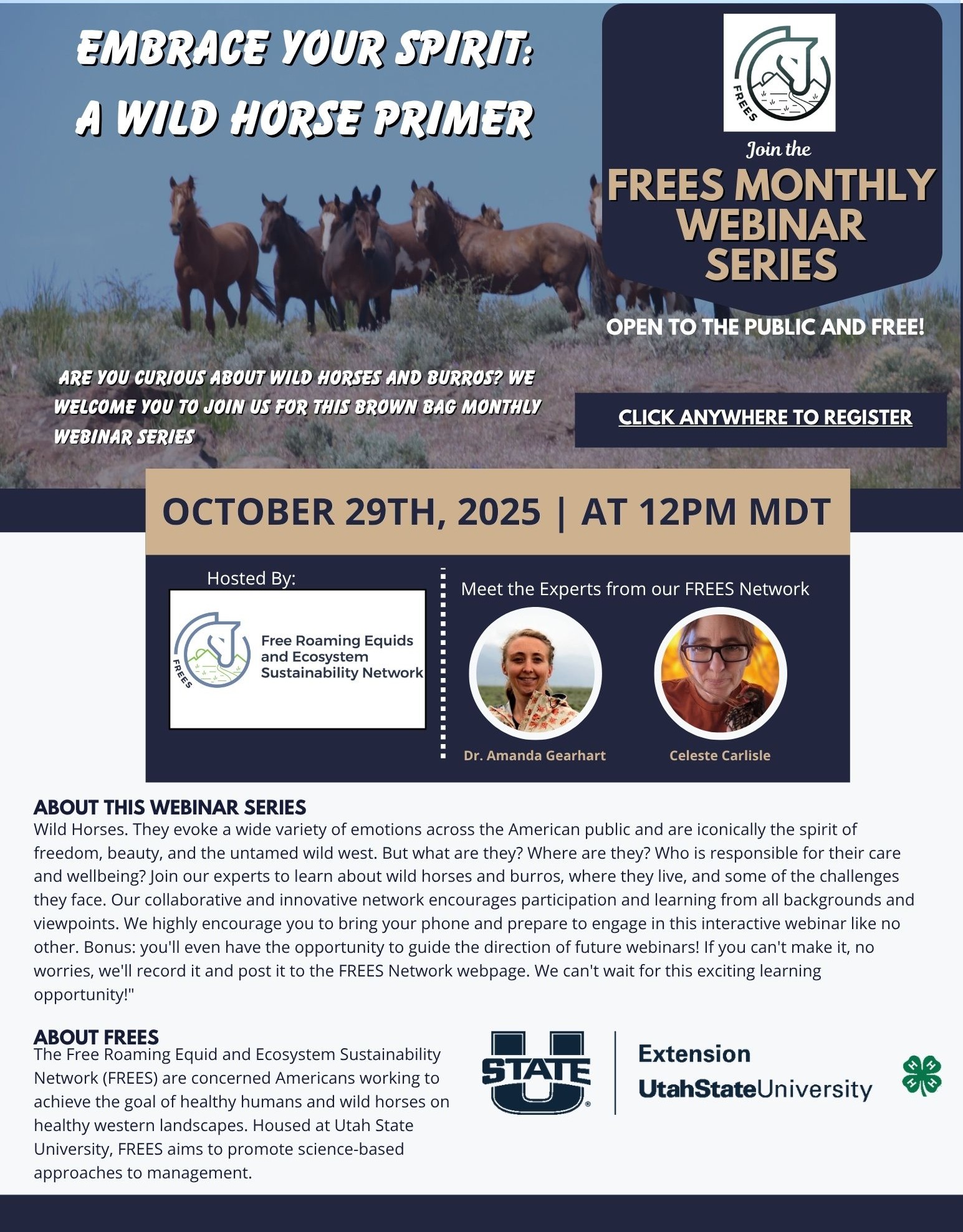
The Free Roaming Equid and Ecosystem Sustainability network will be back in the fall of 2026 to continue our webinar series. Replays of the previous webinars can be found here:
Contact
FREES Network
Utah State University
5230 Old Main Hill
Logan, UT 84322-5230
Email: FREES@usu.edu