
Starting an Equine-Assisted Services Program

Introduction
Highlights
- Equine-assisted activities and therapies can provide significant opportunities for individuals of all abilities to reach their potential.1
- Equine programming can include youth development, therapeutic services, and education and life skills.
- Equine welfare and suitability are essential for success.
- Regular veterinary, farrier, and dental care are non-negotiable.
- Not every good riding horse makes an effective EAS horse.
- Programs do not need a large or elaborate facility, but safety and accessibility are essential.
- Successful programs are built with communities, not just for them.
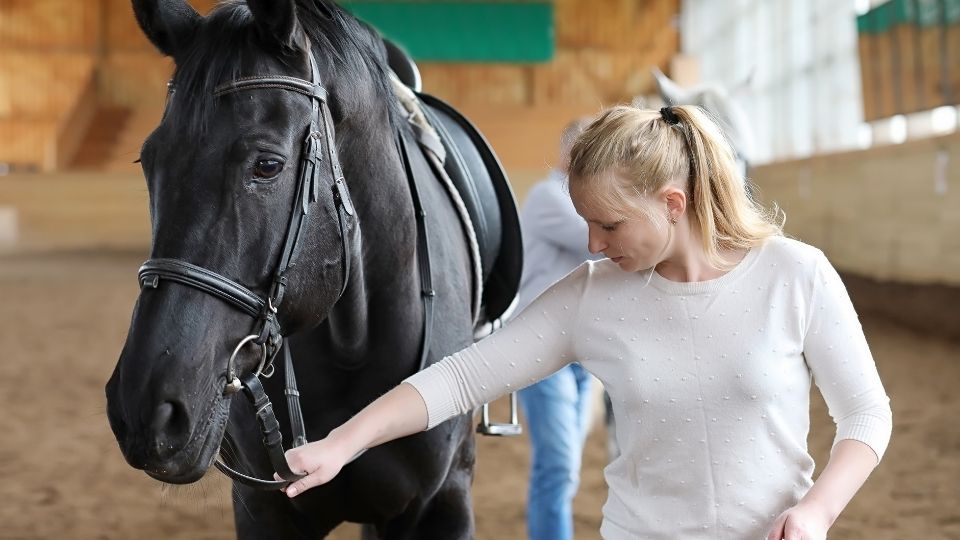
Equine-assisted services (EAS) are expanding nationwide as families, educators, and healthcare professionals recognize the unique benefits of working with horses. That impact may come in the form of greater self-confidence resulting from successfully guiding a horse through a trail pattern, or improved trunk control after 10 weeks of physical therapy incorporating the equine’s movement. Equine-assisted activities and therapies can provide significant opportunities for individuals of all abilities to reach their potential.1 Communities may be interested in starting a program to serve youth, military veterans, foster youth, senior citizens, those in hospice, individuals with disabilities, and/or those seeking personal growth.
Starting an EAS program requires more than just access to horses and passion for helping others. This fact sheet outlines the key considerations for communities and individuals interested in developing safe, sustainable, and impactful equine-assisted programs.
1. Clarify your program goals.
Before starting, ask: What community need will this program address?
Finding community stakeholders (e.g., schools, Boys and Girls Clubs, 4-H leaders, military veteran centers, senior citizen centers, etc.) and inviting them to participate in a short interview or online survey can help you better understand their interests and what your community needs.
Spend some time understanding different EAS programming models and which professionals are necessary. The Professional Association for Therapeutic Horsemanship International® is a great resource for evaluating programmatic differences.
- Youth development? Consider local 4-H groups, Future Farmers of America (FFA), Boys and Girls Clubs, foster and adopted youth centers, K–12 student government, Scouting America, and other reputable organizations as partners. •
- Therapeutic services? Consider partnering with hospitals, hospice centers, special education school groups, or mental health groups, such as local counseling offices or rehabilitation centers.
- Education and life skills? Consider K–12 school partnerships, incarcerated populations, or even corporate retreats for companies looking to elevate teamwork in their management.
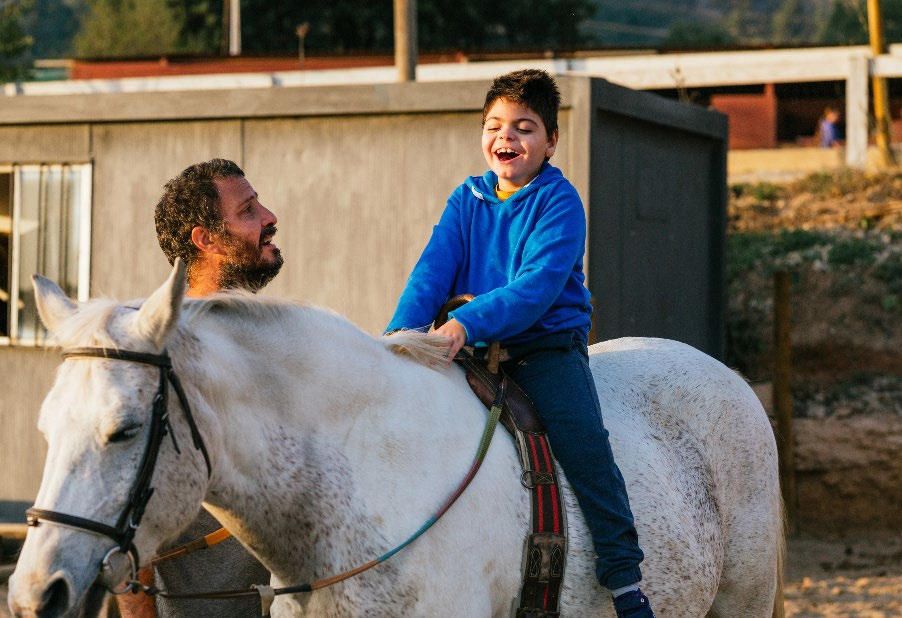
Clear goals will guide your choices in horses, facilities, staffing, and partnerships. These goals, which identify the populations you are interested in serving, will also serve as advertising opportunities to fill your sessions. Volunteers who are passionate about these populations can also be found at similar organizations. Strong partnerships expand reach and ensure sustainability. Gain community buy-in from advertising perceived benefit, community giving, and employment and educational opportunities.2 Finding a population to work with that you are passionate about or have a personal tie to will also help you find meaning in your work and assist in boosting your business model.
2. Identify your liability.
Identifying your goals will also clarify your liability. Understanding that you are working with inherently dangerous animals and potentially vulnerable populations leaves the door wide open for various liability issues to consider.
What paperwork is necessary for your staff, volunteers, and participants to protect yourself and your programming? If your program has a social media account or will use photos or videos to advertise, consider photo/media releases for all staff, volunteers, and participants. Does your program need to collect personal health information (PHI) for medical interventions? How will that be stored securely (physically, digitally, etc.)? Working with a local lawyer who is familiar with equine or livestock liability can help ensure your assets are protected.
3. Choose the right equine partners.
Equines are at the heart of every program. Their welfare and suitability are essential for success. It is not uncommon for senior horses or horses with degenerative health issues looking for a second career to be used for equine-assisted services. Work with a local veterinarian to ensure horses are cleared to work (whether mounted or unmounted) without endangering their welfare. One must be attentive to their equines’ needs and ensure that they are not being taken advantage of. The Professional Association of Therapeutic Horsemanship, International (PATH Intl.) has some great herd management resources4. Always keep your eyes open for webinars, workshops, or classes to improve your herd stewardship skills. Facebook groups related to equine-assisted services or third-party organization e-letters can help you find these resources.
Quick Tip
Not every good riding horse makes a goodEAS program horse!
Some horses appreciate having only one
rider/partner and can be too sensitive to
tolerate multiple partners or varying situations.
If possible, ask sellers if you may trial
potential EAS horses in a variety of
situations and with multiple people to ensure
that the horse will like their job.
Finding a way to assess your future and current herd needs is vital. The following are important considerations for your herd:
- Temperament: Calm, tolerant, and people-oriented horses are best.
- Training: Horses should be desensitized to unusual equipment, unbalanced riders, sudden movements, emotional handlers, mobility aids, and group activity (i.e., being groomed by multiple people at once).
- Care: Regular veterinary, farrier, and dental care are non-negotiable. Make sure you have the funding to support regular healthcare for every member of your herd.
- Workload: Safeguard your herd’s welfare by limiting session numbers and ensuring adequate rest, access to fresh water during longer sessions, and offering hay in between lessons. PATH Intl. recommends no more than 3 working hours per day to maintain optimal equine welfare.5
Utah State University’s (USU) Center for Equine-Assisted Services also offers guidance on training and conditioning for the EAS lesson horse; see Selection & Assessment of the Lesson Horse6 for more information.
4. Secure facilities and equipment.
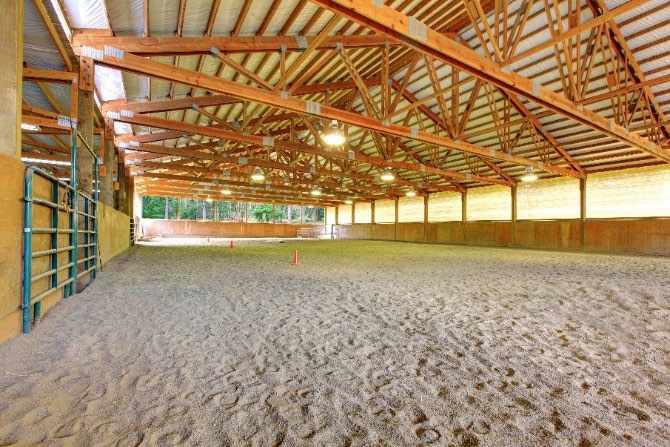
Programs do not need a large or elaborate facility, but safety and accessibility are essential.
- Arena/Space: Provide a safe, enclosed arena or paddock for mounted or unmounted activities. Livestock panels or wood fencing are often a good option to prevent participant injury. Make sure gates are easy to open and accessible throughout the facility. Covered arenas are fantastic options for year-round programs, and many private and county facilities are open to negotiation for community programming leasing. If you do not have access to an indoor arena, ensure that your facility has some type of shelter or pavilion should participants need to get out of the weather.
- Accessibility: Ramps, mounting blocks, or lifts if serving riders with physical disabilities are recommended. Make sure your horses are accustomed to mounting blocks and ramps! Consider bathroom access, parking, and doors. Can a participant with a wheelchair easily access your facility and restrooms? Or will your programming have to be limited to fully ambulatory participants because you don’t have ADA-approved doors? Consider what is possible for your facility now, in 5 years, and in 10 years, and make sure you are advertising to people who can access your programming and use your facility.
- Tack: Properly fitted tack for your equines is non-negotiable. Every horse has a different body and musculature, so work with a local saddle fitter to ensure tack isn’t harming your equines. Consider halters with buckles instead of rope halters, as it may be easier to teach a participant to safely halter with a nylon or leather buckle halter as opposed to a rope or mule tape halter. Labeling or color-coding your equipment specific to horses will also help participants work on their independence and promote equine welfare with well-fitted tack.
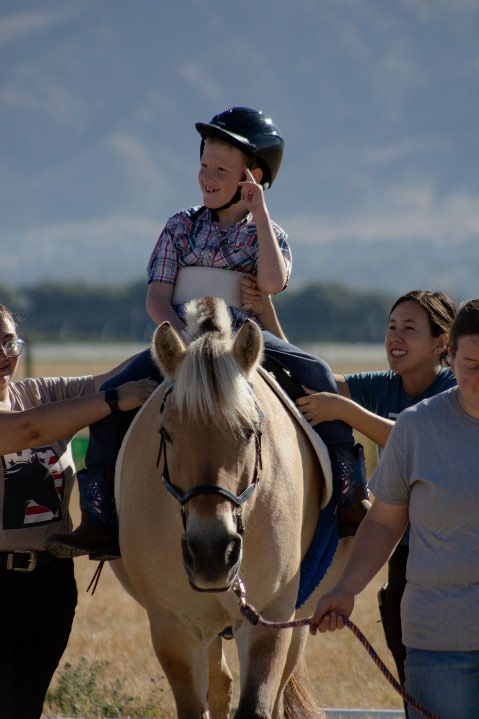
- Participant equipment: Participants should wear ASTM/SEI certified equestrian helmets. These helmets are specifically rated for falls or kicks from horses as opposed to other types of safety helmets. Mounting blocks should be on level surfaces and can be color-coded to aid in visualization for riders. Arena obstacles can be used to support participant riding skills or ground-work activities, like small plastic cones, ground poles, tarps (free of holes), etc.
- Horse comfort: Make sure your herd has access to shelter, turnout options, and have safe fencing and pens. Herd dynamics can change with introductions of new horses or living environments. Not every horse gets along with new herd members, so a few pens are ideal, and consider quarantine options for new members of your herd.
5. Provide staff and volunteers.
Qualified staff and well-trained volunteers make programs successful! While there is no official governing body in the United States for EAS credentialing, there are some organizations that provide certifications, training, and industry standard recommendations. Some of these are as follows:
Credentialed Professionals
Quick Tip
Take good care of your staff and volunteers, and they'lltake good care of you.
Volunteer recognition, like "Volunteer of the Month,'' or
other methods like hosting quarterly volunteer-only
parties, helps show your appreciation for them.
Encourage your staff always to communicate their
needs clearly and support their professional
development.
- Equine-assisted psychotherapy requires licensed mental health professionals partnering with an equine specialist.
- Hippotherapy must be provided by licensed physical, occupational, or speech therapists.
- Adaptive riding is typically taught by PATH Intl. or equivalently certified instructors.
- Equine-assisted learning is typically offered by an educational professional (life skills coach, educator, etc.) in conjunction with a qualified equine specialist.
Support Roles
- Side-walkers, horse leaders, and barn managers ensure safety and consistency. Have written role statements for all of your volunteers and support roles to assist in clarifying responsibilities.
Volunteer Development
- Training and mentorship for volunteers builds sustainability and community buy-in. How often will you host volunteer training? What content will you cover in volunteer training? Baseline recommendations include a facility tour, overview of programming, volunteer responsibilities, herd management, emergency protocols, and liability/confidentiality overviews.
6. Secure funding and cultivate sustainability.
Quick Tip
Utilize a grant-seeking platform likeGrantForward, grants.gov, or
GrantWatch to keep an eye out for
funding that is related to your
population, service goals, or
programming.
EAS programs often combine fee-for-service models with fundraising and grants. Most programs start up by blending participant fees with community sponsorships and donations. Don’t be afraid to start small and expand as resources and capacity allow!
Tracking your program outcomes (e.g., participant numbers, pre- and post-surveys of skills learned, photos and quotes from participants) will help you build credibility with funders and develop grant applications. Consider taking a grant writing course from your local university or working with another nonprofit to get mentorship in grant writing. Plan programming around what funding can support and always ensure your funding is supporting your horses.
7. Engage your community.
Successful programs are built with communities, not just for them. Host open houses, farm tours, or demonstrations to build awareness. Invite community members or local groups to help with horses, events, and facility projects. Highlight participant successes (with permission) to build community pride.
Conclusion
EAS can bring unique and powerful opportunities for growth, healing, and connection in communities. By carefully considering horses, facilities, staffing, partnerships, and sustainability, communities can build programs that are safe, ethical, and impactful.
Getting started is a journey; begin with setting clear goals, gathering the right partners, and growing steadily. With horses as partners, communities can create lasting positive change. The USU Center for Equine-Assisted Services is prepared to help you with creating sustainable and impactful programming that will influence your community for years to come.
References
1 Professional Association for Therapeutic Horsemanship, International (PATH, Intl.). (2021). Definitions guide for EAS practitioners.
2 Berg, E. L., & Causey, A. (2014). The life-changing power of the horse: Equine-assisted activities and therapies in the U.S. Animal Frontiers, 4(3), 72–75. https://doi.org/10.2527/af.2014-0025
3 Poulsen, M., Spiker, M., & Winch, P. (2014). Conceptualizing community buy-in and its application to urban farming. Journal of Agriculture Food Systems and Community Development, 161–178. https://doi.org/10.5304/jafscd.2014.051.014
4 Professional Association for Therapeutic Horsemanship, International (PATH, Intl.). (2020). Equine welfare committee tips. Retrieved September 9, 2025, from https://pathintl.org/topics/equine-welfare-committee-tips/
5 Professional Association of Therapeutic Horsemanship International Standards for Certification & Accreditation (4th ed.). (2021). PATH Intl.
6 Andersen, S. (n.d.). Selection & assessment of the lesson horse: A guide for traditional horsemanship & Equine-Assisted services programs (1st ed., Vol. 1). Open Educational Resources for Utah. https://uen.pressbooks.pub/lessonhorse/

November 2025
Utah State University Extension
Peer-reviewed fact sheet
Authors
Makenna Pahlke, USU Extension Equine-Assisted Services

Makenna Pahlke
Equine-Assisted Services Extension Assistant Professor | Cache County
Agriculture and Natural Resources Department