
What’s the Difference Between Water-Bath and Pressure Canning?
Quick Answer
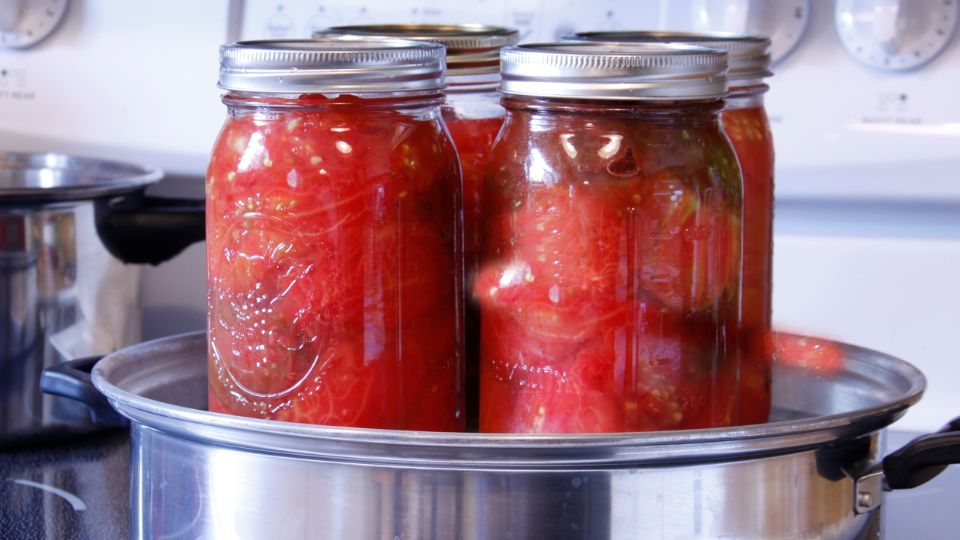
Water-bath canning uses boiling water (212°F at sea level) to can high-acid foods, such as fruit, jam, pickled products, salsas, and some tomato products, made with tested recipes. Pressure canning uses pressurized steam to reach higher temperatures (240-250°F) for canning low-acid foods, such as meat and most vegetables. Use the method in your tested recipe and follow its directions for preparing the food to be canned and for processing the jarred food at your elevation.
Why Can Some Foods Be Canned in Boiling Water While Others Need a Pressure Canner?
Acidity helps prevent the spores of the bacteria that cause botulism from germinating after processing. The pH scale measures how acidic a food is. The scale ranges from 0 to 14, and most foods fall between about 2 and 7.
High-acid foods have a pH of 4.6 or lower. Because these foods are more acidic, you can use the boiling-water canning method when following a tested recipe. Low-acid foods have a pH above 4.6. Because these foods are less acidic, you must pressure-can them. A pressure canner reaches about 240-250°F, which destroys the botulism spores. However, acidity is not the only factor a validated recipe considers. Simply adding acid to an untested recipe does not guarantee it is safe for boiling-water canning.
Can I Use a Pressure Cooker Instead of a Pressure Canner?
No. Do not use a pressure cooker or electric pressure cooker to pressure-can low-acid food. Pressure cookers are designed for cooking food faster. They heat up and cool down too quickly, which matters when canning food safely. Use a stovetop pressure canner.
Can I Use a Normal Pot for Boiling-Water Canning?
Yes. You can use a normal pot for boiling-water canning if it meets the canner requirements. It needs a rack at the bottom to keep the jars off the bottom. The pot also needs a lid. It must hold enough water to cover the jar tops by at least one-two inches throughout the entire boiling-water processing time, plus extra room above the water so it can boil without spilling. For processing times over 30 minutes, use 2 inches of water above the jars. Check that your stove can safely support the pot's size and weight.
Can I Use a Normal Pot for Pressure Canning?
No. It is not safe to use a normal pot for canning recipes that require a pressure canner. Regular pots cannot reach the higher temperatures needed to safely pressure-can food.
For Boiling-Water Canning, Does the Water Need to be Boiling before I Put My Canning Jars in the Canner?
No, you do not need the water in the canner to be boiling before you put your canning jars in. Preheat the canner water to about 140°F for raw-packed food or 180°F for hot-packed food before loading jars. Raw pack means the food is not cooked before being filled into jars. Hot pack means the food is heated before filling it into jars. A tested canning recipe will provide instructions for preparing the food. Some foods can be prepared using either the hot pack or raw pack method, while others can be prepared using only one method.
After loading the canning jars into the canner, cover the canner and bring the water to a full boil. Once the water is boiling, start the processing timer. Keep the water boiling for the full time. If the water in the canner stops boiling at any time, bring it back to a boil and restart the processing timer from the beginning.
Can I Water-Bath Broth?
No. Do not process broth made from meat or other low-acid ingredients in a boiling-water bath. Low-acid foods need pressure canning to reach the higher temperatures needed for safe processing.
If you are unsure which method to use, do not guess. Find a current, research-tested USU Extension recipe for the specific food and follow its processing method and time. These canning resources provide research-based information for both boiling-water and pressure canning.
References
- USU Extension — Ask an Expert: Canning Query: Pressure Canner or Water Bath Canner?
- USU Extension — Why Electric Pressure Cookers Are Not Pressure Canners
- USU Extension — Avoiding Common Canning Mistakes
- USU Extension — Utah Altitude Adjustments for Home Canning
- USU Extension — Extension Canning Resources
- OSU Extension — Safely Canning Foods: Pressure Canners, Pressure Cookers and Electric Pressure Cookers
- NCHFP — Using Boiling Water Canners
- K-State Extension — pH Values of Common Foods and Ingredients
Adapted from USU Extension food preservation resources.
Contact
Jenna Dyckman, USU Extension Associate Professor
Jenna Dyckman
Extension Associate Professor | Cache County Director
Home and Community Department