
How do I take care of my lawn in Utah in the fall?
Quick Answer
To take care of your lawn in Utah in the fall, reduce watering as temperatures cool, keep mowing while the grass is still growing, and fertilize, aerate, or overseed (if needed) at the right time. Fall is one of the best times to strengthen cool-season grasses, as they grow well in cooler weather. Before winter, give the lawn a final shorter mowing, remove the clippings, and adjust or shut down irrigation as the weather changes.
When should I overseed and fertilize my lawn?
Fall is one of the best times to overseed cool-season lawns in Utah. Overseeding means adding grass seed to an existing lawn to fill in thin or bare areas. September and October are generally good months for overseeding, but timing varies by region. Overseeding can also be done after aerating the lawn to improve seed-soil contact.
Fall is also an important time to fertilize cool-season lawns. General Utah turfgrass guidance includes a fall fertilizer application. Lawn roots absorb nutrients well when fertilizer is applied in late October or early November. The exact timing will change based on your location, grass species, and weather.
What fertilizer should I use on my lawn in the fall?
Utah lawns most often need nitrogen. Do not assume your lawn needs phosphorus or potassium, as these nutrients are needed less often and may already be sufficient. To be sure, test the soil before adding nutrients. Soil testing is available through the Utah State University Analytical Laboratory.
The three numbers on a fertilizer bag show the percentages of nitrogen, phosphorus, and potassium it contains. For example, a fertilizer labeled 20-0-0 contains 20% nitrogen but no phosphorus or potassium. For a late-fall application, a quick-release nitrogen fertilizer should be applied after the last mowing. This helps the lawn green up earlier the next spring and actually gives it more drought tolerance the following summer. Apply 1 pound of nitrogen per 1,000 square feet of lawn area.
When should I aerate my lawn in Utah?
For cool-season lawns in Utah, spring and summer are good times to aerate—when it’s needed. April/May and September/October are common aeration months because cool-season grasses actively grow during cooler weather.
Core aeration removes small plugs of soil and grass from the lawn. This helps air, water, and nutrients move into the soil and stimulates microbial activity, which contributes to nutrient cycling. Aeration can also reduce soil compaction and help reduce thatch, a layer of organic material near the soil surface that can sometimes build up excessively. Core aeration is especially useful for lawns with compacted soil or heavy foot traffic.
Most home lawns do not need aeration more than once per year, if at all, but heavily used lawns may need it more often. Especially if they are growing on fine-textured, clayey soils.
How often should I water my lawn in the fall?
You should water less often as temperatures cool. Your lawn needs less water in the fall than in summer. Precipitation, temperatures, soil texture, and grass species affect how often your lawn needs water.
When you do irrigate, water less frequently and deeply. Also, avoid periods of high wind when irrigation water can drift onto streets, sidewalks, and driveways.
When should I stop watering my lawn in Utah?
There is not one shutdown date for every Utah lawn. Water needs depend on your location and the weather. The normal lawn irrigation season is generally April through October in Northern Utah and March through November in southern Utah. Do not keep watering on a summer schedule as the weather cools, and adjust your irrigation controller as the seasons change.
How short should I mow my lawn before winter?
First, keep mowing until the grass stops growing in the fall. For the final mowing of the year, cut the grass to about 1½ to 2 inches tall and remove the grass clippings. During the regular growing season, keep cool-season lawns at least 2½ to 3 inches tall, or higher if your mower allows. When mowing, avoid cutting more than one-third of the grass blade at one time. For example, if the grass is 4 inches tall, do not mow it shorter than 3 inches during a normal mowing.
A shorter final mowing can help reduce disease problems during winter and early spring. It can also keep long grass from falling over under snow, which can make the lawn more likely to develop snow mold.
Why does my lawn have brown spots in the fall?
Brown spots in the lawn may be caused by several different issues. Do not assume that every brown patch means the grass is dead.
Insects or disease can cause brown spots. In northern Utah, sod webworms, billbugs, and white grubs can cause thinning and brown areas. Necrotic ring spot and other turfgrass diseases may also be active. In both cases, the damage may become most noticeable in late summer or early fall.
If you see brown spots in your lawn:
- Check whether the soil is dry.
- Look for signs of insects or disease.
- Watch whether the brown area is getting larger.
- Avoid adding extra fertilizer or water until you positively identify the cause (your local USU county Extension office can help).
Should I rake my leaves or mulch them?
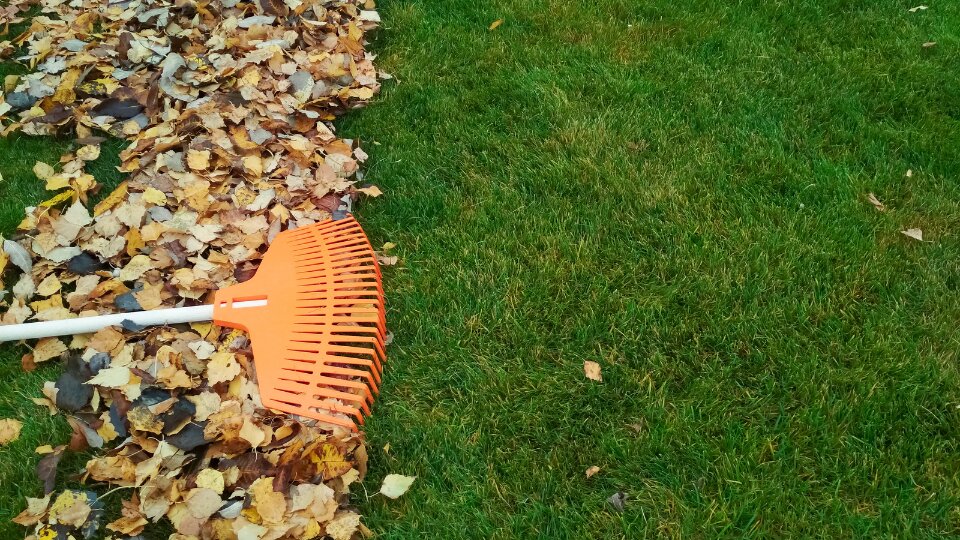
Mulch fallen leaves into the lawn when leaf accumulation is approximately 1 to 2 inches deep or less. Make multiple mower passes as needed so finely shredded leaf material filters down into the turf canopy rather than remaining as a thick layer on the grass.
Repeat throughout the fall rather than allowing a heavy layer of leaves to accumulate. If shredded leaves begin to cover or shade the turf canopy, remove them and redistribute them to other areas of the landscape where leaf mulch can be beneficial.
References
- USU Extension — Basic Turfgrass Care
- USU Extension — Northern Utah Turfgrass Management Calendar
- USU Extension — Turfgrass Cultivation (Aerification)
- USU Extension — Lawn Fertilizers for Cool Season Turf
- USU Extension — Renovate your Lawn After a Long, Hot Summer
- USU Extension — Fall Yard Projects and Pruning Pointers
- USU Extension — Weed Control Options for Residential Lawns in Utah
- USU Extension — St. George, Utah Turfgrass Management Calendar
- USU Extension — Southwest Utah Turfgrass Management Calendar
- USU Extension — Is Your Lawn Dead or Dormant?
- USU Extension — Turfgrass Cultural Practices and Insect Pest Management
Adapted from USU Extension yard and garden resources.
Contact
Kelly Kopp, USU Professor, Plants, Soils & Climate Extension Specialist

Kelly Kopp
Professor | Water Conservation and Turfgrass Specialist | CWEL Director
Plants, Soils and Climate