
How Do I Prune a Peach Tree?
Quick Answer
Prune peach trees each year to maintain healthy fruiting wood, control crop load, and keep the tree’s center open. Prune during the dormant season, usually in February or March, after the risk of severe cold has passed. Most peach trees are pruned into an open-center or vase shape with 4 to 5 main scaffold branches.
When Should I Prune a Peach Tree?
Prune peach trees during the dormant season, usually in February or March. In some of Utah's warmer regions, like Saint George, January can also be a good time to prune. Pruning should generally wait until the risk of severe cold has passed, as it can reduce the cold hardiness of the remaining branches. If very cold temperatures are forecast, delay pruning until the cold weather has passed.
Avoid fall pruning of fruit trees. Fall pruning can encourage new growth that may not harden properly before winter. Also, avoid pruning during or right after a rain or snow event to reduce the spread of fungal pathogens and bacterial diseases such as Coryneum blight.
How Much Should I Prune My Peach Tree?
Plan to remove 30 to 40% of a mature peach tree’s new growth each year. Peach trees need regular annual pruning because they only produce fruit on wood that grew the previous year. Pruning helps maintain new fruiting wood and prevents the tree from becoming too crowded.
Start by removing dead, diseased, damaged, crossing, or inward-growing branches. Then remove branches that don't fit the desired tree shape or create excessive crowding. The goal is to maintain an open canopy with enough new fruiting wood for the following year's crop.
During pruning, select moderately vigorous one-year-old shoots for fruit production. A useful guideline is to leave about 20 to 25 fruiting laterals per scaffold branch, depending on the cultivar and tree health. These shoots are generally about the diameter of a pencil and 12 to 24 inches long.
How Should I Prune a Young Peach Tree?
Young peach trees are trained differently than mature bearing trees. The goal is to establish a strong framework of main scaffold branches early in the tree's life.
When planting a one-year-old tree in early spring, head the tree back to 28 to 30 inches tall. If suitable branches are already present, shorten them to leave two or three buds. If there are no suitable branches for the main scaffolds, the branches can be cut back to stubs.
During the first growing season, select the primary scaffold branches. Remove or shorten competing shoots above and below the selected scaffolds. During later dormant pruning, remove growth that interferes with the established framework.
The main scaffold branches should be spaced around the trunk rather than growing from the same point. Wide branch angles provide stronger attachments and are less likely to split under the weight of fruit.
What Shape Should a Peach Tree Be Pruned Into?
Peach trees should be pruned into an open-center, or vase, shape. This means removing the main upright stem and keeping the tree's center open. The goal is to have three or four strong main branches that spread outward from the trunk, allowing sunlight and air to reach the tree's interior.
Follow these steps to establish and maintain this shape:
- Prune before spring growth begins. Prune while the tree is dormant, after the risk of severe winter freeze has passed.
- Shape the tree when planting. During the first year, cut the main trunk to 12-20 inches above the ground. Make sure buds or existing branches below the cut can grow into the tree's main branches.
- Choose the main branches. Select three or four strong branches that grow outward in different directions. Choose branches that attach to the trunk at wide angles and are spaced at different heights. Remove branches that compete with them.
- Develop the tree's shape during the first two years. During the first and second dormant seasons, shorten the selected main branches to encourage smaller branches to grow from them. Remove branches that grow toward the center or interfere with the tree's shape.
- Thin fruiting branches each year. Peaches grow on branches that developed the previous summer. Keep healthy, moderately vigorous shoots and remove weak or excessively vigorous ones. Leave enough one-year-old growth to produce fruit while making room for new growth for the following year.
- Control the tree's height and remove crowded growth. Focus pruning near the top and outer ends of the branches. Cut tall branches back to smaller side branches to keep the tree manageable and its center open. It is common to remove up to 50% of the previous season's growth each year.
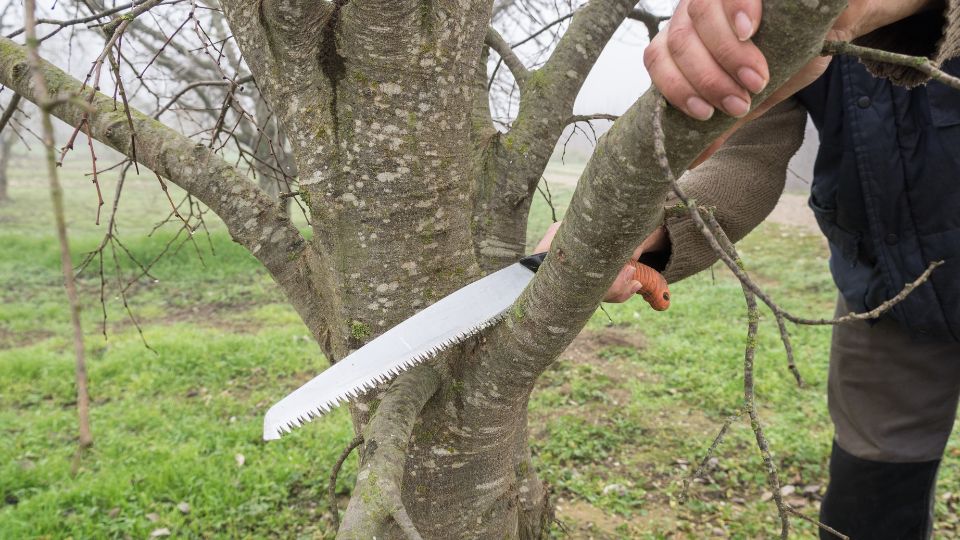
- Make clean pruning cuts. Cut just outside the branch collar, the slightly swollen area where a branch connects to the trunk or another branch. Avoid leaving short stubs or cutting flush against the trunk. Do not apply wound dressings.
Continue pruning every year to maintain the open-center shape and encourage new fruiting branches. Without regular pruning, older wood can replace productive one-year-old growth, reducing fruit production over time.
References
- USU Extension — How to Grow Peaches in Your Garden
- USU Extension — Pruning the Orchard
- USU Extension — FAQs | Fruit | Small Acreage | Production Horticulture
- USU Extension — When to Prune Fruit Trees
- OSU Extension — Training and pruning your home orchard
Adapted from USU Extension yard and garden resources.
Contact
Benjamin Scow, USU Extension Associate Professor of Horticulture, Agriculture, and Natural Resources

Benjamin Scow
Extension Associate Professor of Horticulture, Agriculture, and Natural Resources | Washington County
Horticulture, Agriculture, and Natural Resources