
How Do I Protect My Peach Tree From Pests and Diseases?
Quick Answer
Protecting a peach tree from pests and diseases starts with keeping the tree healthy, monitoring it regularly, and using treatments at the correct time. Common Utah problems include peach tree borers, peach leaf curl, gummosis, powdery mildew, and shot hole disease. If you notice unusual sap, damaged leaves, holes, or dying branches, identify the cause before treating the tree.
Why Is My Peach Tree Leaking Sap?
Sap leaking from a peach tree is called gummosis. It is a symptom, not a specific disease, and can result from insect damage, disease, physical injury, or stressful growing conditions.
Clear sap is more likely to result from nonliving factors, such as injury or environmental stress. Milky or dark-colored sap can indicate an insect or disease problem. Sap mixed with sawdust-like frass near the base of the trunk can signal a larger peachtree borer problem.
Inspect the area around the sap for holes, frass, cracks, or damaged bark. Also, check whether irrigation water regularly hits the trunk and whether the tree is stressed by poor drainage or inadequate watering. If the cause is unclear, a local Extension office or plant diagnostic laboratory can help identify the problem.
How Do I Prevent Peach Leaf Curl?
Peach leaf curl is a fungal disease that is uncommon in Utah because it requires a long, wet spring. It causes puckered red areas on new leaves, followed by discoloration, distortion, and leaf drop. New growth later in the season is usually healthy.
Once symptoms are visible, it is too late to control that year's infection with fungicides. Preventative treatments are applied in the fall, after leaf drop. Apply copper or lime-sulfur treatments at that time according to the product label. Avoid wetting the foliage with irrigation water because wet leaves can encourage foliar diseases.
If peach leaf curl occurs, maintain the tree's health through appropriate watering and fruit thinning. This helps the tree produce healthy new growth after the affected leaves drop.
How Do I Get Rid of Peach Tree Borers?
Two important borer pests of peach trees are the greater peachtree borer and peach twig borer. They damage different parts of the tree. Greater peachtree borer larvae tunnel into the trunk, usually near the soil line, while peach twig borer larvae tunnel into young shoots and later enter fruit.
Greater peachtree borers can be identified by round holes near the base of the trunk and gummy sap mixed with sawdust-like frass. Keeping the tree healthy and avoiding trunk injuries can reduce the risk of infestation. Keep the area around the base of the tree free of vegetation, and protect the trunk from winter injury.
If larvae are already inside the trunk, you can sometimes kill them by inserting a wire into their entry holes. In Utah, preventive trunk treatments may also be used when adult borers are active. Always check the current pesticide label for the crop, application instructions, and harvest restrictions before using a pesticide.
Peach twig borer management depends on monitoring and proper timing of treatment. The pest can damage new shoots in spring and fruit later in the season. Pest activity varies with seasonal temperatures, so treatment timing should be based on current local pest information rather than a fixed calendar date.
How Do I Get Rid of Peach Powdery Mildew?
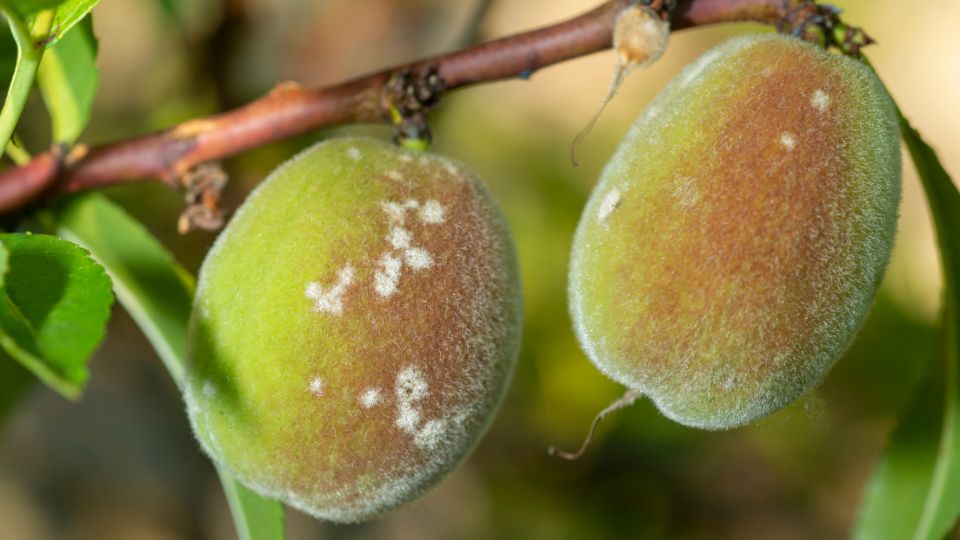
Powdery mildew is a fungal disease that can affect peach leaves and fruit. It can cause fuzzy spots, reduced yield, stunted growth, and distorted plant tissue.
The most effective approach is prevention. Rake leaves and remove other infected plant debris in the fall. Good tree care also helps maintain plant vigor. Fungicides can prevent new powdery mildew infections, but they will not cure tissue that is already infected. Lime-sulfur, myclobutanil, and propiconazole are common fungicide options for peach powdery mildew. Use a pesticide only if the product is labeled for peaches, and follow all label directions.
How Do I Get Rid of Shot Hole Disease?
Shot hole, also called Coryneum blight, is a fungal disease that can affect peach leaves, buds, fruit, and twigs. Small spots develop on young leaves and eventually fall out, leaving holes that give the disease its name. Fruit may develop reddish spots that become rough or corky, while infected buds can die and produce gum.
Remove heavily infected shoots and twigs through pruning. Clean up fallen leaves and other plant debris in the fall, and avoid using irrigation methods that wet the tree's leaves. Fungicide timing is important for managing shot hole disease. Apply fungicide sprays just after petal fall in spring, and apply a copper spray or another fungicide labeled for Coryneum blight when trees are at 50% leaf drop in the fall. Treatment may be particularly important when conditions favor disease development. Follow the current product label for application timing and safety requirements.
References
- USU Extension — How to Grow Peaches in Your Garden
- USU Extension — Greater Peachtree Borer
- USU Extension — Peach Leaf Curl
- USU Extension — Gummosis (Cytospora/Perennial Canker)
- USU Extension — The Backyard Orchardist Fruit Pests: Peach & Nectarine
- USU Extension — Utah Home Orchard Pest Management Guide
- USU Extension — Coryneum Blight
Adapted from USU Extension yard and garden resources.
Contact
Benjamin Scow, USU Extension Associate Professor of Horticulture, Agriculture, and Natural Resources

Benjamin Scow
Extension Associate Professor of Horticulture, Agriculture, and Natural Resources | Washington County
Horticulture, Agriculture, and Natural Resources