
Tips for Growing Garden Vegetables in Utah: Soil Preparation
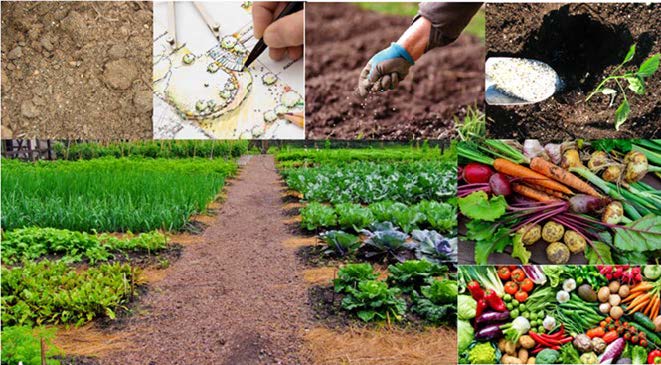
What Is the Best Way to Prepare Garden Soil in Utah for Vegetable Production?
Highlights
- The most demanding task in vegetable gardening is properly preparing the soil for planting.
- Garden sites need adequate sunlight, water availability, wind protection, and site access.
- Incorporate organic matter in the fall to promote decomposition and improve nutrient availability during the growing season.
- Utah soils are predominantly alkaline, which can lead to nutrient deficiencies in vegetable crops.
- Adding organic matter improves soil structure, water retention, nutrient availability and helps reduce soil pH.
Growing your own vegetables is a fulfilling experience, giving you access to fresh, wholesome produce directly from your garden. However, to achieve a successful vegetable harvest, it is important to master the basics of cultivation, particularly proper soil preparation prior to planting. The most suitable soils for vegetable production are fertile, well-drained, and rich in organic matter—conditions that are not always characteristic of Utah soils. Across much of Utah, soils are naturally alkaline due to the state’s arid climate and carbonate-rich parent materials. In addition to high pH, the soil is often heavy in clay and low in organic matter.
To help Utah gardeners maintain healthy soils and enhance early vegetable production, this fact sheet provides practical guidance and tips on soil preparation for vegetable gardening.
Site Selection
High-quality vegetable production begins with selecting an appropriate location.
- Sites should be located in an open area with at least 6–8 hours of light.
- In windy areas, fences, trees, shrubs, or other barriers can be used to protect plants.
- Access to water is a key consideration for successful vegetable production. The water source should be located close to the garden for easy, reliable access. Factors such as water availability, quality, quantity, and cost should be carefully evaluated before planting. Proper drainage is also essential. Slopes greater than 1.5% should be avoided to reduce soil erosion and runoff, and adequate drainage must be provided. Also avoid low areas where water stands after rainfall. If the only available site has poor drainage, consider using raised beds.
- Carefully plan site access to allow the movement of carts, vehicles, and other equipment. Avoid planting across common pathways in the yard, such as those leading to the garage or play areas.
- Avoid areas shaded by trees and where tree roots compete with vegetables for resources.
- Avoid sites adjacent to heavily traveled roads because exhaust emissions and runoff containing oil and other pollutants can contaminate crops (Figure 1).

Source: Adapted from Nick, J. M. A. et al., 1994
Fall Soil Preparation
The most demanding task in vegetable gardening is preparing the soil for planting. For larger gardens, using mechanical equipment such as rototillers or tractor-drawn plows is often necessary, and in many cases, it is more practical to rent the equipment or hire someone to do the task. In smaller gardens, and especially in raised beds, soil preparation can be done using a spade, spading fork, or shovel.
Fall is the best time to prepare the soil. Incorporating organic matter in the fall promotes decomposition and improves nutrient availability during the growing season. Residues from previous crops, weeds, and organic matter (compost and animal manures) should be thoroughly incorporated into the soil before establishing the new crop. Fresh manures, such as from cows or poultry, often contain high salt levels and should be applied at recommended rates to reduce plant injury and reduced growth.
One method to till soil and incorporate organic matter is “double digging.” To do this, lift an 8- to 12-inch layer of topsoil, loosen and turn the 8- to 12-inch layer beneath it, and then return the topsoil to create a deeper root zone. Woody plant materials, including roots, sticks, and dry stalks, should be removed from the garden rather than incorporated into the soil. Remove perennial grass and persistent weed pests whenever possible to prevent recurring problems.
After turning the soil, break up soil clods and level it with a rake or harrow. For small-seeded crops like carrots, a finely broken and smooth soil surface promotes easier planting, improved germination, and a more uniform stand. A plank drag can be used to prepare soil in larger gardens, while a hand rake can serve the same purpose in smaller plots (Figure 2). For more information see “Raised Bed Gardening,” and “How to Grow Carrots in Your Garden” on the Utah State University (USU) Extension Yard and Garden website.


Dealing With High pH Soils
Most vegetable crops thrive in soils with a pH between 6 and 8 (see Table 1; Cox & Koenig, 2010). In Utah, soils are predominantly alkaline, with an average pH of 8.0. A major limitation of alkaline soils is reduced nutrient availability, particularly of micronutrients such as iron, zinc, and manganese. The most common symptoms associated with deficiencies of these micronutrients are leaf chlorosis and interveinal chlorosis. To minimize micronutrient deficiencies in alkaline soils, first confirm the deficiency through a soil test or plant tissue analysis. The Utah State University Analytical Laboratories provide soil and plant tissue testing services. Once the deficiency has been identified, the following strategies can help manage the challenges associated with high-pH soils and improve nutrient availability.
Strategies
- Select tolerant crops or rootstocks (grafted plants). Grafted Solanaceae crops (e.g., tomatoes and peppers) and Cucurbitaceae crops (e.g., melons and watermelons) are generally more vigorous and resilient than standard (non-grafted) plants (Hu & Beartrack, 2022). Grafting can improve nutrient and water uptake, enhance tolerance to abiotic and soil-related stresses, increase plant performance and yield, and improve adaptation to Utah’s high-pH soil conditions.
- Apply elemental sulfur. The most effective solution to lower pH is applying elemental sulfur every year. Sulfur-oxidizing microorganisms, such as Thiobacillus spp., convert elemental sulfur into plant-available sulfate in the soil. This process requires adequate oxygen and moisture. Apply elemental sulfur annually at 6–10 pounds per 1,000 square feet. As sulfur oxidizes in the soil, it forms sulfuric acid, which gradually lowers soil pH.
- Add organic matter. Utah soils are naturally low in organic matter due to the arid climate, which limits plant growth. Adding organic matter improves soil structure, water retention, and nutrient availability while helping reduce soil pH. Highly acidic amendments such as peat or sphagnum peat moss lower soil pH more effectively than other organic materials.
- Use acidifying fertilizers. Repeated application of acidifying fertilizers (e.g., ammonium sulfate, 21-0-0 or urea, 46-0-0, which is less acidifying but still helpful) and other products with label designations indicating an acidic soil reaction, reduces soil pH (Heaton & Koenig, 2010).
Utah soil generally contains adequate calcium content. However, crops such as tomatoes, peppers, eggplant, and cucurbits remain susceptible to blossom end rot (BER). BER is a physiological disorder characterized by a dark, leathery, sunken patch on the bottom of the fruit. Despite the high calcium content of many Utah soils, BER is caused by a failure to transport calcium to the fruit, primarily due to inconsistent irrigation (water stress). Maintaining consistent soil moisture and proper irrigation practices are the most effective strategies for reducing blossom end rot. Calcium-containing soil or foliar products such as biostimulants may provide supplemental calcium when deficiencies are confirmed by soil testing. In addition, calcium-based soil amendments are generally recommended only when soil tests indicate sodic (high sodium levels) conditions, in which case gypsum is typically applied (Utah State University Extension, n.d.).
Table 1. Optimal pH Ranges for Common Garden Plants
| Neutral-alkaline (pH 7.0 to 8.0) | Near neutral (pH 6.5 to 7.5) | Neutral-acidic (pH 6.0 to 7.0) | ||||||||||||||||||||||||||||||||
|---|---|---|---|---|---|---|---|---|---|---|---|---|---|---|---|---|---|---|---|---|---|---|---|---|---|---|---|---|---|---|---|---|---|---|
|
|
|
Source: Cox and Koenig, 2010
Raised Beds

Raised beds can be used when native soils have poor drainage, are compacted, or are otherwise difficult to manage. Raised bed soil mixes have greater water movement, enhanced soil physical properties, and make managing soils easier. They are particularly beneficial for cultivating root crops such as carrots and potatoes. Beds range from 1–3 feet in height, with taller beds recommended in areas prone to flooding or when easier access without bending over is desired. Beds should be no more than 4 feet wide to allow gardeners to reach the center for weeding and harvesting without walking on the bed and compacting the soil. While bed length may vary, pathways of at least 2 feet between beds are recommended. Raised beds can be managed without tillage if foot traffic is avoided on the bed surface, helping to preserve soil structure and minimize compaction.
Raised beds provide multiple benefits. Soil in raised beds warms earlier in the spring, which can promote faster seed germination and earlier crop establishment. Beds drain faster than native soils, effectively suppress weeds, and can be covered with black plastic mulch to promote higher temperatures and early season growth in the spring. When constructing raised beds, it is recommended to use materials that resist decay, such as redwood, cedar, brick, vinyl, or comparable products (Figure 3).
Raised beds may be filled with different soil blends. An affordable and effective option is a 30:50 mixture of topsoil and compost that is thoroughly mixed before use. Adding moisture to raised bed mixes prior to application can help reduce settling in the bed during the season. To control perennial weeds such as bindweed, place cardboard at the bottom of the bed. For more information see USU Extension’s “Raised Bed Gardening” and “Vegetables, Fruits & Herbs Book.”
References
Cox, L., & Koenig, R. (2010). Solutions to soil problems II: High pH [Fact sheet]. Utah State University Extension. https://extension.usu.edu/yardandgarden/research/solutions-to-soil-problems-ii-high-ph
Drost, D. (2020). How to grow carrots in your garden [Fact sheet]. Utah State University Extension. https://extension.usu.edu/yardandgarden/research/carrots-in-the-garden
Hagevik, R., & Cabe Trundle, K. (2024). Creating sustainable school and home gardens: Raised bed gardening [Fact sheet]. Utah State University Extension. https://extension.usu.edu/utah4h/research/creating-sustainable-school-and-home-gardens-raised-bed-gardening
Heaton, K., & Koenig, R. (2010). Solutions to soil problems V: Low organic matter [Fact sheet]. Utah State University Extension. https://extension.usu.edu/yardandgarden/research/solutions-to-soil-problems-v-low-organic-matter
Heflebower, R., Wagner, K., Gunnell, J., & Condrat, J. (2012). Raised bed gardening [Fact sheet]. Utah State University Extension. https://extension.usu.edu/yardandgarden/research/raised-bed-gardening
Hu, B., & Beartrack, M. (2022). Introduction to vegetable grafting [Fact sheet HLA-6039]. Oklahoma State University Extension. https://extension.okstate.edu/fact-sheets/introduction-to-vegetable-grafting
Nick, J. M. A., Marshall Bradley, F., & Atthowe, H. (1994). Growing fruits & vegetables organically: The complete guide to a great-tasting, more bountiful, problem-free harvest. Rodale.
Pandley, S. (2024). Soil acidity and liming. In Soil Science and Plant Nutrition (pp. 290–304). DvS Scientific. https://doi.org/10.5281/zenodo.14493851
Utah State University Extension. (n.d.). Blossom end rot. In Utah Vegetable Production Guide. https://extension.usu.edu/vegetableguide/tomato-pepper-eggplant/blossom-end-rot
Utah State University Extension. (2016). Vegetables, fruits & herbs book. https://digitalcommons.usu.edu/extension_curall/819
The authors used no generative AI in the creation of this content, and it is solely the work of the authors.
June 2026
Utah State University Extension
Authors
Gastone Makalaya, Josh Martin, and Milena M. T. de Oliveira

Josh Martin
Professional Practice Extension Assistant Professor | Horticulture | Iron County
Agriculture and Natural Resources

Milena Oliveira
Assistant Professor, Vegetable Extension Specialist
Related Research