
Thrips
Description
Adult: Adults are about 1.5 mm long. Their yellow and brown bodies are elongated with two pairs of fringed (hairy) wings. They have beak-like mouthparts, gray eyes, and seven-segmented antennae.
Larva: Early larvae, instars I and II (0.5-1.0 mm in length), are active feeding stages. Larvae are white to pale yellow, have an elongated and slender body, and resemble adults but without wings. Antennae are short and eyes are dark in color. Early larvae feed on new leaves in the center of the onion neck. Late larvae, instars III and IV (1.0-1.2 mm long), are inactive, nonfeeding stages. They are pale yellow to brown with a stout body. Antennae are bent to the head and wing buds are visible. They are found in the soil, at the base of the onion plant neck, and underneath bulb scales.
Egg: White to yellow, kidney-bean-shaped, and microscopic, eggs develop within leaf tissue with one end near the leaf surface.
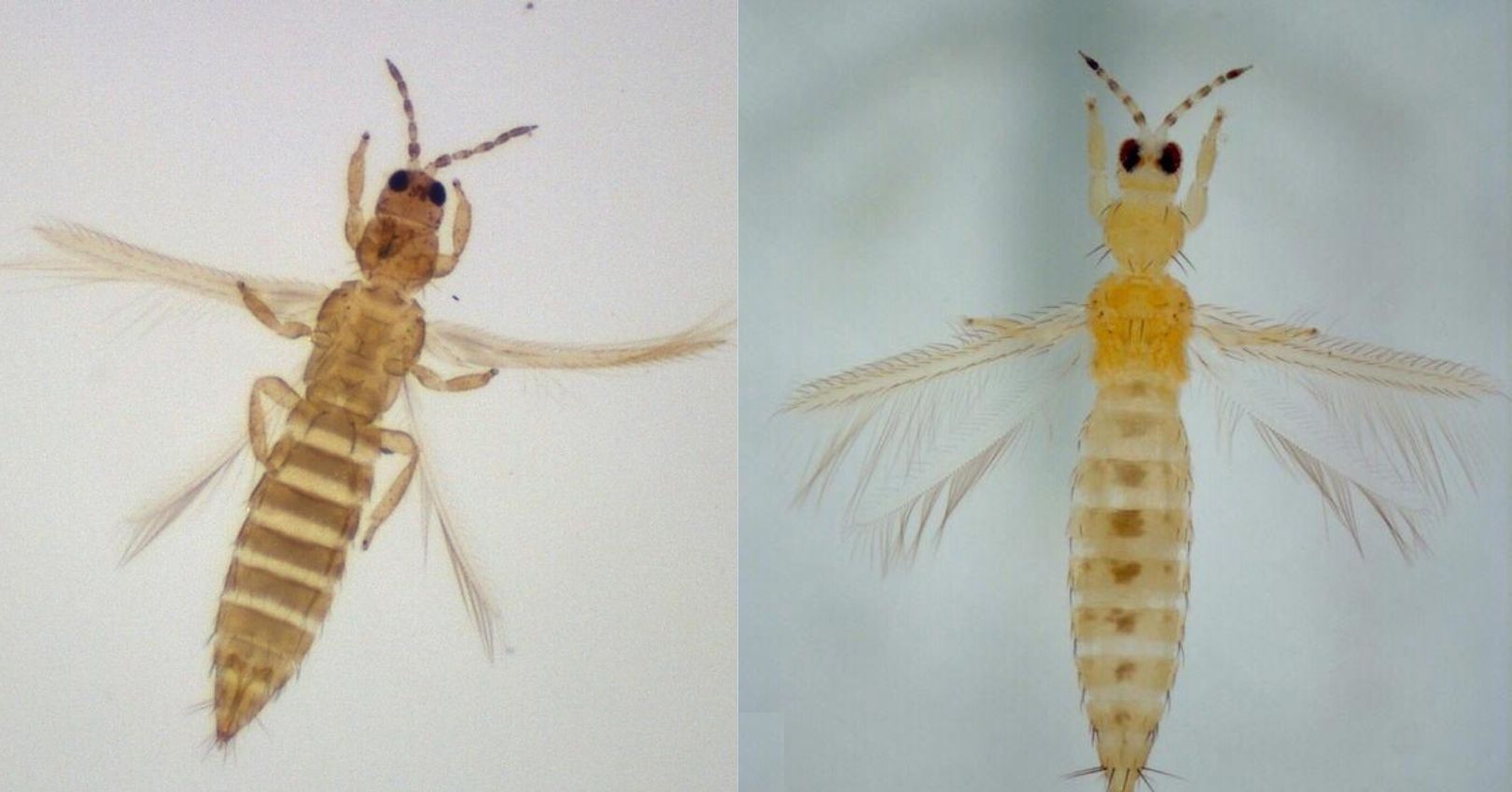
Life History
Onion thrips is the dominant thrips species in onion fields. They overwinter as adults and become active in the spring, dispersing into onion fields. In Utah, females reproduce asexually (parthenogenesis) and insert eggs individually into leaves. Females will lay eggs for about 3 weeks. A complete generation requires 3 to 4 weeks during the summer months, and five to eight generations may occur each year. Thrips populations increase rapidly under hot, arid conditions, leading to economic crop losses.
Damage
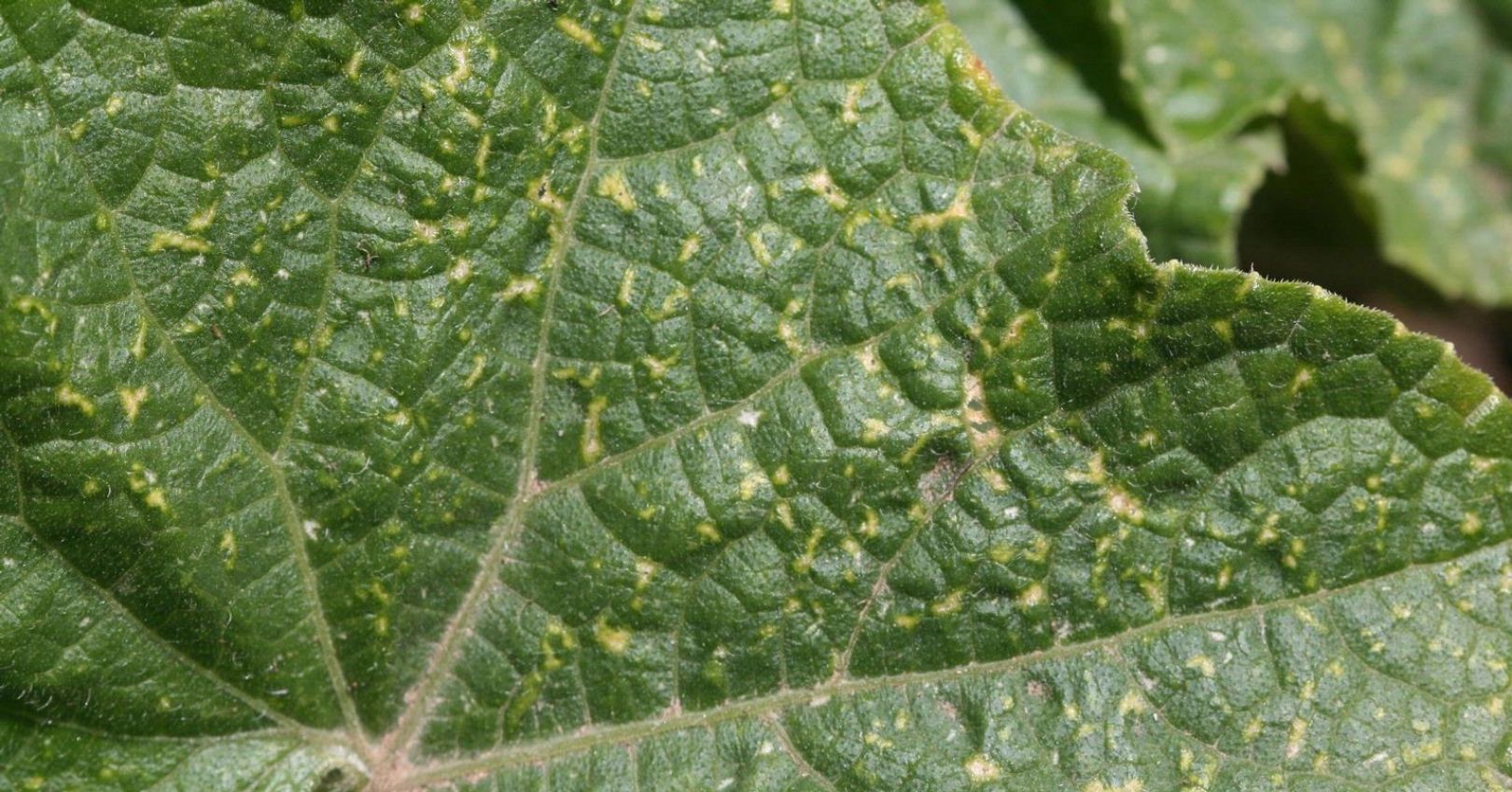
Thrips will feed on leaves, developing buds, flowers, and fruits of melons, and if populations are high, can cause economic loss. Typical symptoms are “rasping” and stippling injury on leaves, and stunted buds, flowers, and fruits. Thrips feeding on the surface of well-developed fruits can cause scarring. An abundance of dark tar-spots of thrips frass can contaminate fruits.
Monitoring
Use yellow or blue sticky traps in susceptible fields from seedling through flowering to determine the magnitude of the thrips population.
Management
Cultural
- Disc in weeds before they flower. This can reduce attracting thrips to the field. However, discing weeds after they have flowered (once thrips are present) can cause thrips to move into crop plants.
Chemical
Before deciding to treat for thrips, verify that the damage is thrips-related. Unnecessary treatments can cause spider mite buildup, so it is important to consider treatment only if the thrips population is causing serious damage to shoot tips, flowers, or fruit.