
Irrigation
Cucumber, Pumpkin, and Squash
All cucurbits require regular, uniform watering during the growing season. Water shortages during establishment can limit seed germination, transplant establishment, and early vine growth. Inconsistent watering around flowering and fruit set can cause misshapen fruits and induce blossom end rot, and affect fruit sizing, flavor, and color development. Overwatering encourages root rots, belly rot on fruits, and can cause edema or fruit cracking. Furrow irrigation is suitable for the cucurbits and some growers use sprinkler irrigation to aid in stand establishment. Growers who plant through plastic mulches commonly use drip irrigation. Later in the cucurbits’ growth, sprinkler irrigation (solid set, wheel lines, and center pivots) can contribute to foliar diseases and may interfere with bee activity, thus reducing fruit set, shape, or size.
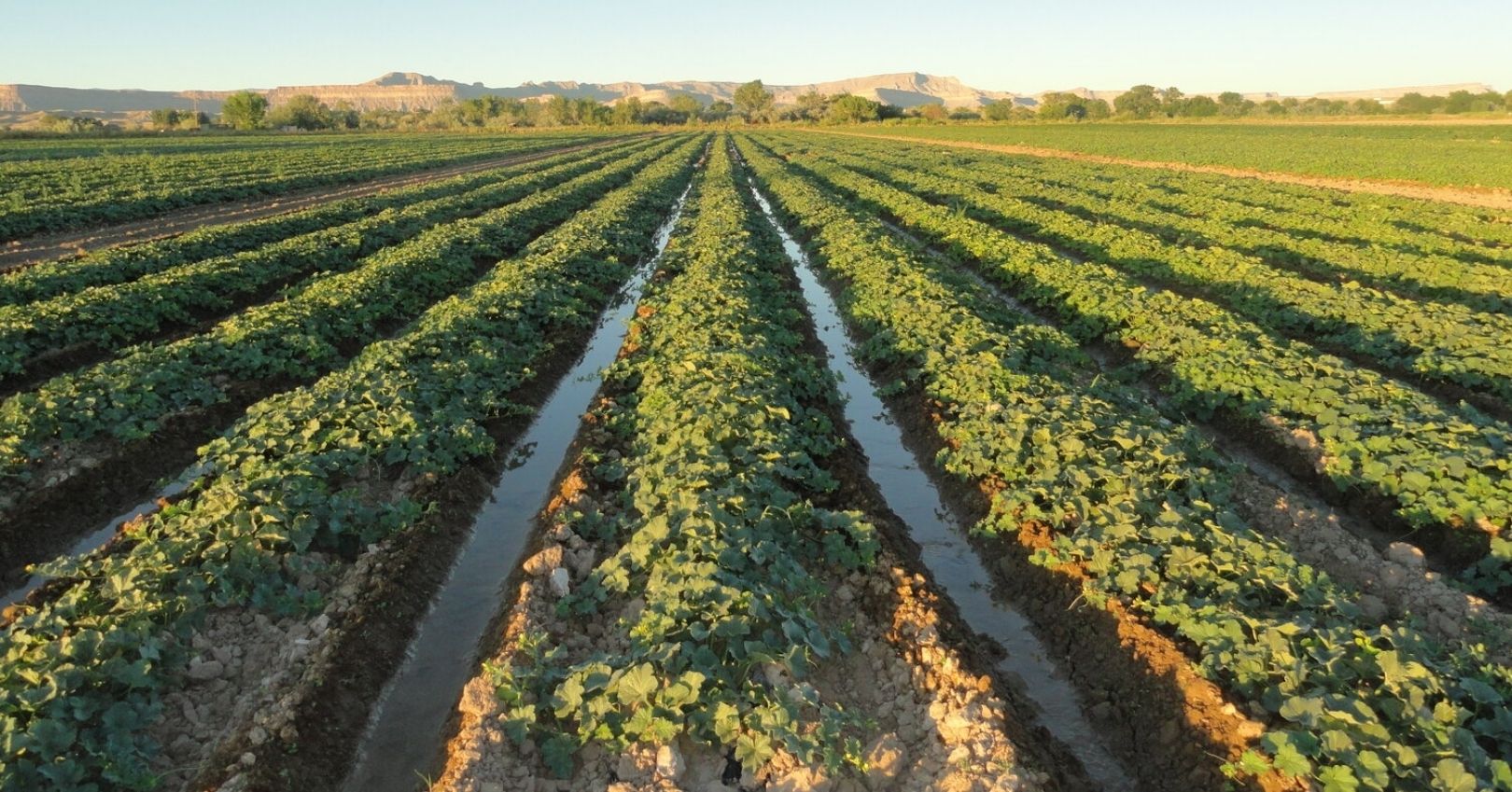
Soil water status should be monitored regularly to maintain consistent soil water. Soil moisture monitoring is easily done with a resistance block such as the Irrometer® Watermark sensor. Place sensors at various locations in the field and at several depths in the soil profile to get an accurate measure of soil water content. Sensors typically express soil water content as a tension reading (centibars) that defines the effort required to access available water. Soil water monitoring helps determine when to irrigate next. Field capacity describes a soil at 100% available water holding capacity after excess water has drained away. Start irrigation for the cucurbits at 25%-30% depletion when irrigating by drip systems and at 40%-50% depletion of available water-holding capacity with furrow or sprinkler systems. Note that irrigation depends on your soil type.
Soil Tension Values for Different Soil Textures
| Soil Texture | 0% |
20-25% |
35-45% |
|---|---|---|---|
| Soil Tension Values (centibars) | |||
| Sand, loamy sand | 5-10 | 17-22 | 25-30 |
| Sandy loam | 10-20 | 22-27 | 33-40 |
| Loam, silt loam | 15-25 | 25-30 | 40-50 |
| Clay loam, clay | 20-40 | 35-45 | 55-65 |