
Walnut, English or Persian
Juglans regia
Juglandaceae - Walnut


Description
See also Black Walnut description.
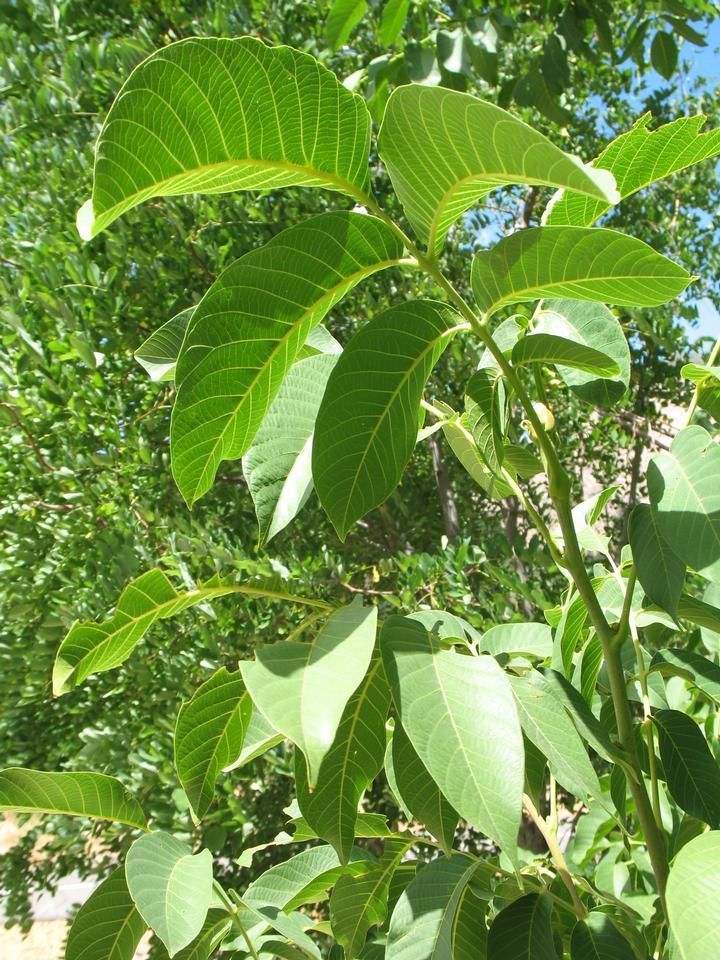
Leaves: With 5 to 9 leaflets with entire margins (rarely 13); leaflets elliptic to obovate.
Twigs/buds: Twigs yellowish-greenish-brown initially, but grayish when older; thick. Terminal buds grayish, large (1/4" to 1/3" in length); scales brownish, hairy, and slightly overlapping.
Flowers/fruit: Monoecious. Fruit a nut with thinner, smoother shell than black walnut; this is the most common commercially available walnut in the U.S.
Bark: Silver-gray, smooth; ridges flat and interlacing; similar to quaking aspen (P. tremuloides) when young.
Wood: Valuable and prized; usually purplish-brown, hard, heavy, close-grained, durable; polishes well; used to make gun-stocks, pianos, furniture, or as fuel.
General: Native to southeastern Europe to Himalayas and China, and widely planted throughout the world. Shade intolerant; prefers rich, deep soils.
Landscape Use: Can be planted in Utah in warmer, protected areas, but generally not quite as cold hardy as black walnut. Zones 4-8.
Cultivars: 'Carpathian', 'Hansen'.
Characteristics
General
| Family | Juglandaceae - Walnut |
|---|---|
| Cultivar Availability | Yes |
| Hardiness Zone | 4-8 |
| Type | Broadleaf |
| Utah Native | No |
Growth
| Growth Rate | Medium |
|---|---|
| Mature Height | High |
| Longevity | High |
| Is Good Under Power Lines | No |
| Crown Shapes | Rounded |
Ornamental
| Bark | No |
|---|---|
| Fall Color | No |
| Flowers | No |
| Foliage | Yes |
| Fruit | No |
Tolerance
| Shade | Low |
|---|---|
| Salt | Medium |
| Drought | Medium |
| Poor Drainage | Medium |
| Alkalinity | High |
| Transplanting | Low |