
Mulberry, Red
Morus rubra
Moraceae - Mulberry
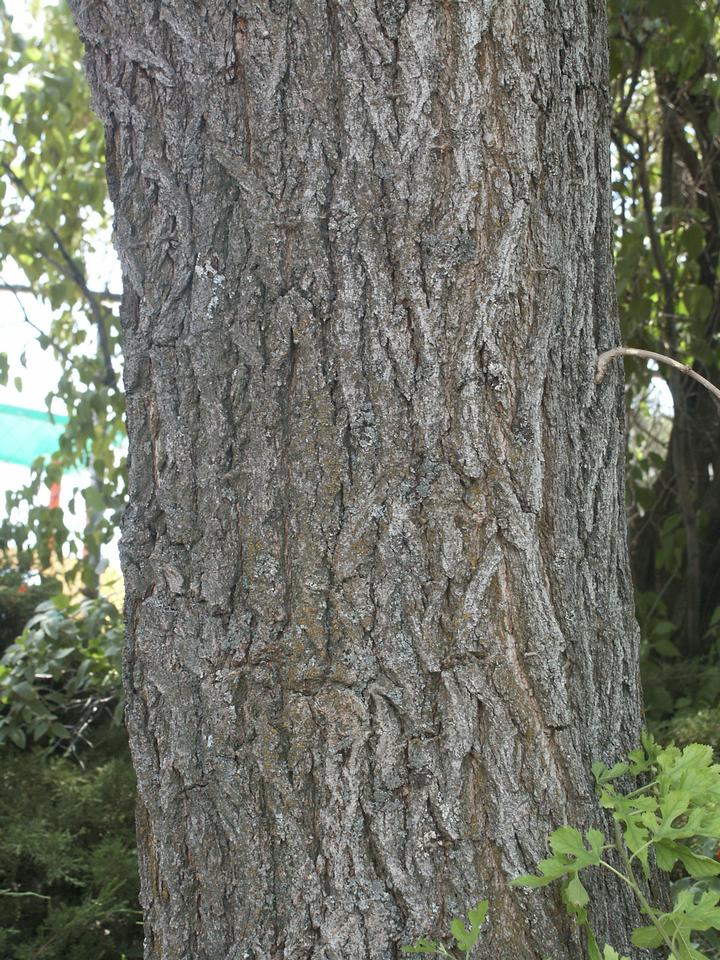


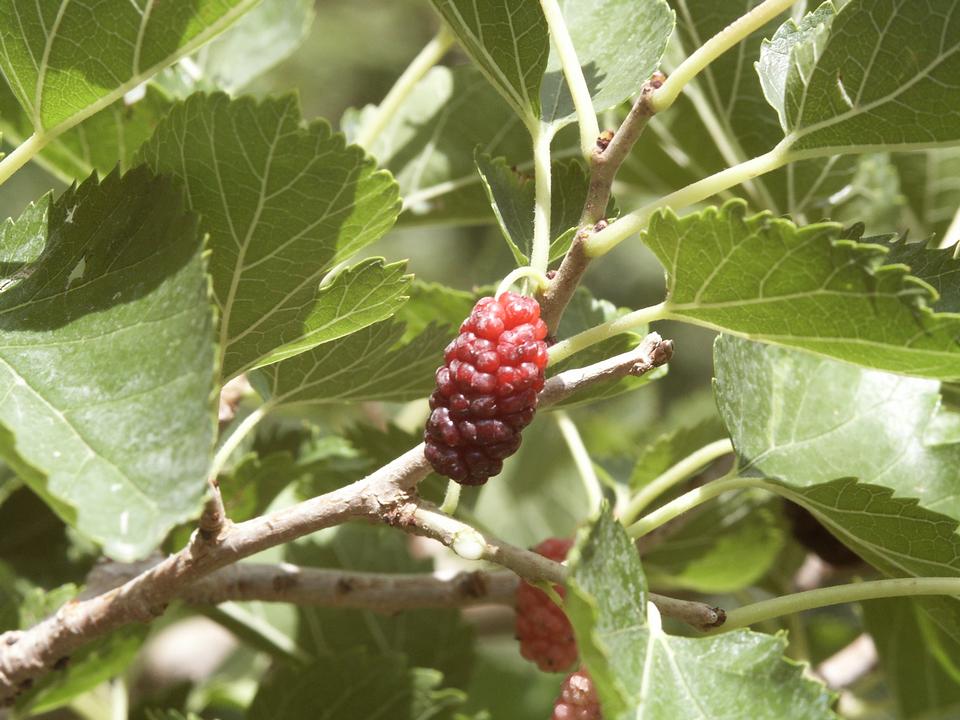

Description
Leaves: Alternate; simple; nearly orbicular; 3" to 5" long; deciduous; variable in shape; no lobes or up to 3 to 5 lobes; coarsely serrate margin; acute to acuminate apex; hairy beneath; light yellow fall color; petiole 1/2" to 1" long.
Twigs/buds: Twigs slender; somewhat zigzag; red-brown to green-brown; showing milky sap when cut. No terminal bud; lateral buds ovoid, pointed, 1/4" long, light brown.
Flowers/fruit: Polygamo-dioecious. Flowers small and inconspicuous with no petals. Multiple fruit of small drupes; resembles a blackberry; dark purple or nearly black; 1/2" to 3/4" long; juicy; ripening in June or July.
Bark: Thin; dark brown to orange-brown; scaly and furrowed; bark of roots yellow.
Wood: Sapwood yellow; heartwood yellow-brown; growth rings distinct; ring-porous; rays plainly visible to naked eye; little used but excellent firewood.
General: Native to most of the eastern U.S. Usually found on rich, moist sites, but can stand considerable heat. Shade tolerant.
Landscape Use: Mulberries are good city trees that grow fairly rapidly. They need attention to branch structure and attachment to keep them healthy and well-formed. The broad, round canopy and shiny, bright green leaves are very attractive. Be sure to plant all-male trees if you do not want fruit. Zones 4-9.
Comments & Limitations: Fruit and/or plant part can be nuisances; use fruitless varieties if possible.
Characteristics
General
| Family | Moraceae - Mulberry |
|---|---|
| Cultivar Availability | No |
| Hardiness Zone | 4-9 |
| Type | Broadleaf |
| Utah Native | No |
Growth
| Growth Rate | High |
|---|---|
| Mature Height | High |
| Longevity | Medium |
| Is Good Under Power Lines | No |
| Crown Shapes | Rounded |
Ornamental
| Bark | No |
|---|---|
| Fall Color | No |
| Flowers | No |
| Foliage | Yes |
| Fruit | No |
Tolerance
| Shade | Low |
|---|---|
| Salt | High |
| Drought | High |
| Poor Drainage | High |
| Alkalinity | High |
| Transplanting | High |