
Honeylocust
Gleditsia triacanthos
Fabaceae - Legume


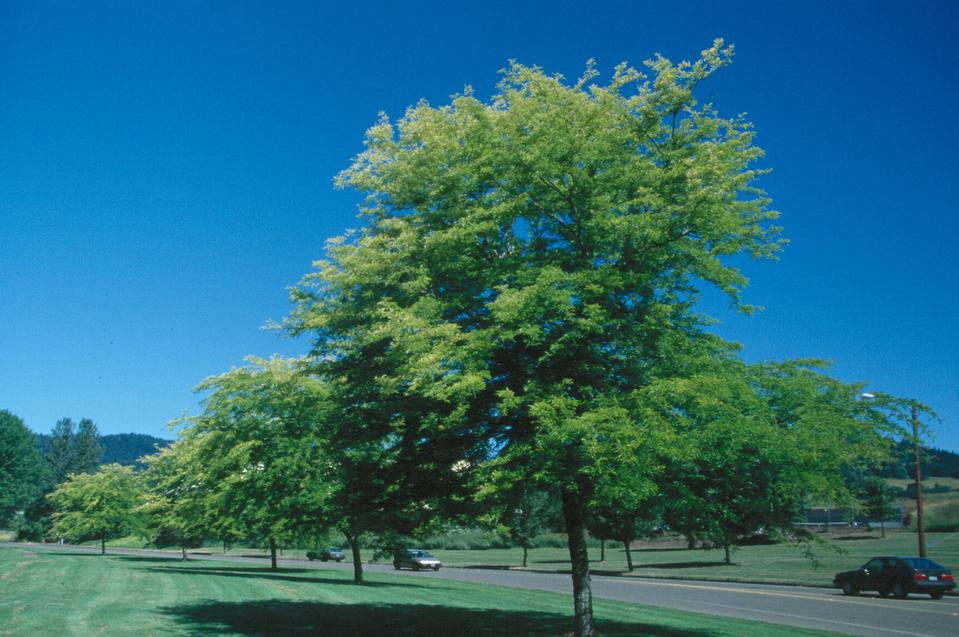


Description
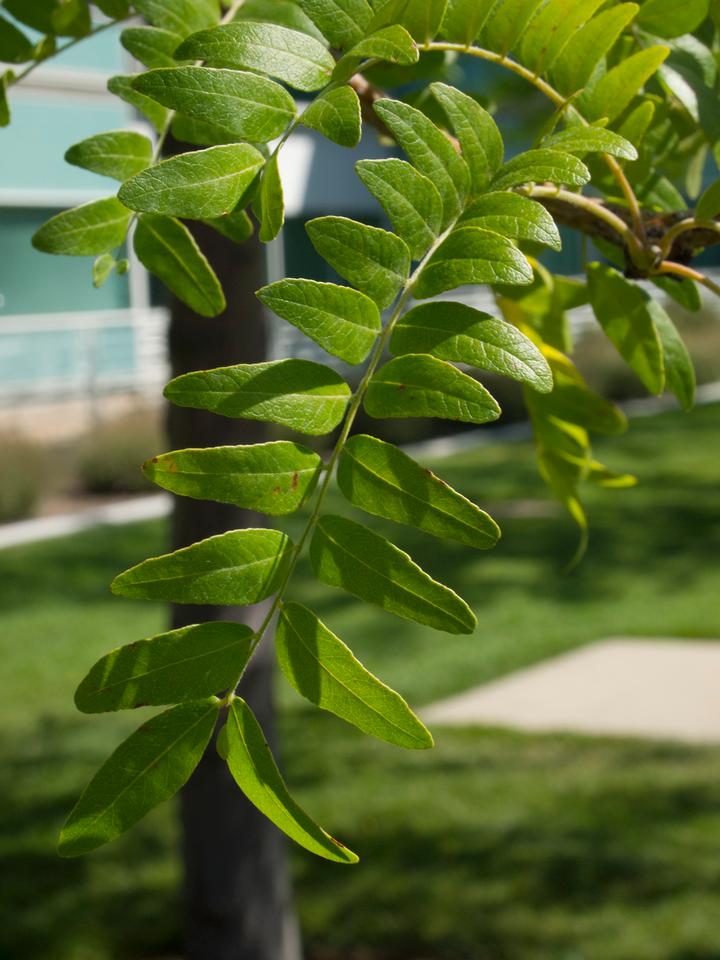
Leaves: Alternate; both once and twice pinnately compound; once pinnately compound leaves with 15 to 30 nearly stalkless leaflets; deciduous; twice pinnate leaves with 4 to 7 pairs of 6" to 8" long, lateral "branches"; leaflets ovate to ovate-lanceolate, up to 1-1/2" long by 3/4" wide, margins with fine, rounded teeth, leaflet tip pointed or rounded, glabrous; bright green; nice yellow color in fall.
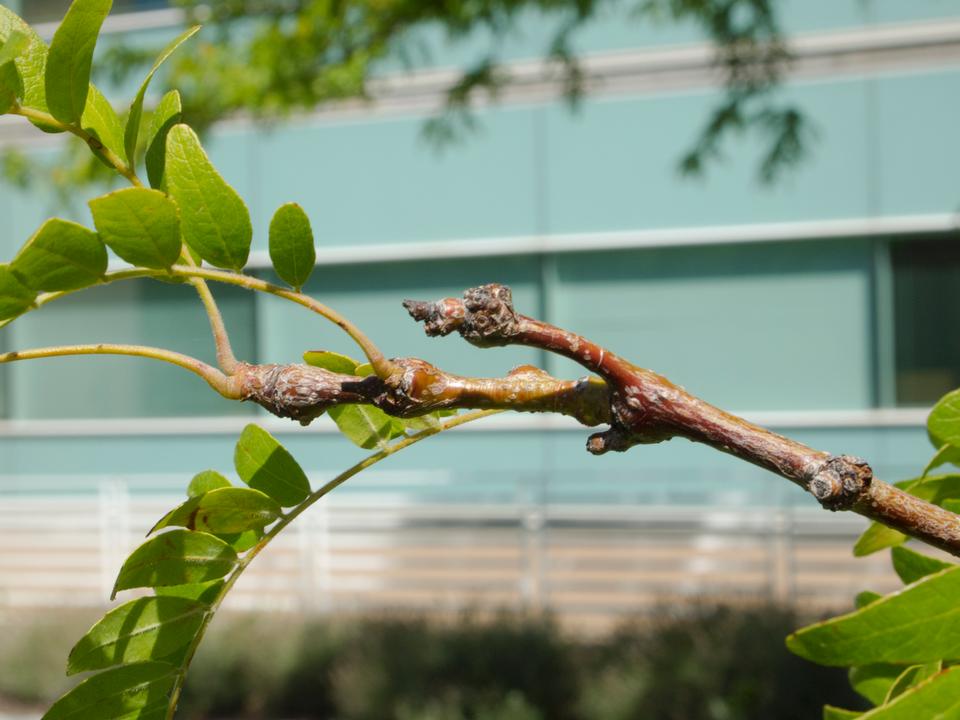
Twigs/buds: Twigs stout to slender; glabrous; glossy; zigzag; native trees having stiff, sometimes branched, brown to red thorns from 3" to 12" long; thornless varieties are more often planted. No terminal bud; lateral buds small, nearly hidden by bark, 3 or more at each leaf scar.
Flowers/fruit: Flowers dioecious (some are perfect), small, greenish-white or yellow; not showy; appearing after leaves open. Fruit a flat, strap-shaped legume; green at first, maturing red-brown; twisted; 12" to 18" long; containing 12-14 dark brown, oval seeds; many cultivars do not bear fruit.
Bark: Smooth and gray on younger branches; on older stems becoming gray-brown to nearly black, and broken by vertical furrows into plates or scaly ridges.
Wood: Slightly important where native; sapwood yellow; heartwood red-brown; growth rings conspicuous; ring-porous; rays conspicuous to naked eye; used for veneer and firewood.
General: Native to most of the eastern U.S. Very hardy and drought resistant; tolerant of salt and high pH. Often invades old fields where native, with trunks covered with red thorns. This species does not fix nitrogen. Shade intolerant. Fruit and/or plant part can be nuisances; use fruitless varieties if possible. Thorns or spines that can be dangerous; use thornless varieties if possible.
Landscape Use: A good, large landscape tree because of its relative toughness, its adaptability to a variety of sites, and its fine texture and light shade. Does well even if surrounded by pavement. However, it is over-planted in Utah and is not trouble-free. Thyronectria and other cankers entering through bark injuries have become problems elsewhere and eventually may cause trouble here. Thornless and fruitless cultivars generally are planted. Zones 3-9.
Cultivars: 'Christie', 'Imperial', 'Moraine', 'Rubylace', 'Shademaster', 'Skyline', 'Spectrum', 'Sunburst', var. inermis.
Characteristics
General
| Family | Fabaceae - Legume |
|---|---|
| Cultivar Availability | Yes |
| Hardiness Zone | 3-9 |
| Type | Broadleaf |
| Utah Native | No |
Growth
| Growth Rate | High |
|---|---|
| Mature Height | High |
| Longevity | Medium |
| Is Good Under Power Lines | No |
| Crown Shapes | Rounded |
Ornamental
| Bark | No |
|---|---|
| Fall Color | Yes |
| Flowers | No |
| Foliage | Yes |
| Fruit | No |
Tolerance
| Shade | Low |
|---|---|
| Salt | High |
| Drought | High |
| Poor Drainage | High |
| Alkalinity | High |
| Transplanting | High |