
How the Utah Farmers Market Network is Promoting Sustainable Consumption Across the State
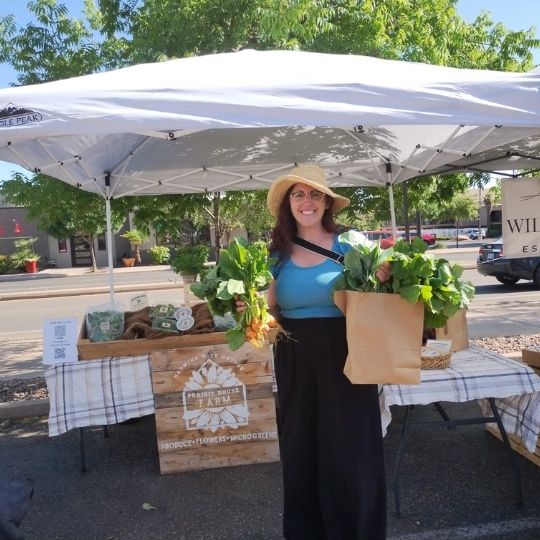
This week’s blog post features Jaclyn Pace, director of the Utah Farmers Market Network. The mission of the Utah Farmers Market Network is to support farmers markets through communication, collaboration, and professional development — building community, uplifting agriculture, and incubating small businesses throughout Utah. What started as a grassroots effort has become one of the most integral hubs for local markets across the state. The network began as a series of conversations among Utah farmers market managers who wanted to network and learn from each other. From there, with support from USDA grants through Utah State University, the Utah Farmers Market Network formalized into what they are today — the leading statewide network connecting markets, vendors, and the communities they serve.
Here’s what we learned from Jaclyn:
-
Why does shopping at farmers markets matter?
Farmers markets are so much more than a place to buy tomatoes. They are community hubs. When you shop at a farmers market, your dollars go directly to the people who grew or made the product. Vendors reported bringing in an average of $18,000 for the season, and that money goes directly into the vendor's pocket. On top of that, up to 80% of vendors in Utah say they wouldn't have been able to start their business any other way. So when you show up on a Saturday morning and buy a jar of honey or a bunch of kale, you are quite literally helping someone build a livelihood.
-
You've been gathering data from farmers markets for the last 3 years — what are some of the biggest takeaways?
The data has been really eye-opening. A few things stand out. First, Utahns are deeply loyal to their local markets — up to 89% of customers reported visiting their local market every week, and they spend an average of $29 to $52 per day. That's not casual shopping; that's a weekly ritual. Second, the vendor demographics tell an important story: up to 70% of vendors are women and nonbinary-owned businesses. Farmers markets are genuinely serving as an economic on-ramp for people who might not otherwise have access to traditional business infrastructure. And third, the food access work is making a real difference — last year, up to $43,161 worth of food was distributed to low-income households through programs like SNAP and Double Up Food Bucks.
-
How many farmers markets are in Utah?
This season we estimate over 60 markets will open across the state. We have markets in urban centers and in smaller rural communities, and we want Utahns to know that there is likely a market near them.
-
What are some of the biggest things the Utah Farmers Market Network has accomplished?
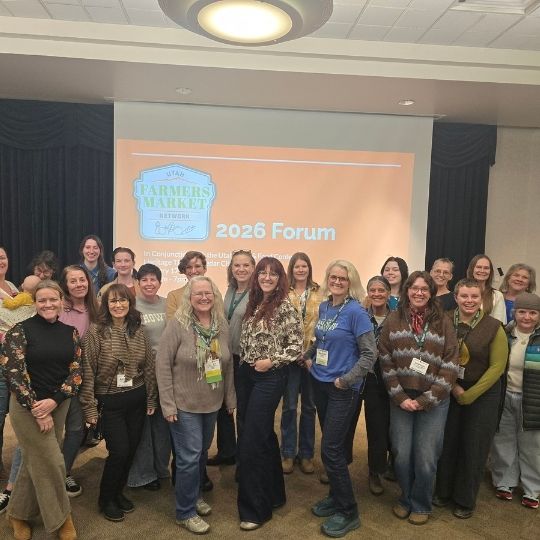
We pride ourselves on our collaborations with individuals, universities, and organizations across the state. We were named Utah Tech University's Community Partner of the Year for our work with their students, professors, and researchers both on and off campus. In 2023 we convened a Diversity, Equity, and Inclusion Community of Practice with market managers statewide, helping markets collect data on the inclusivity of their organizations and create strategic DEI plans. We've also built out robust food access programming — working with Utahns Against Hunger to expand SNAP and Double Up Food Bucks at markets statewide. In late 2022, USU was awarded a second FMPP grant to create a market manager handbook, a marketing campaign, and to gather community and economic impact data — all tools that help market managers run stronger, more sustainable markets. Our annual Market Manager Forum, which started in 2020, has become a real anchor for farmers markets and vendors across the state. In addition, we have built a strong Advisory Council with individuals from 12 different organizations working for food access and security and supporting Utah’s local entrepreneurs. They meet monthly to steer the direction of the network.
-
How is shopping at a farmers market connected to sustainability?
It connects on multiple levels. When you buy from a local farmer, you're dramatically shortening the supply chain — less transportation, less packaging, less refrigeration. You're also supporting small-scale, often diversified farming operations that tend to be far more ecologically mindful than large industrial agriculture. Beyond the environmental piece, there's economic sustainability — keeping money circulating locally, helping small businesses survive and grow. And there's community sustainability — farmers markets create gathering spaces that strengthen social fabric. When a market closes, a neighborhood loses something it often can't easily replace. Shopping local is one of the most tangible ways individuals can vote with their dollars for the kind of food system they want to see.
-
How can people find out where their local farmers market is?
It's easy! You can find your local farmers market on our website. We want every Utahn to be able to find a market that works for them, whether that's about location, accessibility, or the programs available like SNAP and Double Up Food Bucks. It's all there in one place.