
Guest Blogger: Liesl Cannon

USU Extension Sustainability is all about helping everyday people live more healthy, happy and sustainable lives. This is the sixteenth of a series of posts that will feature real people who are making real changes in their lives to be more sustainable.
This month we are featuring Liesl Cannon. Read on to learn about her work with the Pollinating Insect Unit, her work as scientific illustrator and her views on how sustainability plays an important role in our lives.
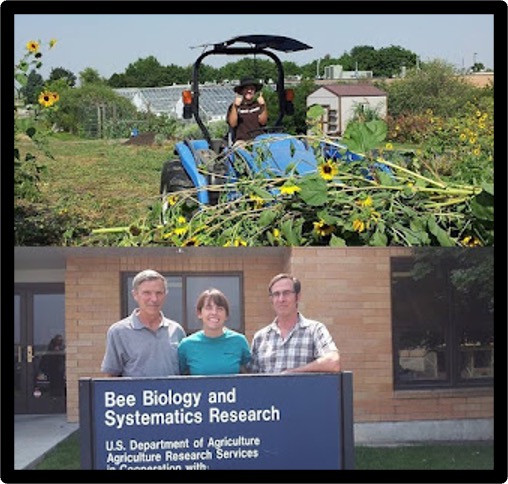
1. Please tell us a little about your past work with USU and some of the research you have done with bees.I worked at the USDA-ARS Pollinating Insect Research Unit for four of the five years of my college experience at Utah State University. Our lab focused a lot on research surrounding alternative pollinators for agriculture. Right now the majority of commercial pollination services are given by honeybees, but our lab focused on managing and sustaining pollination services by different bee species. My research area focused on ways to increase nesting in the bee species Osmia lignaria, also known as the Blue Orchard Bee.
2. How did you first get involved with the bee lab? What peaked your interest about working with bees?I actually found the lab through a volunteer opportunity, I volunteered at their greenhouses for about four months, and then they hired me! I became really interested in bees when I realized I knew absolutely nothing about them! I started learning basic facts about them like not all bees are honeybees, only female bees have stingers, and there are thousands of different species throughout the world.
I’ve always loved drawing and art. I grew up loving illustrated books about science, nature, and animals. So as I got more involved in the science world, that passion kind of rekindled, and I found meaning in combining art and science.
4. How do you use your artwork educate people about bees and the natural world?I do a lot of sketches and paintings about bee diversity, and people naturally start asking questions about the blue and metallic bees, or the really big furry bees, and a conversation is started! I also wrote and illustrated a coloring book about bees. We distributed it at the Pollinator Week booth at the farmers market. I also distributed them at a lecture I gave to an elementary school about bees.
5. How can everyday people learn more about native bees and help the native populations?Probably just by being observant and aware of what is going on in their backyards! Start noticing bees, how they look and how they act. When you have questions look up basic questions about bees online, or check out a book from the library about bees.
6. Do you have any tips for gardeners wanting to attract more pollinators?
I would say have less lawn, a diversity of native plants, and by xeriscaping. Native plants will attract native pollinators! There are many resources online about plants you can get at local nurseries that are native, and grow well in your area.
7. What is the most rewarding thing about your line of work?I think seeing the excitement of little kids when their curiosity is sparked, and they start asking questions and searching for answers.
8. Why is living sustainably important to you personally?Because everything we have in our modern world started with a natural resource. I feel like the natural world is at the base of everything our society does and is, and somehow we’ve become very separate from it all.
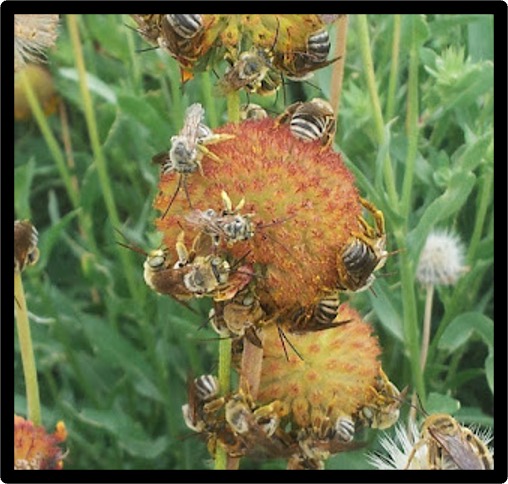
Because as I learn more about them I recognize how much more there is to life than me. There are cycles and complex processes going on all around us (such as the nesting and life cycle of bees, their predators, and all their various adaptations), and I think that is a beautiful thing!
Recent Posts