
How Do I Set Boundaries?
If you’ve ever felt overwhelmed, resentful, or stretched too thin, boundaries may be the missing piece. Many people sense that something isn’t working in their relationships or daily routines, but feel unsure how to address it—or worry that setting boundaries will make things worse.
The truth is, healthy boundaries aren’t about shutting people out. They’re about creating clarity, balance, and mutual respect. This article walks you through boundary setting step by step, helping you identify where boundaries are needed, what kind of boundaries will help most, and how to put them into place in ways that support both your well-being and your relationships.
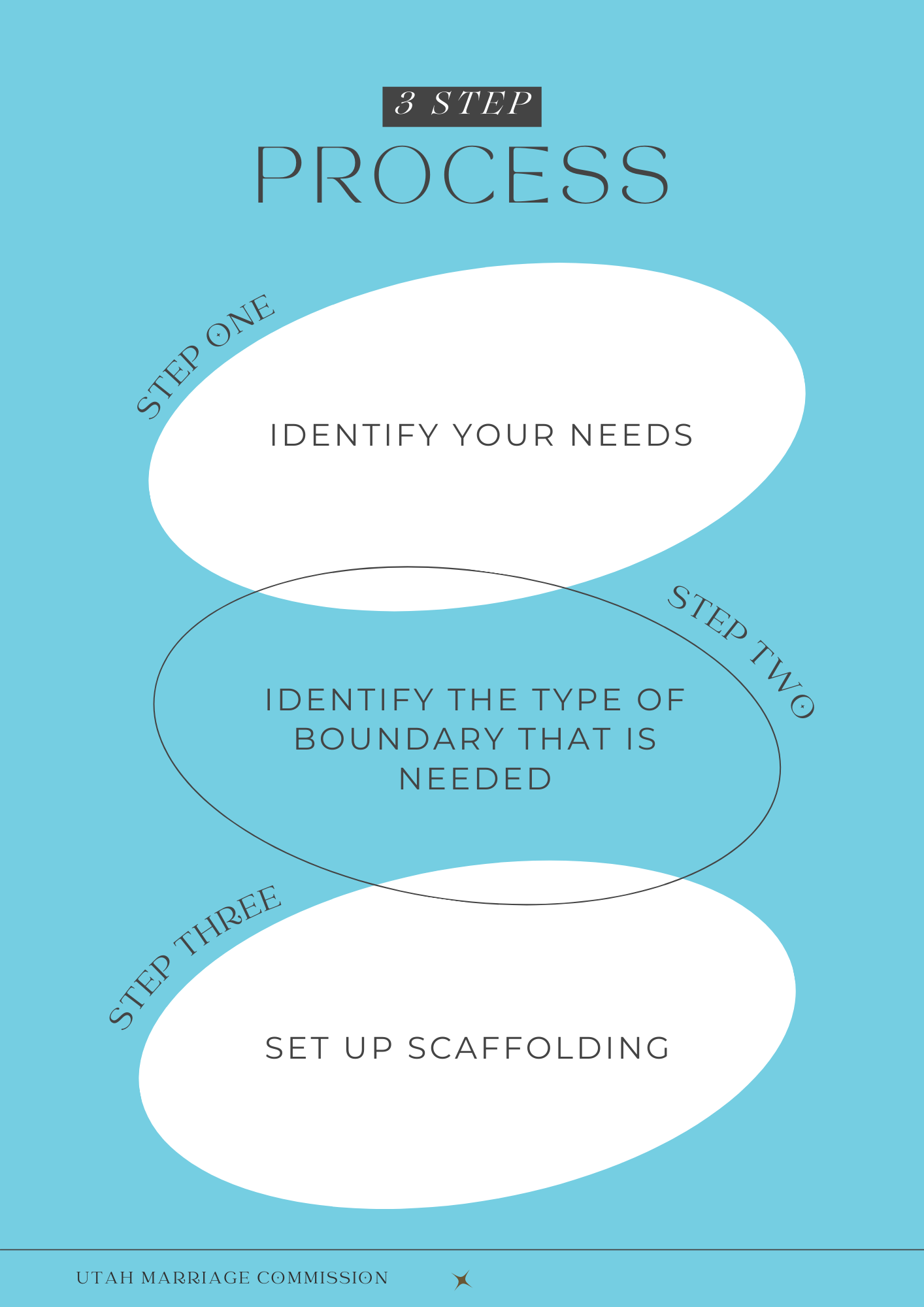
Step One: Identify the need. We can’t fix a problem we aren’t aware of. There’s differing levels of awareness and many areas of loose and poorly set boundaries fall into the subconscious or unconscious areas of our awareness. Thus, step one: make the unconscious, conscious.
Nedra Tawwab suggests the following “Signs That You Need Boundaries”.
- You feel overwhelmed.
- You feel resentment toward people asking for your help.
- You avoid phone calls and interactions with people you think might ask for something.
- You make comments about helping people and getting nothing in return.
- You feel burned out.
- You frequently daydream about dropping everything and disappearing.
- You have no time for yourself.
If any of these signs resonate with you, it’s likely you need boundaries. One way to hone in more closely on the areas of your life that need boundaries is to ask yourself the following question:
“What areas of my life lack balance?”
Michael Gilbert, a successful business executive, once said, “We have been using the word ‘balance’ when what we really seem to mean is ‘boundaries.’ Boundaries keep things in their place. Just as functional membranes (letting the right things through and keeping the wrong things out) facilitate the healthy interaction of the cells of our bodies, so do functional personal boundaries facilitate the healthy interaction of the various parts of our lives. Bad boundaries lead to either being overwhelmed or withdrawn. Good boundaries lead to wholeness and synergy.” Identifying the areas of your life that consistently feel disorganized, out of control and mismanaged directly leads you to the site of a boundary need. Another way to further clarify this is to take The RELATE Assessment. The RELATE Assessment looks at 10 major aspects of relationship wellness. Your report includes discussion questions that can help you identify areas where boundaries may be needed. Once you’re aware of the areas of your life that need boundaries, you’ll need to identify the type of boundary you need.
Step 2: Identify the Type of Boundary Needed. Here is a non-exhaustive list of potential types of boundaries: 
- Physical Boundaries. “If you get too close to my physical body, I will take two elephant-sized steps backwards.”
- Sexual Boundaries. “I will exit the conversation if you begin asking questions about my sex life or my physical appearance.”
- Intellectual Boundaries. “When you invalidate my feelings by saying ‘get over it,’ I will ask you to validate my feelings. If you choose not to, I will not speak further to you about my feelings on the matter.”
- Emotional Boundaries. “If I find out that you told another person a detail I asked you to keep private, I will no longer disclose details of a private nature to you.”
- Material Boundaries. “If you do not return the item, I lent you in the agreed upon timeframe, I will no longer lend you my personal items.”
- Time Boundaries. "If you don’t give me notice when you’re running late for dinner, I will wait 10 minutes and then leave."
Identifying what type of boundary is needed will allow you to more effectively identify how to set the boundary. For example, if your coworker Bob is consistently touching your knee while in meetings, having an emotional boundary may help, but certainly isn’t going to establish the sexual and physical boundaries that are needed before you may feel safe again in a meeting with Bob.
Gabrielle Bernstein, author of The Universe Has Your Back: Transform Fear to Faith, suggests, “Before you enter a room with people, set your intention to protect your energy and create healthy boundaries.” Being mindful of what type of boundary needed will help facilitate that. Now you’re ready to put the actual boundary in place.
Step 3: Set-Up the Scaffolding of Your Boundary. Those ugly, rusty bars of steel resting against a building aren’t just there for fun. Scaffolding is the temporary and necessary support while building something more permanent. When starting to set boundaries, you need scaffolding. The main ingredient in boundary scaffolding is your own behavior. To “scaffold” boundaries, one must design responses and reactions to the above identified areas where boundaries are needed, and those responses and reactions need to depend entirely on your own behavior.
In The Science of Stuck, Britt Frank suggests one of the biggest barriers to setting boundaries is relying on others’ behavior instead of our own. She explains that when boundaries fail, we’re often making a request, not setting a boundary. What's the difference? A request relies on the behavior of others. A boundary does not. Here’s some examples:

|
Request |
Boundary |
|
Please tell me when you’re coming home so I can prepare dinner. |
If you don’t tell me by 5pm when you’ll be home, I will not be preparing dinner. |
|
Please don’t invite your friend _____ over to the party at our home because he is rude and inconsiderate. |
I value that _____ is your friend. If you invite them to the party at our home, I will be leaving and spending time elsewhere until the party is over. |
|
Please don’t spend money on soda at the gas station as it is expensive. |
I know you love gas station soda and if you spend more than what we have budgeted, I will not be purchasing _____ that was budgeted. |
Frank is quick to explain that while these types of behavioral boundaries can feel like ultimatums (or threats), the difference relies on our intent. If your intent is to strengthen the relationship and maintain safety for all, it is a boundary. If your intent is to achieve power over another person and/or control everything about a situation, it is an ultimatum.
The goal of effective relationships is to meet others' needs the way they want their needs to be met and get our own needs met in the way we want them met. Boundaries help us do this by clarifying expectations. With clear expectations, we’re better equipped with the knowledge of how to effectively meet others' needs and vice versa. Loose or poorly set boundaries can lead to increased relationship distress and impact our individual wellness. Boundaries are most effective when we’re clear on the areas of one life that need boundaries, when the type of boundary matches the need, and the boundary is built in scaffolding based on one’s own behavior and not on the reaction/response of others. To explore other ways to support and scaffold your relationships, check out The Stronger Connection Podcast where these and other relevant relationship topics are discussed.