
Tax Considerations When Exiting Farming/Ranching
Selling farm assets can create significant unintended tax consequences
Dr. Adam J. Kantrovich, Extension Specialist of Agribusiness, Assistant Director of Agribusiness Team, and Director of the Clemson Tax School, Clemson University
Download PDF Version
Introduction
Farming/ranching is an honorable profession; it is not for the faint of heart. In many cases, it is a multi-generational activity, with some farms and ranches being in the family for 200 years or more. Farming comes with inherent dangers and stressors. Normal activities and stressors include everything from hopes for timely temperatures and moisture (rain) needed for crops; mechanical breakdowns when planting or harvesting and a weather system is, of course, on its way; access to inputs; the cost of inputs versus the value of crop produced; etc. Farming and ranching are stressful in good situations, but, unfortunately, over the past few years we have seen increasing challenges related to market access and trade wars, one natural disaster after another, prolonged drought situations, higher input costs with many farm product values dropping, and the list goes on and on and on.
We have reached a point that many families are asking themselves, “how much longer can we hang on before we lose everything”, or a bank tells the farm or ranch, “no more” and calls in the debt. In some cases, it happens because there are no successors for the operation, and it is simply time to transition into retirement and out of the operation. Many of these cases include the sale of some of the operations assets, or possibly all the assets. These sales, regardless of the reason, will trigger tax liabilities that can be substantial and are usually not being considered in the process of selling the assets.
Considerations to Moving Forward
Newton’s Third Law of Motion is: “for every action, there is an equal and opposite reaction”. When assets are sold, there is revenue generated; when revenue is generated, there very likely will be a tax liability. The entire process can be daunting. One of the first things a farmer or rancher must do is to work with tax and legal professionals, or even Extension personnel, that may specialize in taxation, farm financial management, or similar. These individuals can work with the farmer or rancher to run various scenarios or options to develop a plan that will work to limit some of the stress and determine if there is a way to minimize the tax liability. There may be property held as collateral by a lender, so when a decision is made, you must also work with your lender so everyone is aware of the plan, as they may need to “release” assets to be sold due to a lien on the title.
Each farm and ranch is unique with its own set of challenges; it is important to understand that the information presented in this publication cannot cover all situations, but it will cover some of the most common types of assets and the potential liability if that asset is divested. Because of the potential differences in fact patterns of each situation, it is strongly encouraged to seek advice from trusted legal and tax practitioners.
Business Structures
There are several business structures available that farms and ranches may utilize. Some may utilize multiple structures for a variety of purposes, including liability, differences in ownership and ownership percentages, a way to separate asset types and or operations, for succession and transition purposes, and others. Some of the more frequent structures include: 1) sole proprietorship, 2) partnership, 3) LLC (single or multi-members), and 4) subchapter S corporation. It is less frequently seen today, but there are still some remaining farms and ranches using a C-Corporation business structure.
When beginning to divest of farm and ranch assets, it is important to understand the different potential tax ramifications based on the business entity type. Very few individuals go into the development of a business entity with its dissolution and asset divestment in mind, but one should, because the potential legal and or tax ramifications can be substantial. The differences may include, but are not limited to: 1) the tax rate applied to sale of assets, 2) how the value is or may be determined (i.e. can a discounted rate be applied to an asset), and 3) can an asset be gifted.
How to Begin to Determine a Potential Tax Liability
In many cases tax rates will vary based on the filing status of an owner or operator, and/or the business structure type. Individual filing types include: 1) single, 2) married filing joint, 3) head of household, and 4) married filing separate. We will not discuss each of these in this publication, but the marginal tax rate scales vary based on the filing type, as well as the standard deduction that is allowed to be taken.
A good balance sheet is a must. It is good practice to have an up-to-date balance sheet developed annually at the end of the fiscal year. For most, the fiscal year is the same as the calendar year. The balance sheet should include all the assets owned by the business entity and include the fair market value of the assets, and, in many cases, include the adjusted cost basis. If a farm or ranch has multiple entities, a balance sheet for each entity should be developed. As previously stated, each entity could potentially have differing tax code that must be followed, which will determine what Internal Revenue Code (IRC) and tax rates are to be applied.
When the selling of farm and ranch assets takes place, the balance sheet can assist as 1) an inventory of all the assets owned or 2) the type of tax that may apply based on the type of asset. There are typically multiple types of taxes that will affect farms and ranches. At the time of sale, the assets may be subject to any one of a number of these types of taxes.
The most common taxes that farm assets and income are subject to include: 1) ordinary/earned income which is subject to Self-Employment (SE) Tax, 2) depreciation recapture, 3) short- and long-term capital gain. In some cases, there may be additional taxes that may play a role once certain limitations are reached. It is also possible that multiple taxes may be applied to the same single asset once sold. For example, if an asset that had been depreciated to $0 was sold for more than its original purchase price, then the value the asset was sold at will be subject to depreciation recapture and capital gain tax.
According to the May 15, 2019, Michigan Farm News Article, “Tax Considerations when exiting dairy farming” by Kantrovich and Jones, “Understanding the different tax types, asset disposition associated with a tax type and the corresponding rates will assist a farm owner to take a more measured approach to when and how to sell or lease/rent an asset to limit tax liability.” This is a poignant statement that implies the value of determining which, of the available options for which assets to maintain, which to rent, which to sell, and the timing of each, will play a large role in the tax liability at the time of asset divestment and the method used.
Self-Employment (SE) Tax
Earned income is subject to Self-employment (SE) tax. When someone earns a paycheck by working for someone else, the employer and employee both pay into the Federal Insurance Contributors Act (FICA), FICA is made up of Social Security and Medicare taxes. Usually, the employer and the employee share the cost of the tax by each paying half, but if you have self-employment income, you are the employee and the employer, and must pay the entire cost. In these cases, one-half is allowed as a deduction for determining taxable income.
Consumable Assets: Crops, Feed and Supplies
For a cash basis taxpayer, consumable assets are typically assets that are purchased or raised and used within the business within a season or annual cycle. These assets may include items such as raised crops or purchased crops, feed, general supplies, feeder animals, poultry, and similar assets that have not been used. Typically, the sale of these types of assets produce revenue that is considered ordinary income subject to SE tax.
Depreciable Assets
Capital assets purchased and used in a trade or business are required to be depreciated. Depreciation provides a tax benefit to the taxpayer by reducing the taxable income. When an asset is sold or traded in, the tax benefit, or a portion thereof, is paid back based on the price received through the sale or trade of the asset. This is known as depreciation recapture. Although there are several methods that can be used to depreciate an asset, the important variables used to determine the tax liability are what the adjusted tax basis of the asset is at the time of disposition, the ordinary taxable income of the taxpayer, and the highest marginal tax bracket rate of the taxpayer.
Common depreciable assets include, but are not limited to, such items as machinery and equipment; buildings and improvements; breeding livestock, such as dairy and beef cattle, horses, hogs, goats and sheep (poultry are not included); and perennial plants, such as fruit trees, vines, bushes, etc.
Livestock can be a bit confusing in this context for many individuals because of its complexity. Livestock that are born and raised on the property with the intent for the animal(s) to come into the herd will give the animal a $0 basis, since no money was expended to purchase the animal. If the animal is held for at least two years before being culled or sold, it will be subject to capital gain.
If breeding livestock is purchased, since it is considered a capital asset, it is a depreciable asset. Since it is depreciable, in general, when sold or culled, the animal will be subject to depreciation recapture. If there is a profit made, i.e. the animal is sold for a higher value than it was purchased, it will be subject to depreciation recapture based on the adjusted basis and capital gain. The capital gain could be short- or long-term, dependent on the holding period: two-years or less, or more than two-years.
The income derived from livestock held for sale, regardless of whether the animal was raised on the farm or purchased, is considered ordinary income subject to SE Tax. The same is true of livestock raised or produced with the intent to be sold to others in the normal course of business and not put into the taxpayer’s own breeding or dairy herd.
Capital Gains
Capital gain (loss) is generated upon the sale of a capital asset. The gains from the sale are taxable and are NOT subject to SE tax, but the rate that is utilized to determine the tax liability is based upon several variables. This includes, at a minimum, 1) the holding period of the asset by the taxpayer, 2) the taxable income of the taxpayer, and 3) the adjusted tax basis of the asset.
As previously stated, the type (short or long) of capital gain that is applied is based on the holding period limitations of the capital asset being sold. The holding period requirements vary based on the asset type. In general, most assets are considered to be a short-term capital gain if held for one year or less; however, as it relates to breeding cattle, milk cows, and horses, the holding period is more than two years for long-term capital gain treatment. This means if you sell a beef cow that was raised prior to reaching two years of age, or a cow that was purchased and held for less than two years, it would be considered a short-term gain. If these holding period thresholds are surpassed, i.e. held for more than two years, then it would be considered a long-term capital gain.
It is important to note that the capital gain rates are first based on the ordinary taxable income of the taxpayer, and then the capital gain is then added on top of the ordinary taxable income to determine the capital gain tax rate.
Short-Term Capital Gains Rates
Short-term gains are for assets other than breeding livestock that are held for one year or less, and will be taxed at the taxpayer’s marginal tax rate, but are NOT subject to SE tax.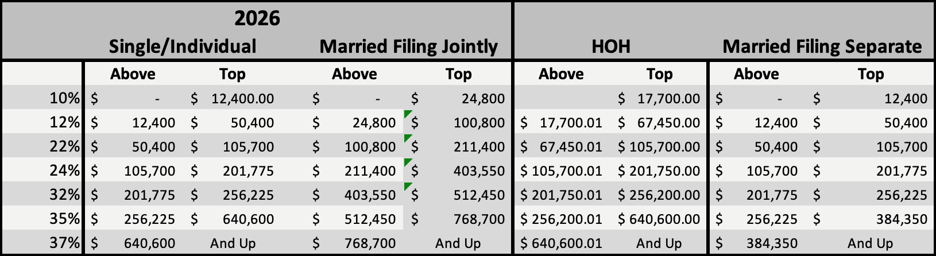
Long-Term Capital Gains (LTCG) Rates
Capital assets used in a trade or business that are sold after the required holding period (usually more than one year) are considered long-term capital gain.
Long-term capital gains on most assets used in a trade or business are taxed at one of three rates: 0%, 15%, and 20%. If there is a sale of a “collectible” there is a tax rate of 28%. Collectibles would include items such as antiques, valuable art, etc. Rates are generally significantly lower than those found for similar values within the marginal income tax bracket rates.
Land
Land is a non-depreciable asset for tax purposes. Therefore, it is not subject to tax depreciation. The sale of farm or ranch land is going to be subject to capital gain. If land was held for one year or less, it will be subject to short-term capital gain (loss); if it was held for more than one year, it will be subject to long-term capital gain.
Other Common Tax Handling Challenges
Insolvency. If the farm or ranch is insolvent and will be utilizing a bankruptcy chapter, there are special rules within Internal Revenue Code (IRC). Please work with a trusted legal and tax professional. Further Information can be found within IRS Publication 908, Bankruptcy Tax Guide.
Debt Cancellation. There are special rules as it relates to a creditor canceling debt owed. Under most circumstances, the dollar value of the debt that has been canceled will be considered ordinary income subject to SE tax. However, there are some special rules for farmers. If three previous years’ income of the taxpayer was 50% or more of gross income, and the debt being canceled was held by a commercial or government agency, a farmer may be able to exclude the debt cancelation value from income. Please seek assistance from legal and tax professionals that specialize in this area of law and taxation.
Equities and Patronage Retains for Cooperatives. These values are typically not sold, and the revenue that will be received from the cooperative(s) for any owed equities, patronage retains, etc. will vary in the timing of when the revenue is received when no longer being in the trade or business of farming and ranching, based on the rules and policy of the cooperative. Typically, taxes were paid at the time the patronage retain was generated; therefore, no tax would be owed.
It is also important to note that some cooperatives required a “buy-in” stock to become a member-owner. A payout may be provided and/or the “membership stock” may be able to be sold. In these types of situations, capital gain rules may apply, dependent on the facts and circumstances of the situation.
Not all exits are the same!
When the decision has been made to stop farming or ranching, the next decision process needs to be determining what to do with the assets. Are they kept, sold outright, sold through an installment sale or land contract, rented or leased for a period, or a combination of these options? Some of the decisions may take priority based on the situation and cash flow need. Each of these options may change how and/or when a particular tax is applied.
Sell it all, now!
Selling everything on the farm or ranch in a single tax year can significantly increase the seller’s income for the year, thus significantly increasing the tax liability owed from the sale. If the opportunity is available to not have to sell all the assets in a short period of time, the tax liability may be able to be reduced, sometimes significantly, by using a variety of techniques for different assets. Even simply selling assets over a longer period may be enough to reduce the tax liability by lowering the income to the taxpayer in a particular year, as the revenue is then spread across multiple years. Let’s review some of the potential tax outcomes of different methods of revenue generation when transitioning out of farming and ranching.
Installment Sales. Installment sales are a way to make sure we can guarantee some revenue for an agreed amount of time. 1) This may be able to reduce the tax liability owed. For assets that are subject to capital gains, you will only owe the capital gain liability for the proportion of the principal received in any given year. 2) A proportion of the value received within the year is principal, while the remaining is interest. The interest income is taxed as ordinary income and is not subject to SE tax. 3) On the negative side, if the installment sale is on depreciable assets, the year the contract is signed, regardless of if any payments are received, depreciation recapture is triggered and 100% of the value is owed. The depreciation recapture is not paid in a proportion amount over time, it is all paid at once in one year, the year the installment sale is initiated.
Rent Or Lease. If there is not a need to sell all a farm or ranch assets, the owner may consider renting or leasing some of those assets. This option may provide positives to both parties involved. It can provide annual income to one party, while providing an opportunity to the other party. A newer or younger individual coming into farming or ranching may not have the equity or cash flow necessary to purchase the assets. This will provide an expense to the renter which helps manage their taxes and it will allow time for the renter to build a cash reserve to assist in eventual purchase of their own equipment. It may also provide the owner with some continued expenses tied to the equipment. Rent income will typically be treated as ordinary income and subject to SE Tax if only the machinery and equipment are being rented or leased. If the lease includes both land and machinery and equipment, then the rental income will not be subject to SE Tax.
Important Points to Remember!
In many cases we may see a farmer or rancher stop operations but maintain ownership of some key assets. Those assets may be rented out for an extended period of time. The rent offers some stable revenue, which is an important part of transitioning out of the operation. The rent also receives favorable tax treatment by typically not being subject to SE tax. The downside of this option is that by renting for a lengthy period of time, the Net Investment Tax (NIT) may be triggered. This may occur when an asset being rented remains rented for a significant period and then sold. The asset may no longer be considered an asset used in a trade or business and, dependent on if specific income related thresholds are hit, NIT may be triggered. The NIT is a 3.8% tax, and if this is triggered, an additional 0.9% Medicare tax may also be triggered.
Conclusion
This publication discusses critical areas with tax consequences from transitioning out of farming or ranching. Once the decision is made to transition out of farming or ranching, the transition planning process begins and is inherently complex with a series of moving parts that are interrelated. A decision in how to handle one asset type will very well affect tax liability and/or other asset types’ tax liability determination. As stated throughout the publication, it is strongly advised to work with trusted professionals that specialize in these topics as soon as considerations to transition out of farming or ranching begins to take place, and long before a farm sale or conversion process begins.
Have courage to look to a new future with new challenges. Ask for assistance; there are numerous resources available to assist with this process. The farming life has always been a highly respected occupation, but that does not mean it is easy; if it was, everyone would be doing it, not just the micro-fraction of the population that are farmers and ranchers.
Additional Topics
This fact sheet was written as part of Rural Tax Education, a national effort including Cooperative Extension programs at participating land-grant universities to provide income tax education materials to farmers, ranchers, and other agricultural producers. For a list of universities involved, other fact sheets and additional information related to agricultural income tax please see RuralTax.org.
Additional Topics
- Kantrovich, Adam & Jones, John. “Tax Considerations When Exiting Dairy Farming”. Michigan Farm News. May 15, 2019, pp 6-7, 10.
- IRS 26 U.S. Code Section 1245. Gain from dispositions of certain depreciable property, “Depreciation Recapture”.
- IRS 26 U.S. Section 1250. “Gain from Disposition of Certain Depreciable Realty”.
- IRS U.S. Code Section 1231. “Property Used in the Trade or Business and Involuntary Conversions”.
- Self-employment tax (Social Security and Medicare Taxes), https://www.irs.gov/businesses/small-businesses-self-employed/self-employment-tax-social-security-and-medicare-taxes
This information is intended for educational purposes only. You are encouraged to seek the advice of your tax or legal advisor, or other authoritative sources, regarding the application of these general tax principles to your individual circumstances. Pursuant to Treasury Department (IRS) Circular 230 Regulations, any federal tax advice contained here is not intended or written to be used, and may not be used, for the purpose of avoiding tax-related penalties or promoting, marketing or recommending to another party any tax-related matters addressed herein.
USDA is an equal opportunity provider, employer, and lender. Rural Tax Education is part of the National Farm Income Tax Extension Committee. The land-grant universities involved in Rural Tax Education are affirmative action/equal opportunity institutions.
This material is based upon work supported by the U.S. Department of Agriculture, under agreement number FSA21CPT0012032. Any opinions, findings, conclusions, or recommendations expressed in this publication are those of the author(s) and do not necessarily reflect the views of the U.S. Department of Agriculture. In addition, any reference to specific brands or types of products or services does not constitute or imply an endorsement by the U.S. Department of Agriculture for those products or services.
April 2026
Back to Top