
Design Principles for Clothing and Textiles
Introduction
The principles of design are essential to developing and producing clothing used by individuals and families around the world. Each principle has a specific role in creating an aesthetically pleasing garment or ensemble. Design principles consist of: balance, proportion (also referred to as scale), emphasis, and rhythm. When a garment or ensemble uses the design elements and principles to create visual unity, harmony is achieved. Garments often integrate more than one principle, while drawing from the design elements to create a cohesive look. The following discussion will present background information on each design principle and application to clothing design and construction.
Balance
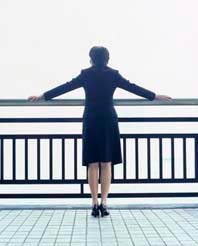
According to Wolfe (2011), balance implies that there is an equilibrium or uniformity among the parts of a design (p. 205). To achieve balance, a garment or ensemble should have equal visual weight throughout the design. Using structural features, added embellishments, or decorations to a garment contribute to the appearance of a garment or ensemble being balanced or not. A clothing designer can use surface designs on fabric to construct a garment, creating visual balance. Further, color, line, and texture can impact the balance of a design. For example, cool and light colors have less visual weight than dark, warm colors. An individual wearing a small amount of a dark, warm color, can balance it out with a larger amount of cool, light colors.
Balance used in clothing design can be categorized into two groups: formal and Informal balance. When a garment or ensemble has equal visual weight on either side, or is symmetrical, formal balanced is achieved. The presence of identical details placed equal distance from the center, such as pockets, seams, pleats, or tucks, are good examples of how formal balance is used in uniforms, blazers, blue jeans, and other common garments. Formal balance is the most common and inexpensive application of design principles (Wolfe, 2011).
To achieve informal balance, a garment is created using asymmetrical features, such as line, color, shapes, and textures. The most common use of informal balance is when a garment is constructed using fabric that has a diagonal line design or closures that are off-centered, such as a zipper or neckline. Accessories used in an ensemble can create informal balance that brings interest to a solid-color garment.
Proportion/Scale
Proportion is defined by Wolfe (2011) as the spatial or size relationship of all parts of a design to each other and the whole garment or ensemble (p. 206). Designing clothing for the human body requires unequal parts or garments to be used. A good illustration of this is a dress. The bodice of a dress can be smaller than the portion of the dress that goes from the waist to the knee, calf, or ankle. In order for clothing to have visual appeal on the human body, it is recommended that it flatter the wearer's natural body shape. The design details found in clothing can contribute to the overall proportion of an ensemble. Details such as yokes, collars, pockets, accessories, buttons, and trimmings should be in proportion to the overall garment size. When the size of the sunglasses is relative to the face of the wearer, proportion is achieved. Some trends encourage the use of oversized sunglasses, which makes the face appear visually smaller. Overall, when all parts of a garment or outfit work well together, the result is a well-proportioned look.
Emphasis

Emphasis is used to create interest in a garment or draw attention to a certain part of an ensemble. When emphasis is used by an individual or a designer, one feature of the ensemble is visually more prominent in a design than others. For example, a bright necktie that is contrasting to the color of a men’s dress shirt draws the eye to the tie rather than the shirt. Therefore, the eye is drawn to an item of emphasis first rather than other features in the garment or outfit. Examples of items used to create emphasis are: bow, appliqué, monogram, accessories, belts, scarves, neckties, jewelry, decorative trimmings, tucks, gathers, ruffles, and buttons. Color, line, and texture can also be used to draw attention to parts of the body such as the waist, chest, arms, one shoulder, etc. (Wolfe, 2011).
Rhythm

Rhythm creates a sense of movement in a design. The eye moves from one feature on the body to another with the use of this principle. Further, a pattern or texture is created with the application of rhythm to the surface design of fabrics used in the construction of clothing items or products. Specific applications of rhythm are classified in the following categories: gradation, opposition, radical arrangement, repetition, and transition.
Gradation refers to a design pattern that gradually increases or decreases in size, shape, or color. An example is when designers use a gradient-dying technique called ombre that uses a gradual change in color from light to dark across the textile. Opposition is rhythm created with multiple lines converging to form a right angle. One of the most common uses of this form of rhythm is found in a plaid shirt or other plaid or check pattern (Wolfe, 2011). Radial arrangement is created when a pattern has a central starting point. Wolfe (2011) suggests that this form of rhythm can be created with tucks, seams, darts, flowing lines, or colors that fan out from a central area (p. 210). Tie-dye is an example of creating a radial arrangement design on fabric using color. Repetition is when a specific pattern, line, shape, color, or texture is repeated in a garment. Transition is a technique used to move the eye between different parts of a design at a more gradual pace rather than an abrupt change in direction (Wolfe, 2011, p. 209). An example of this would be a continuous line created by a scarf, ruffles, or gathers.
Rhythm in a garment or ensemble is distorted when a surface design, such as a plaid, is not matched accurately at the seams. When this occurs, the movement of a garment stops at each seam, confusing the look's rhythm and the overall design's harmony.
Harmony
Harmony occurs when the overall design, garment, or ensemble achieves visual unity. Wolfe (2011) asserted that when design elements (color, shape, line, and texture) are used effectively within the parameters of design principles (balance, proportion, emphasis, and rhythm), harmony is created. Another consideration of the designer or individual when creating or choosing clothing is the shape and form of the body. Harmony cannot be achieved unless the clothing or dress complements the wearer. All parts of the ensemble need to work together to achieve the desired look. Whether an ensemble is harmonious or not depends upon the observer's subjective opinion.
Conclusion
Design principles serve as guidelines for applying design elements to a design-related task. Clothing and fabric designers use these guidelines to achieve a visually pleasing or harmonious design that consumers will integrate into their personal wardrobes. Whether designing clothing or mixing and matching clothing in a personal wardrobe, design principles can be a useful tool to simplify the process of looking one’s best.
References
- Nielson, K. J., & Taylor, D. A. (2011). Interiors: An introduction. McGraw Hill.
- Wolfe, M. (2010). Fashion! Goodheart-Wilcox.
Published January 2016
Utah State University Extension
Peer-reviewed fact sheet
Authors
Elizabeth Hale, USU Extension Intern; Joanne Roueche, CFCS, Associate Professor, USU Extension; Lindsey Shirley, Ph. D., USU Extension Clothing & Textiles Specialist