
Wildfires and Adolescent Mental Health: A Call to Action
Introduction
Key Message
Wildfires can be emotionally difficult for adolescents, but many recover well with time and support. Communities can help by recognizing higher-risk experiences, strengthening family and social supports, creating pathways to professional care, and follow-up over time.
Wildfires are no longer isolated disasters in Utah and across the American West; for many communities, they have become recurring events that disrupt landscapes, economies, homes, schools, and daily life. The 2026 season has brought this reality into sharp focus. By early August, more than 474,000 acres had burned across Utah from 755 wildfire ignitions, and the state had already experienced record losses of woodland and forest acreage (Maffly, 2026). Public attention during and after these events focuses on fire suppression, damaged infrastructure, economic losses, air quality, and ecological recovery. Less visible, however, are the psychological effects that may remain after evacuation orders are lifted, and the smoke begins to clear.
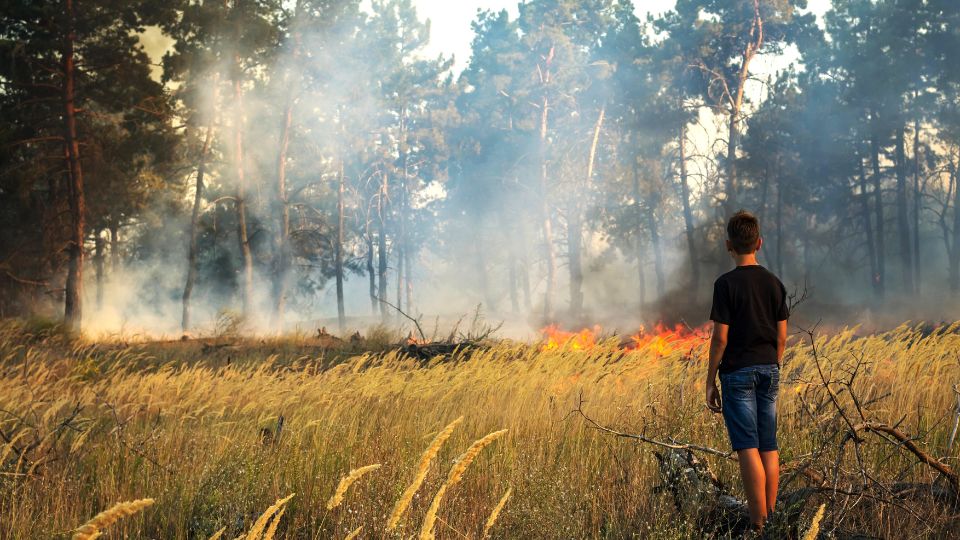
For adolescents, wildfire exposure may carry heavy psychological burdens. Exposure may include witnessing flames or destruction, fearing for one's life or the safety of family members, evacuating from home, losing property or pets, experiencing the injury or death of someone close, enduring displacement or school disruption, living through repeated wildfire events, or being exposed to wildfire smoke even when the flames are distant. These experiences may not affect all adolescents in the same way. The type and severity of exposure, perceived threat, previous experiences, family circumstances, social support, and access to resources can all influence psychological outcomes.
Although wildfires affect people across the lifespan, adolescents warrant focused attention because wildfire can disrupt several systems that are especially important during this developmental period, including family relationships, peer networks, schools, routines, housing stability, and a developing sense of safety and identity. A recent systematic review of 19 studies examining nine wildfire events across six countries found consistent evidence linking wildfire exposure with adolescent mental health concerns, particularly post-traumatic stress disorder (PTSD) and depressive symptoms. Perceived threat, property loss, housing adversity, and injury to oneself or a family member emerged as important risk factors, while some symptoms persisted or worsened over time (Kemel et al., 2025).
This fact sheet does not suggest that every adolescent exposed to wildfire will develop a mental health disorder. Rather, it highlights what current research suggests about who may be most vulnerable, what factors may support recovery, and where significant gaps in knowledge and services remain. Its purpose is to help Extension professionals, educators, mental health providers, families, emergency managers, and community leaders consider adolescent well-being as part of wildfire preparedness and recovery alongside ecological, economic, and physical recovery efforts. Figure 1 shows an effective response pathway for community professionals.
| 1. NOTICE | Look for higher-risk experiences and changes in functioning: intense fear, direct loss, injury, or danger to loved ones, displacement, school disruption, pre-existing mental health concerns, repeated fire exposure, or symptoms that persist. |
|---|---|
| 2. STABILIZE | Help restore safety, predictable routines, reliable information, sleep and daily structure, school continuity, and practical support for families. Do not assume trauma; ask what the young person needs. |
| 3. CONNECT | Strengthen supportive caregivers, peers, schools, trusted adults, and community relationships. Social support is one of the most consistent protective factors identified in the wildfire literature. |
| 4. REFER | Create clear pathways to qualified mental health care when distress is severe, persistent, worsening, or interfering with daily life. Community programs should complement—not replace—clinical care. |
| 5. FOLLOW UP | Recovery changes over time. Check in after families return home, school routines resume, smoke events recur, anniversaries approach, or new fires threaten the community. Evaluate local programs and access barriers. |
What Current Research Suggests
Research indicates that wildfire exposure can affect adolescent mental health. However, outcomes vary considerably according to the type and severity of exposure, the adolescent's circumstances before the disaster, and the support available during recovery. Kemel and others (2025) found consistent associations between wildfire exposure and PTSD and depressive symptoms, but also substantial variation in study design, exposure measurement, and follow-up periods. These limitations make it inappropriate to assume that all adolescents will respond to wildfire in the same way.
- All adolescents will not respond to wildfire in the
same way. - Social and parental support are some of the
most consistent protective factors identified in
the wildfire literature.
However, the nature of the wildfire experience appears to matter as much as, and sometimes more than, simply living in an affected area. Across studies, greater perceived threat, fear for one's life or the lives of family members, property or housing loss, and injury to oneself or someone close have been associated with poorer psychological outcomes (Kemel et al., 2025). Mellado (2025), for example, studied 292 Chilean adolescents 6 months after a mega-wildfire and found that adolescents who experienced greater fear reported greater PTSD, depression, anxiety, and stress. Parental support, in contrast, was associated with lower depression, anxiety, stress, and suicidal ideation.
Recent research following the deadly Mati wildfire in Greece further illustrates why severity and context are important. Ten months after the disaster, a study of 393 adolescents reported substantial PTSD and sleep difficulties. Adolescents were at greater risk when someone close to them had been seriously injured or trapped, while greater social support was associated with fewer emotional and sleep difficulties (Kolaitis et al., 2026). Because the Mati fire involved extraordinary loss of life and destruction, these findings should not be generalized to every wildfire event; rather, they demonstrate how direct threat, loss, and disruption can shape adolescent responses.
Wildfire smoke may also represent an additional and distinct pathway of risk. A 2025 California study of mental-health-related emergency department visits during the 2020 wildfire season found that increases in wildfire-specific fine particulate matter (PM2.5) were associated with higher visits for several mental health conditions. Youth specifically showed increased emergency visits for some mood-related outcomes (Jung et al., 2025). These findings show that adolescents may experience wildfire-related health effects even when they are geographically removed from flames, evacuation, or property loss. At the same time, smoke-related mental health research remains emerging and should be distinguished from research examining traumatic wildfire exposure.
What About Long-Term Effects?
Evidence regarding the duration of wildfire-related distress is still developing. Kemel and others (2025) found that some adolescent symptoms persisted or worsened during follow-up and concluded that affected communities should have access to sustained psychosocial support. However, a large Australian longitudinal study offers an important counterpoint. Among 2,967 adolescents followed for 24 months, 167 reported direct bushfire harm. Bushfire harm itself did not significantly predict depression, anxiety, psychological distress, insomnia, or suicidality 2 years later. Earlier mental health symptoms, adverse childhood experiences, and previous mental health problems were stronger predictors of later outcomes (du Toit et al., 2026).
Taken together, these findings suggest that long-lasting psychological distress is possible but not unchangeable. Wildfire exposure should therefore neither be minimized nor assumed to result in chronic mental health problems for every adolescent. A more useful approach is to identify young people experiencing substantial threat, loss, displacement, pre-existing vulnerability, repeated exposure, or persistent symptoms, and ensure appropriate support remains available throughout recovery.
Risk and Protective Factors
Adolescent responses to wildfire are seemingly shaped by an interaction of the disaster itself, previous life experiences, family circumstances, and available social support. The following factors are especially relevant when communities consider who may need additional attention after a wildfire:
- Greater perceived threat and fear. An adolescent's belief that their own life or someone else's life is in danger is one of the most consistent predictors of PTSD and other symptoms (Kemel et al., 2025; Mellado, 2025).
- Direct loss and disruption. Property loss, housing instability, injury, separation from loved ones, school disruption, and uncertainty about family safety can increase distress (Kemel et al., 2025; Kolaitis et al., 2026).
- Pre-existing vulnerability. Previous mental health symptoms, adverse childhood experiences, and earlier mental health difficulties can shape recovery and may be more predictive of later outcomes than wildfire exposure alone (du Toit et al., 2026).
- Family and social support. Supportive caregivers and stronger social support are associated with fewer symptoms following wildfire exposure (Mellado, 2025; Kolaitis et al., 2026).
These protective factors are not unique to wildfire, nor should they be presented as wildfire-specific treatments. Rather, current evidence suggests that familiar sources of resilience, including supportive caregivers, peer connection, stable routines, school continuity, community belonging, and access to qualified care, may be particularly valuable when wildfire has disrupted an adolescent's normal support systems (Figure 2).
| Risk indicators | Protective supports |
|---|---|
|
|
Note. These factors help identify possible risk and sources of support; they are not a diagnostic tool and are not all specific to wildfire trauma.
What We Still Don't Know: Research and Intervention Gaps
Despite growing evidence that adolescents can experience significant psychological distress or burden following wildfire exposure, much less is known about how best to support recovery. Research has been far more successful at identifying symptoms and risk factors than at evaluating interventions. Wildfire-specific programs designed for adolescents remain scarce, and few have undergone rigorous evaluation. One example, Sonoma Rises, demonstrated the feasibility and preliminary efficacy of a mobile application designed to reduce post-disaster distress among adolescent wildfire survivors (Heinz et al., 2022). More recent reviews describe telehealth, trauma-informed school support, and allied-health approaches as promising, but these models remain unevenly implemented and insufficiently studied in wildfire-affected youth populations (He et al., 2026).
We Need to Understand Recovery Over Time
Longitudinal research remains a significant gap. Cross-sectional studies can identify distress following a wildfire, but they cannot fully explain which adolescents recover naturally, which experience persistent difficulties, or which develop symptoms months or years later. Reviews continue to call for larger longitudinal studies that use consistent measures of exposure and mental health outcomes (Oerther et al., 2024; Kemel et al., 2025). The emerging evidence also suggests that pre-existing mental health concerns and adverse childhood experiences may be important predictors of later outcomes, emphasizing the need to examine what adolescents were experiencing before the disaster as well as what happened during it.
We Need to Know Who Is Being Missed
Existing research does not adequately represent the diversity of young people living in wildfire-prone communities. Rural and peri-urban adolescents may experience displacement, interrupted schooling, transportation barriers, provider shortages, and delayed access to services while simultaneously living in areas with substantial wildfire risk. A 2026 narrative review found particularly limited research involving rural and peri-urban youth, Indigenous youth, and other marginalized populations, and noted that sustained, culturally responsive interventions remain uncommon (He et al., 2026). These omissions make it difficult to know whether current findings or intervention models apply equally across communities and cultural contexts.
Wildfire Smoke Requires Separate Attention
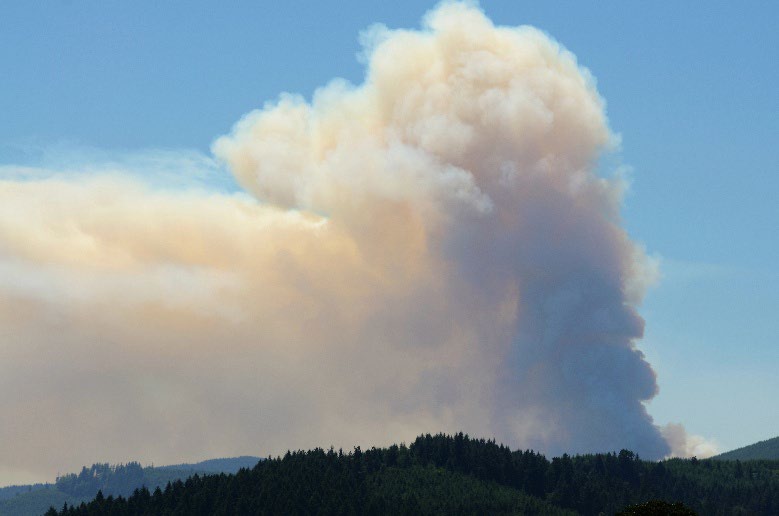
Wildfire smoke can extend hundreds of miles beyond the fire itself, meaning adolescents may experience prolonged wildfire-related disruption without direct exposure to flames, evacuation, or property loss. Reviews suggest possible associations between wildfire smoke and psychological well-being, particularly during chronic or persistent smoke events (Eisenman & Galway, 2022). Recent work using wildfire-specific PM2.5 strengthens concern about short-term mental health service use (Jung et al., 2025), but the mechanisms and adolescent-specific effects remain insufficiently understood. Researchers have specifically called for improved exposure measures that distinguish wildfire PM2.5 from other forms of air pollution (Oerther et al., 2024).
Promising Approaches Still Need Testing
The lack of wildfire-specific intervention research also creates an opportunity to examine approaches that have shown promise in other youth populations. Nature-based interventions, for example, were associated with short-term improvements in resilience in a 2025 systematic review and meta-analysis of 15 studies involving 2,571 participants, although the authors cautioned that the evidence was heterogeneous and methodologically limited (Fan et al., 2025). There is currently insufficient evidence to describe nature-based, or awe-informed, programming as a treatment for wildfire-related psychological distress. These approaches are better understood as promising areas for research, particularly when combined with established supports such as family connection, peer relationships, stable routines, trauma-informed care, and access to qualified mental health professionals.
With this said, the most pressing question is no longer simply whether wildfire can affect adolescent mental health. Increasingly, the questions are:
- Which adolescents are most likely to need additional support?
- What forms of support are effective?
- When they should be offered?
- How can communities make them accessible over time?
Answering those questions will require longitudinal research, more representative samples, consistent measures of wildfire exposure, and rigorous evaluation of interventions designed with the needs and strengths of affected communities in mind.
Conclusion and Call to Action
We need a more thoughtful approach to
wildfire recovery, one that recognizes
adolescent mental health alongside
physical safety, ecological restoration,
infrastructure, and economic recovery.
Wildfire affects adolescent mental health in significant ways, but distress and burden is neither uniform nor inevitably long-lasting. Many young people will recover with the support of families, peers, schools, and communities. Others, particularly those who experience intense fear, personal loss, displacement, injury, repeated disaster exposure, or existing mental health challenges, may need additional support during recovery (Kemel et al., 2025; du Toit et al., 2026).
The emerging evidence therefore calls for neither alarm nor inaction. Instead, it points toward a more thoughtful approach to wildfire recovery, one that recognizes adolescent mental health alongside physical safety, ecological restoration, infrastructure, and economic recovery. Communities do not need to assume that every adolescent exposed to wildfire has been traumatized, but they should be prepared to recognize distress, strengthen protective supports, and connect young people with appropriate services when problems emerge.
Extension professionals, educators, emergency managers, health systems, families, and community organizations are well positioned to act on this pathway.
- Preparedness plans can include adolescent mental health before a fire occurs.
- Schools and community partners can identify referral options and communication strategies.
- Families can be given practical information about common stress reactions.
- Local organizations can examine whether transportation, cost, geography, language, or provider shortages are preventing adolescents from receiving care.
Wildfire recovery is about more than what happens to a landscape after it burns. It is also about what happens within families, schools, relationships, and communities as people rebuild a sense of safety and stability. Adolescents should be part of that conversation. The call to action is not to assume lasting harm, but to be prepared: notice those who are struggling; strengthen the systems that support recovery; connect young people to appropriate care; and build better evidence through research to understand what produces successful outcomes for the future.
For community professionals: Before fire season, identify local youth mental health referral options, school contacts, transportation barriers, and trusted community partners. During recovery, use Figure 1 as a simple check: Notice → Stabilize → Connect → Refer → Follow Up.
References
Acknowledgments and Disclaimers
This fact sheet summarizes current research and is intended for education and community planning. It is not a diagnostic or treatment guide.
The author used Elicit AI and Heuristica AI to assist with literature discovery and research organization. ChatGPT was used for editorial support, including clarity, readability, and language refinement. All sources, interpretations, conclusions, and final content were reviewed by the author, who assumes full responsibility for the accuracy and integrity of this work.

August 2026
Utah State University Extension
Peer-reviewed fact sheet
Authors
Troy D. Allan, Assistant Professor, Utah State University Extension

Troy Allan
Professional Practice Extension Assistant Professor Home and Community | Rural Mental Health | Veteran Initiatives
Home and Community