
Quick Guide to Extension Impacts: Forestry
Reducing Hazardous Fuels to Improve Forest Health
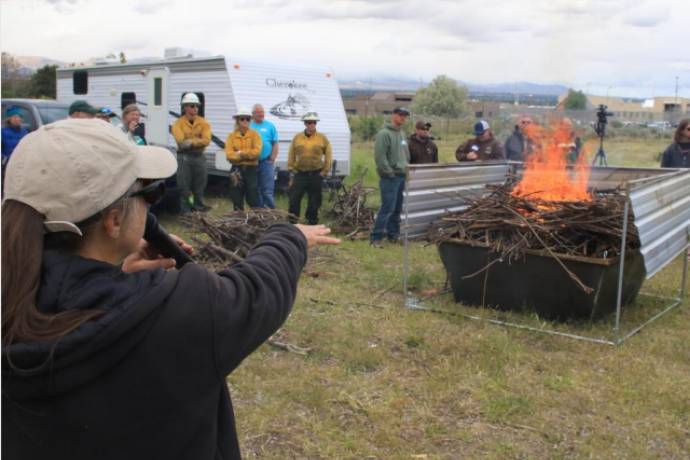
DIY Biochar Kilns Remove Hazardous Fuels and Improve Forest Health in Utah
Educating the public and landowners about biochar and its applications, while demonstrating the feasibility of building and using biochar kilns, improves the health of Utah’s forest, saves taxpayer money, and creates a valuable product, biochar.
- Darren McAvoy, USU Extension Forestry Assistant Professor
Situation
The 2017 fire season was the most expensive in U.S. history, with costs exceeding $2 billion. Past fire suppression and land use change has caused some tree species such as pinyon juniper (PJ) to expand their range in the Intermountain West, resulting in increased fire risk and decreased forest health, watershed health, and forage for wildlife and livestock. Currently, there are more than 9 million acres of PJ in Utah, and the BLM treats and removes 40,000 acres of PJ a year.
More people live in the wildland-urban interface now than in the past, which increases wildfire threat to both private and public structures as well as increased wildfire risk to watershed health. Fuel loads in these forests need to be reduced to decrease the costs and risks associated with fighting wildfires, to slow pest outbreaks in overly dense forests, and to keep forests healthy.
Extension Responded
At a workshop on May 17, 2017 USU Forestry Extension demonstrated how to use innovative, low cost, low-tech, metal kilns to reduce hazardous fuel loads, thin unhealthy forests, and make biochar in Utah’s forests.
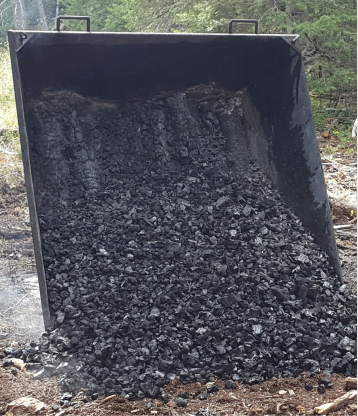
USU commissioned the construction of 4 metal kilns for this DIY biochar-making workshop, providing hands-on experience for 50 people. Attendees included foresters, fuels specialists, arborists, gardeners, and city managers. Traditionally slash/burn piles are used to dispose of waste wood in the forest, but the biochar kilns contain the fire which protects the soil, improves forest health by facilitating thinning of unhealthy and/or densely growing trees, and creates a valuable product (biochar). Workshop attendees learned how to load, maintain, and quench biochar in the kilns, and how to apply biochar as a soil amendment to forests and rangelands. Outputs from this project include biochar, reduction in forest fuels, and in the long-run, healthier forests.
- Megan Dettenmaier, Darren McAvoy, Lauren Dupéy, and Michael Kuhns
Impact
In the United States, the 2017 fire season was the most expensive in history with costs exceeding $2
billion. Because of fire suppression activities and land use changes, many trees, such as pinyon-juniper, have
expanded their range in Utah and as a result, increased fire risk and decreased forest health.
An increasingly large number of people live at the wildland urban interface, which highlights the wildfire risks
posed to private and public infrastructure. If no action is taken to reduce the fuel loads currently accumulating
in Utah forests, the costs and risks associated with fighting wildfires will increase, pest invasions may intensify
because pests easily travel through dense forests, and as a result, general forest health will decline.