
Let the Wild Become Holy Again
By Troy D. Allan, Ed.D., MFA
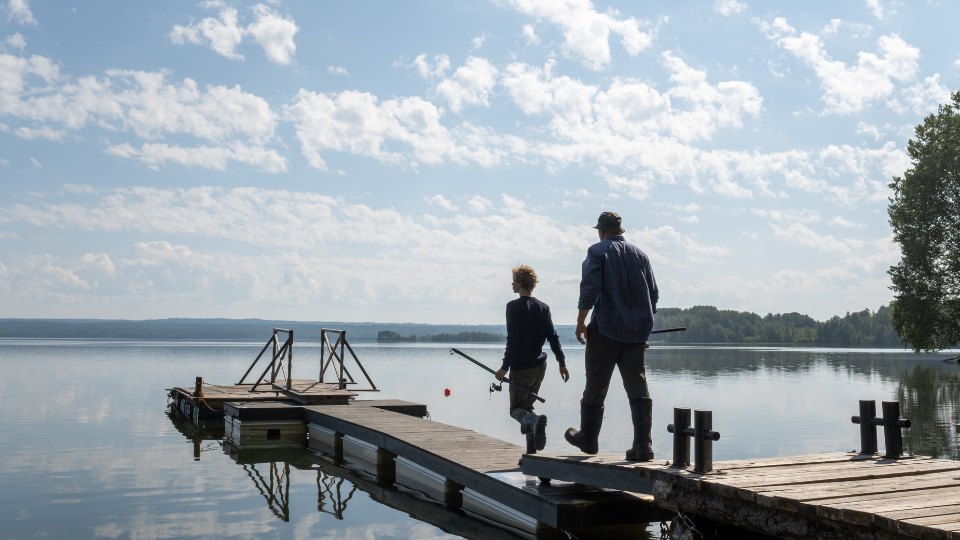
Last fall, on the upper fork of the Fremont River, my daughter and I hiked into a remote stretch of water to fly fish for native trout. The leaves had fallen from the trees, and we walked along a dull, ruby-and-orange carpet. At my ranch, not far from this location, winter had already settled across my pastures, turning the grasses brittle and brown, but here, fed by a gurgling fifty-five-degree spring, the riverbanks were alive. Tall blades of bright green grass stretched their arms to feel the warmth of the yellowing sun.
For a moment, the world stopped, as if I had stepped outside of myself. We stood on the bank, with the scent of pine at our backs, watching trout with dark green backs suspended in the cool, clear water. There was no hurry, no rush, no lesson, nor any curriculum to echo scripts: just light, color, sound, water, and breath. The moment on that trail became sacred, though no one had named it so.
Lately, I’ve been reading the works of David Abram. His writing reminds me that the natural world is not merely passive scenery, but an animate, expressive presence—something that speaks if we take the time to listen. The wild speaks kindness, love, joy, and rest. It offers not just beauty but deep invitation, as if the wild itself is a kind of speaking liturgy—ancient, holy, and alive. In this way, for me, wildness becomes a form of sacred pause.
But this kind of sacred rest—this wild, breathing kind—stands in quiet contrast to the version many of us grew up with. For some, sacred time came with structure, quiet rules, and the silent weight of heavy expectations. It was about reverence but not necessarily wonder. We were taught to sit still, to be good, to keep things contained. Emotion was something to manage, not explore. And rest was more concept than practice. And awe? Awe belonged to sermons, not trout streams, wind in the pines, or the sky when it turns to fire in late October or shows itself through the cosmos. Yet research is beginning to affirm what many of us have felt intuitively: awe is a powerful emotion that expands our sense of time, reduces stress, and increases our connection to others and the world around us (Keltner, 2023). The natural world doesn’t just inspire—it heals.
Annie Dillard wrote, “Does anyone have the foggiest idea what sort of power we so blithely invoke? ... It is madness to wear ladies’ straw hats and velvet hats to church; we should all be wearing crash helmets.” She wasn’t mocking faith but reminding us that genuine reverence and awe should crack us open. That maybe awe isn’t something we can choreograph. Perhaps it’s something that finds us when we finally step into the wild.
In the wild, I found something deep, old, maybe. A kind of sacred rhythm that doesn’t ask me to be good, quiet, or still—just present. The wild has taught me that rest isn’t always passive; it can be intensely alive.
On that day, I found a kind of sanctuary that sustains me. Not one confined to a single day, place, or practice, but one that rises whenever I am willing to stop, listen, or belong. Sometimes, in the sound of wings lifting from a fencepost. Sometimes, in the long shadows of dusk across my pasture. Sometimes, like that day on the river, in the quiet company of a child, where nothing needs to be taught.
Academic and theologian Barbara Brown Taylor writes about finding the divine in everyday geography—in movement, soil, and skin. Her reflections echo a growing body of scholarship suggesting that sacredness is not separate from the land but embedded within it. Our relationship with the earth may be less about stewardship and more about kinship.
What I’ve come to believe is this: wildness doesn’t pull us away from what is holy; it leads us deeper into it. Awe is found standing beneath a night sky or wading into a cold stream, and it is not a distraction from wellness or meaning. It’s a doorway. It softens the noise. It loosens the grip of control. It reminds us that rest is not a reward; it is a rhythm, a rhythm our minds and bodies have always needed but rarely honored.
In a world that tells us to go faster, harder, and stay in line, the most sacred thing we can do is walk outside and listen. To let the wild become holy again.
Suggested Resources for Learning More
- Abram, D. (1996). The Spell of the Sensuous: Perception and Language in a More-Than-Human World. Vintage Books.
- Dillard, A. (1982). Teaching a Stone to Talk: Expeditions and Encounters. Harper & Row.
- Keltner, D. (2023). Awe: The New Science of Everyday Wonder and How It Can Transform Your Life. Penguin Press.
- Macfarlane, R. (2008). The Wild Places. Penguin Books.
- Taylor, B. B. (2009). An Altar in the World: A Geography of Faith. HarperOne.
- Greater Good Science Center – Awe Research: https://greatergood.berkeley.edu/topic/awe
- David Abram’s Alliance for Wild Ethics: https://wildethics.org
- The Sacred Place Where Life Begins: Gwich’in Women Speak (2015) – On indigenous reverence for land.
- The National Parks: America’s Best Idea (2009) – Ken Burns’ deep dive into nature and national heritage.
- My Octopus Teacher (2020) – A powerful story of wild connection and presence in the natural world.
References
Abram, D. (1996). The Spell of the Sensuous: Perception and Language in a More-Than-Human World. Vintage Books.
Berry, W. (2018). The Art of the Commonplace: The Agrarian Essays of Wendell Berry. Counterpoint.
Dillard, A. (1982). Teaching a Stone to Talk: Expeditions and Encounters. Harper & Row.
Keltner, D. (2023). Awe: The New Science of Everyday Wonder and How It Can Transform Your Life. Penguin Press.
Taylor, B. B. (2009). An Altar in the World: A Geography of Faith. HarperOne.