
Everyday Creativity for Better Mental Health
Emma Taylor & Cara Murray
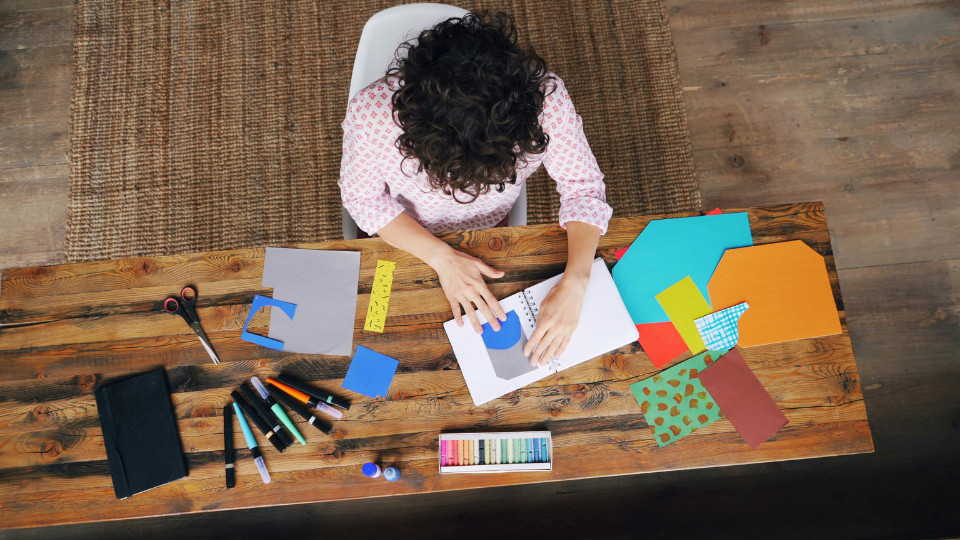
Mental wellbeing is about more than managing stress, it also involves finding connection, purpose, and joy in everyday life. Supporting mental health doesn't always require major lifestyle changes; small everyday activities can make a meaningful difference.
One simple but often overlooked way to support mental health is through creative expression. Creativity is the act of expressing yourself or making something meaningful through imagination, curiosity, or hands-on activities. It is available to everyone, and you don’t have to be an ‘artist’ to engage in creative expression!
Being Creative Supports Better Mental Health
Creative activities can support mental wellbeing in several ways. They encourage mindfulness, provide a healthy outlet for expressing emotions, and can help strengthen social connections that are important for our mental health (Orwig et al., 2021).
- Mindfulness & Wellbeing
Creative activities can encourage mindfulness by helping us intentionally focus on what we are doing, notice our thoughts and feelings, and staying connected to the present moment. The act of creating can provide space to slow down, reflect, and develop greater self-awareness. Research has found that creative activities may help reduce symptoms of anxiety and depression while increasing self-esteem, resilience, and overall well-being (Sawada et al., 2024). By focusing attention on the creative process, individuals may find a healthy outlet to manage stress and connect with others.
- Creative Expression
Making time for creative expression can be more than a hobby, it may be an investment in personal well-being (Alexander et al., 2021; & Fancourt et al., 2025). There are lots of activities you can try that don’t require a lot of money or talent, including:
- Gardening
- Writing in a journal
- Learning a new creative hobby (like crocheting, for example)
- Baking bread
- Painting a flowerpot
- Taking pictures
- Drawing, sketching, or doodling
- Adult coloring books
You don't have to be an expert to start a garden or a writer to keep a journal. Creativity is less about talent and more about giving yourself permission to explore, learn, and express yourself. Research suggests that the benefits come from participating in the creative process, not from the final result (Shukla et al., 2022). As you begin a creative arts activity, it can help to use positive self-talk to remind yourself that what you create does not need to be perfect. What matters most is not necessarily what you make, but how the process supports and strengthens resilience and mental wellbeing.
- Groups & Community Workshops
Creative activities have a way of bringing people together, helping to nurture social connections that support mental health (Alexander et al., 2021). Participating in creative groups or workshops creates opportunities to build relationships, learn new skills, and develop a sense of community belonging. These positive social experiences can help reduce feelings of loneliness while reinforcing protective factors that contribute to resilience and overall wellbeing. You can find these groups and workshops through your local Utah State University Extension office, library, museum, community or recreation center or local arts organization
Start working creative expression into your life!
If you're looking for a simple way to support your mental health, consider making creativity part of your routine.. Set aside a few minutes each week to draw, write, bake, garden, crochet, paint, or try something entirely new. Better yet, invite a friend or family member to join you. You may be surprised to find that small moments of creativity can become meaningful investments in your wellbeing. Here are a few resources to creative activities that can help get you started in your creative journey:
- Art therapy activity ideas: https://hummingbirdproject.net/art-therapy-ideas-10-ways-to-stimulate-creativity-in-older-adults/
- Creativity for adults: https://www.jeyram.org/creativity-for-adults
- Adult craft ideas: https://www.mostarle.com/blogs/news/adult-craft-activities-ideas-for-parties-relaxation-and-creative-fun?srsltid=AfmBOopplHizXHhqukVcevAl_KzD1yBVycAkbxhfG_c5grXgQAB8LoYh
- How to spark creativity with 12 craft projects for adults with disabilities: https://www.opportunityvillage.org/disability-services/craft-projects-for-adults-with-disabilities
- Art therapy at home ideas: https://www.rivernorthcounseling.com/counseling/art-therapy-at-home-simple-creative-exercises/
- Brushing away stress: https://www.rmcad.edu/blog/brushing-away-stress-21-art-therapy-activities-for-self-expression-and-healing/
References
Alexander, R., Aragón, O. R., Bookwala, J., Cherbuin, N., Gatt, J. M., Kahrilas, I. J., … Styliadis, C. (2021). The neuroscience of positive emotions and affect: Implications for cultivating happiness and wellbeing. Neuroscience &Amp; Biobehavioral Reviews, 121, 220-249. https://doi.org/10.1016/j.neubiorev.2020.12.002.
Fancourt, D., Garnett, C., & Müllensiefen, D. (2025). The relationship between demographics, behavioral and experiential engagement factors, and the use of artistic creative activities to regulate emotions. Psychology of Aesthetics, Creativity, and the Arts, 19(3), 439–449. https://doi.org/10.1037/aca0000296.
Orwig, W., Diez, I., Bueichekú, E., Vannini, P., Beaty, R., & Sepulcre, J. (2021). Cortical Networks of Creative Ability Trace Gene Expression Profiles of Synaptic Plasticity in the Human Brain. Frontiers in Human Neuroscience, 15. https://doi.org/10.3389/fnhum.2021.694274.
Sawada, K., Koike, H., Murayama, A., Nishida, H., & Nomura, M. (2024). Appreciation processing evoking feelings of being moved and inspiration: Awe and meaning-making. Journal of Creativity, 34(1), 100076. https://doi.org/10.1016/j.yjoc.2024.100076.
Shukla, A., Choudhari, S. G., Gaidhane, A. M., & Quazi Syed, Z. (2022). Role of Art Therapy in the Promotion of Mental Health: A Critical Review. Cureus. https://doi.org/10.7759/cureus.28026.