
Aspen Health on Cedar Mountain: What Landowners Should Know

Overview
Study Details
- Original measurements were taken in 2008.
- Researchers remeasured 67 of the original 83 plots.
- Study area: Cedar Mountain, southern Utah.
- Elevation: generally above 8,200 feet.
- Monitoring focused on:
- Aspen abundance.
- Mortality.
- Crown health.
- Insect and disease damage.
- Regeneration and recruitment.
Aspen forests are one of the most valuable parts of the Cedar Mountain area, located in southwest Utah, and all Utah landscapes. They provide wildlife habitat, improve scenery, help slow wildfire spread, and support healthy watersheds and grazing lands (Figure 1).
Researchers, led by Chad Reid, then Utah State University (USU) Extension Iron County agent, first measured aspen conditions on Cedar Mountain in 2008. About 12 years later, USU researchers, led by then USU Extension Iron County agent Randall Violet and USU graduate student Jaycee Cappaert returned to most of the same locations to see how the forests had changed over time (see “Study Details” box). These precisely defined, small-scale areas that researchers used to measure and monitor forest health are called plots. While these findings are specific to Cedar Mountain, they may generally apply to other areas of Utah.
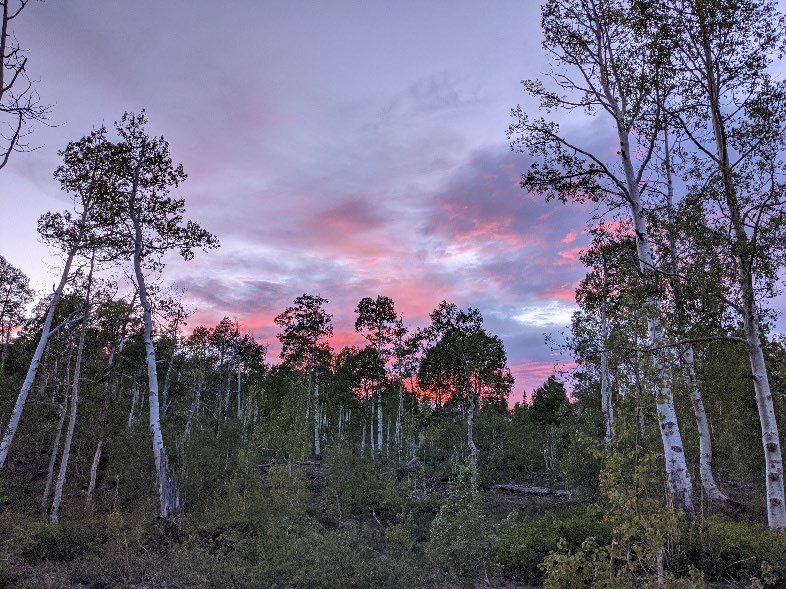
The main question was simple:
Are the aspens replacing themselves fast enough to survive long-term?
The answer is mixed. Some areas still have healthy young aspen growth, and browsing pressure from livestock and wildlife appears to have decreased in many places. However, many stands (groups of similar trees) are aging, more trees are dying, and too few young trees are growing into mature forests.
Without enough smaller, younger aspens surviving into larger-size classes, many stands may eventually shift to conifer (pine and fir) forests, brush, or grass, and unfortunately, weeds.
Helpful Definitions
- Regeneration: very young aspens, usually new sprouts or seedlings.
- Recruitment: young aspen that survive long enough to move into larger-size classes.
- Overstory: the mature forest canopy.
- Crown dieback: dead or thinning leaves and branches in the upper part of a tree.
- Basal area: a forestry measurement used to estimate how much tree cover exists in a stand.
- Stable aspen stand: an area where aspen still makes up at least 80% of the forest.
- Browsing: feeding on young trees by deer, elk, cattle, or sheep (ungulates).
Key Findings
1. Aspen forests are shrinking in some areas.
In 2008, most study plots were dominated by aspen. Today, fewer areas are primarily aspen.
- Areas considered “healthy/stable aspen” dropped from about 84% to 70%.
- More plots now contain no living aspen at all, increasing from 1% to 19%.
- Nearly 1 in 5 plots no longer had live mature aspen trees.
This suggests that parts of Cedar Mountain are slowly transitioning away from aspen. In fact, some areas of Cedar Mountain have lost aspen coverage during some of the author’s careers in Utah.
2. Aspen stands are getting older.
Many aspen stands contain larger, older trees but not enough younger, smaller trees to replace them. Researchers found:
- More dead standing trees than before (Figure 2).
- More areas with complete aspen loss.
- More insect and disease damage.
- Signs that many stands are aging without enough renewal (Figure 3).
Aspen naturally regenerates after disturbance such as fire, cutting, or large tree death. Without disturbance, forests often become older and less vigorous.
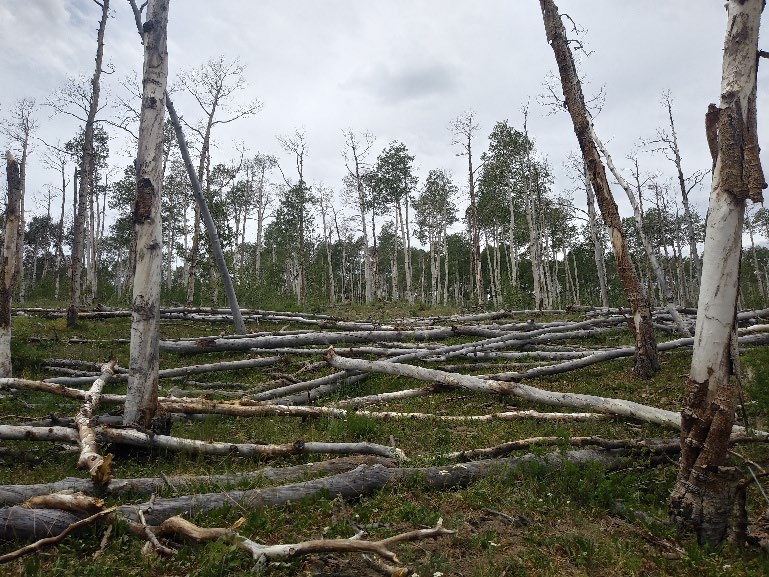
Figure 2. Dead Quaking Aspen Overstory on Cedar Mountain; Note Declining Aspen in the Background
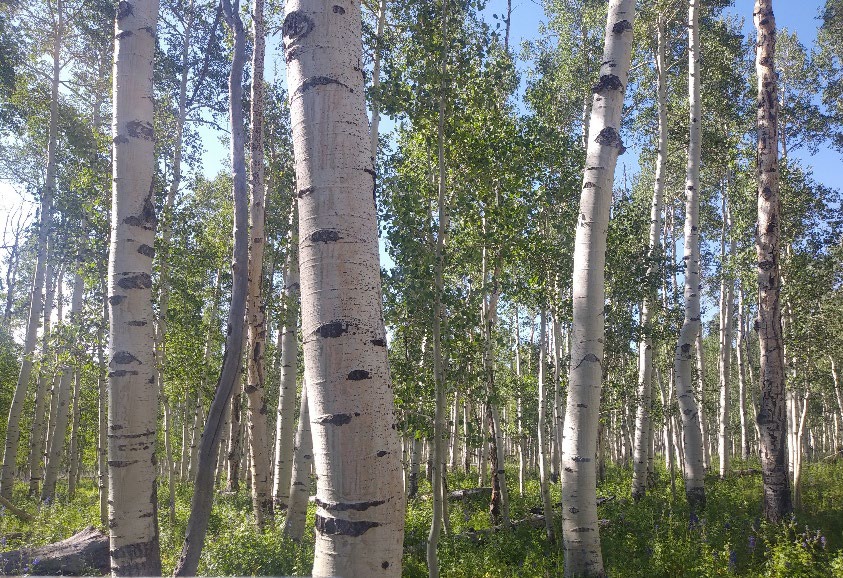
Figure 3. Dense Quaking Aspen on Cedar Mountain With No Young Trees
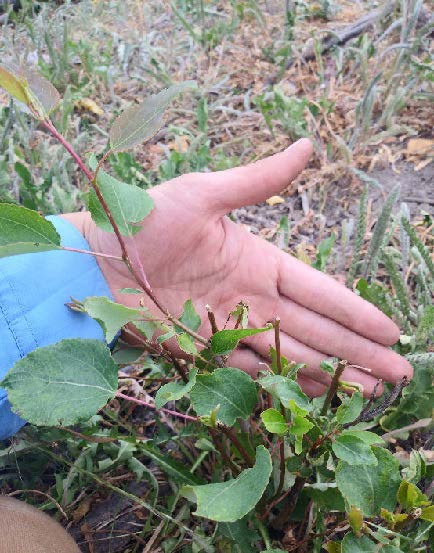
3. Young aspens are present, but many are not surviving.
Lacking regeneration was one of the most important findings. The number of small, young aspens increased overall compared to 2008. That is good news. However:
- Many plots still had no young aspens at all.
- Too few young aspens are surviving into sapling and mature stages.
- Regeneration (young trees) is uneven across the landscape.
In simple terms: Many young aspens are starting, but not enough are growing up into full-sized trees.
This raises concerns about the future forest.
4. Browsing pressure appears lower than before.
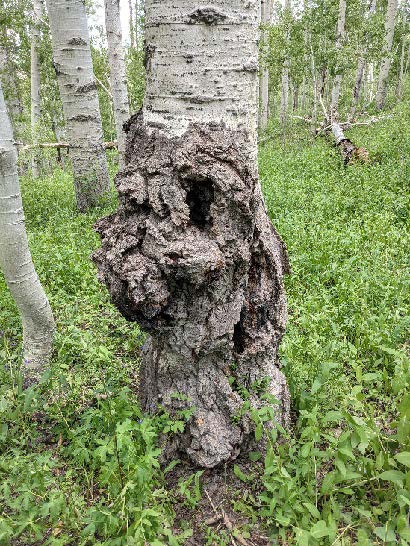
Browsing deer, elk, and livestock can prevent young aspens from growing tall enough to survive (Figure 4). Compared to 2008:
- Fewer plots had heavy browsing.
- More plots had low browsing levels.
This may be helping some regeneration succeed. Still, browsing remains a concern in areas with little or no young trees coming in.
5. Insects, disease, and crown damage are increasing.
Researchers found more signs of:
- Trunk decay (Figure 5).
- Cankers and fungal damage.
- Dead branches and crown dieback.
Trees with more crown damage were also more likely to die sooner. These problems are often worse in older and drought-stressed stands.
What This Means for Landowners
Overall, many Cedar Mountain aspen forests are slowly declining due to:
- Aging.
- Limited disturbance.
- Insect and disease pressure.
- Incomplete regeneration.
- Poor survival of young trees into larger-size classes (due to drought and browsing).
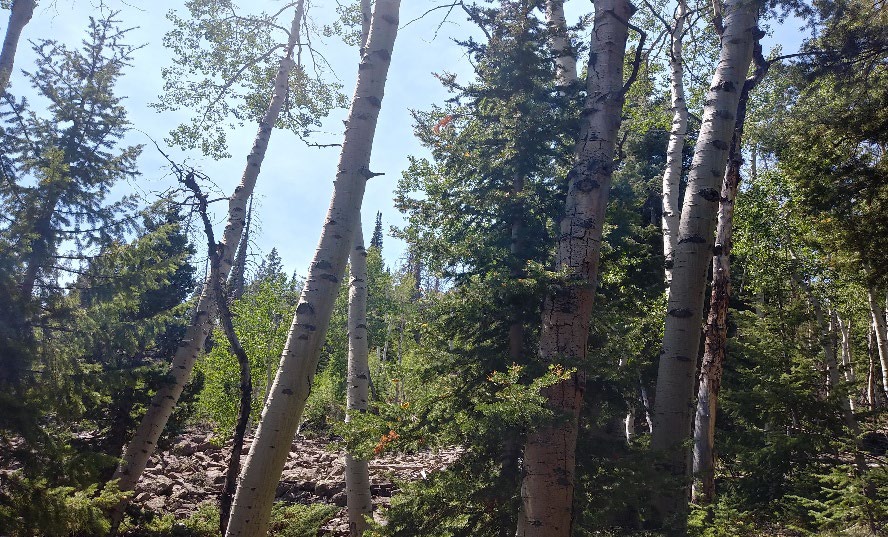
Researchers found no evidence of sudden, widespread collapse. Instead, the changes are gradual and ongoing. One challenge of slow but constant change is that it is hard for us to see when we visit the forest day by day or even year by year. Without enough successful regeneration and recruitment, some aspen stands may eventually convert to:
- Conifer forest (Figure 6).
- Brushlands.
- Open grasslands.
Management Considerations
Landowners who want to maintain or improve aspen stands should pay close attention to the following.
Young Aspen Survival
It is not enough to simply have young aspen sprouts or suckers present. Young aspens must survive long enough to become:
- Saplings.
- Mature overstory trees.
This is currently the biggest weakness in many stands.
Browsing Pressure
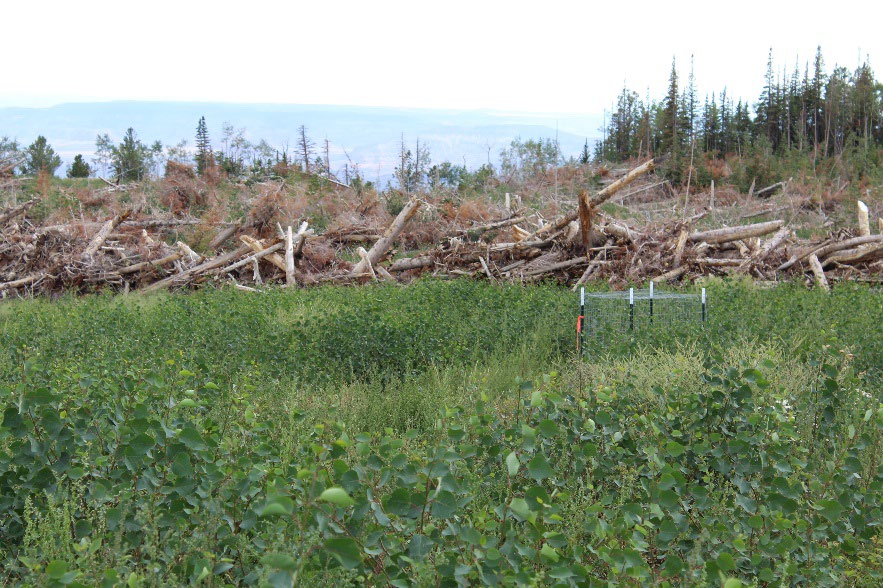
Photo: Kristen Nesbit
Heavy browsing can eliminate future aspen forests even when regeneration starts well. Possible tools include:
- Adjusting livestock timing or duration.
- Temporary fencing.
- Resting areas after disturbance.
- Managing wildlife pressure where possible.
Disturbance and Aspen Renewal
Aspen responds very well to disturbance. In some areas, carefully planned actions may help stimulate regeneration, such as:
- Cutting that targets large aspen.
- Prescribed fire that kills large aspen.
- Removing competing conifers.
- Removing the entire overstory (Figure 7).
Utah aspen stands typically decline as they age and can benefit from active management. Aspen is a relatively short-lived species, and without applying some of these actions, there will likely be less aspen in the future.
Overall Conclusion
Cedar Mountain’s aspen forests are changing. The landscape still supports significant aspen acreage, but many stands are aging and losing mature trees faster than they are being replaced. The good news is that regeneration has improved in some areas and browsing pressure appears lower than in the past. The concern is that too few young aspen are surviving into the next age class. If current trends continue, some aspen stands may slowly disappear over time unless active management helps support successful regeneration and long-term recruitment. If private forest landowners are concerned about the health of their aspen or simply want to improve the many benefits provided by aspen, they are encouraged to contact their local area forester with the Division of Forestry, Fire, and State Lands, whose prime objective is to assist landowners with forest management needs.
Acknowledgments
The authors did not use generative AI in creating this content, and it is solely the work of the authors. Jaycee Cappaert provided the photos in this fact sheet, unless otherwise noted.
These studies focused on aspen health, browsing impacts, regeneration, drought stress, and forest succession in Utah and the western United States. If the reader is interested in the full report by Cappaert and others (2026), they can find it at “Quaking Aspen on Cedar Mountain, Utah: Status and Update.”
For correspondence or more information, contact Justin DeRose: justin.derose@usu.edu.
References
Bartos, D. L., & Campbell, R. B. Jr. (1998). Decline of quaking aspen in the interior west-examples from Utah. Rangelands, 20(1), 17–24.
Cappaert, J. (2023). Happy or SAD Quaking aspen (Populus tremuloides Michx.) on Cedar Mountain, Southern Utah (Publication 8882) [Master’s thesis, Utah State University]. All Graduate theses and Dissertations, Spring 1920 to Summer 2023.
Kitchen, S. G., Behrens, P. N., Goodrich, S. K., Green, A., Guyon, J., O’Brien, M., & Tart, D. (2019). Guidelines for aspen restoration in Utah with applicability to the Intermountain West [General Technical Report RMRS-GTR-390]. U.S. Forest Service, U. S. Department of Agriculture.
Rogers, P. C., Leffler, A. J., & Ryel, R. J. (2010). Landscape assessment of a stable aspen community in Southern Utah. Forest Ecology and Management, 259(3), 487–495.
Rogers, P. C., & Mittanck, C. M. (2013). Herbivory strains resilience in drought-prone aspen landscapes of the western United States. Journal of Vegetation Science, 25, 457–469. https://doi.org/10.1111/jvs.12099
Worrall, J. J., Marchetti, S. B., Egeland, L., Mask, R. A., Eager, T., & Howell, B. (2010). Effects and etiology of sudden aspen decline in southwestern Colorado, USA. Forest Ecology and Management, 260(5), 638–648. https://doi.org/10.1016/j.foreco.2010.05.020
September 2026
Utah State University Extension
Authors
Justin DeRose and Darren McAvoy

Darren McAvoy
Forestry and Wildland Resources Specialist
Wildland Resources Dept
Related Research
Are Organic Matter Soil Amendments Created Equal?
Each class of material has specific characteristics and management issues when it comes to using it as a soil amendment.
Backyard Composting in Utah
The benefits of using compost as a soil amendment include increasing soil tilth, fertility, water holding capacity, aeration, and drainage.
Gardening in Sandy Soils
Learn the basics of clay, silt and sand soils with an emphasis on gardening in soils with high sand content. Get tips for gardening tips for managing sandy soils, and the types of plants that grow best in sandy soils.
It's All About Soil Structure!
The single best soil amendment—the one that provides desirable benefits regardless of the soil one applies it to—is organic matter.

Policies and Programs for Water-Wise Residential Landscaping in Utah
Water-wise landscaping is the practice of using plants in a landscape that are adapted to local conditions and only need small amounts of water. Converting yards to water-wise landscaping conserves water and is a climate adaptation action residents can ta
Preparing and Improving Garden Soil
A great garden starts with healthy soil. In Utah, there are unique considerations for creating and maintaining healthy soils.