
Colostrum Management for Dairy Calves: Technical Guidelines for Consultant Evaluation and Implementation

Key Takeaways
- Colostrum provides antibodies that calves cannot obtain before birth.
- Calves should be fed 10%–12% of their body weight in colostrum within 2 hours of birth.
- Colostrum quality, quantity, timing, and cleanliness all influence successful passive transfer.
This fact sheet provides a technical overview of colostrum management in dairy calves, including evaluation methods and evidence-based recommendations for consultants, educators, and students.
Colostrum's Composition and Importance
Colostrum is the first milk produced after calving, and it is typically the first feed a newborn calf receives. It provides essential nutrients and immune components needed to support calf health immediately after birth. Colostrum contains several biologically active components, including immunoglobulins, leukocytes, growth factors, hormones, nonspecific antimicrobial factors, and nutrients (Godden et al., 2019).
Immunoglobulins
During gestation, the ruminant placenta prevents the transfer of maternal immunoglobulins to the fetus. As a result, calves are born immunologically naïve and rely on colostrum to obtain antibodies that help protect them against common diseases (Barrington & Parish, 2001). Immunoglobulin G (IgG) is the most abundant immunoglobulin in colostrum; it is the primary antibody responsible for providing systemic immunity in newborn calves (Larson et al., 1980).
Leukocytes
Colostrum also contains white blood cells, known as leukocytes (Duhamel et al., 1987). These immune cells may influence early immune responses in calves and contribute to immune system development. However, research has not consistently demonstrated clear effects of colostral leukocytes on practical outcomes such as respiratory or enteric disease or improved responses to vaccination (Godden et al., 2019).
Nutrients and Other Beneficial Components
In addition to antibodies, colostrum provides high levels of nutrients and other biologically active compounds that support the development and function of the calf’s digestive system (Hammon et al., 2013). Compared with whole milk, first-milking colostrum contains significantly higher levels of total solids, protein, fat, vitamins, and minerals. In Holstein cows, colostrum averages 23.9% total solids compared with 12.9% in milk, largely due to higher concentrations of protein and fat (Foley & Otterby, 1978). These nutrients provide critical energy needed for thermoregulation, metabolism, and early growth.
Colostrum also contains bioactive compounds such as growth factors, hormones, antimicrobial proteins, and oligosaccharides that support development of the calf’s gastrointestinal tract and immune system (Godden et al., 2019).
Evaluating Colostrum Management
Although colostrum contains many beneficial components, proper colostrum management is essential to ensure calves receive colostrum promptly after birth and in adequate quantity, quality, and cleanliness. Poor colostrum management can result in failure of passive transfer or lower levels of passive immunity within a herd, increasing the risk of disease and mortality during early life.
To achieve adequate passive transfer, calves must absorb sufficient IgG shortly after birth. It is estimated that calves require approximately 150–200 g of IgG to achieve adequate passive transfer. However, producers aiming for excellent passive transfer should target calves consuming at least 300 g of IgG shortly after birth (Godden et al., 2019).
Multiple factors go into managing the passive transfer of colostrum. Producers should evaluate colostrum quality, quantity, quickness, and cleanliness to successfully monitor passive transfer.
Colostrum Quality
As mentioned previously, colostrum contains multiple immune and nutritional components; however, the primary component used to evaluate colostrum quality is IgG. High-quality colostrum is currently defined as a minimum of 50 g/L of IgG (Godden et al., 2019).
Colostrum quality can vary widely among cows, with the 5th percentile having 24.9 g/L IgG and the 95th having 130.2 g/L IgG.
Several factors may influence IgG concentration, including parity, dry period length, environmental conditions before calving, vaccination status, and the time between calving and colostrum collection (Godden et al., 2019).
- Lactation: Older cows generally produce colostrum with higher IgG concentrations than first-lactation heifers.
- Timing of collection: Colostrum quality declines if collection is delayed after calving.
- Dry period length: Very short dry periods can reduce colostrum quality and yield.
- Heat stress: High temperatures during late gestation may negatively affect colostrum quality.
- Vaccination: Prepartum vaccination increases pathogen-specific antibodies in colostrum.
Visual consistency has been shown to poorly predict colostrum quality (Maunsell et al., 1999). The Brix refractometer can estimate IgG concentration in colostrum. This handheld instrument measures the percentage of solids in a solution and provides a simple way to assess colostrum quality on farm. A review presented that a Brix result of 22% or greater should be used to define colostrum as good and having IgG concentrations of at least 50 g/L (Buczinski & Vandeweerd, 2016).
Key takeaway: Always test colostrum with a Brix refractometer. Aim for ≥22% Brix to ensure high-quality colostrum.
Colostrum Quantity
A common recommendation is that newborn calves receive a volume of colostrum equal to 10%–12% of their body weight at the initial feeding, which corresponds to about 3–4 L for a Holstein calf (Godden et al., 2019). Research has shown that feeding larger volumes of colostrum at the first feeding improves passive transfer in calves. In one study, calves fed 4 L of colostrum shortly after birth followed by 2 L at 12 hours achieved higher serum IgG concentrations than calves fed 2 L initially followed by 2 L later, (Morin et al., 1997), and other research has shown that calves receiving larger volumes of colostrum at birth experienced greater growth and increased milk production in later lactations (Faber et al., 2005).
Both nipple bottles and esophageal tube feeders can successfully deliver colostrum and achieve adequate passive transfer when calves receive sufficient volume (Godden et al., 2009; Desjardins-Morrissette et al., 2018). However, studies have reported that calves drinking from a nipple bottle may consume only about 2.2 L of colostrum on average (Chigerwe et al., 2012). Therefore, producers using nipple bottles should be prepared to administer the remaining colostrum using a tube feeder to ensure calves receive the recommended volume.
Key takeaway: Dairy calves should receive approximately 10%–12% of their body weight in colostrum at the first feeding.
Colostrum Quickness
The efficiency of immunoglobulin absorption across the intestinal epithelium is highest shortly after birth and declines over time until gut closure occurs. Gut closure is believed to occur approximately 24 hours after birth (Stott et al., 1979). This led to recommendations that colostrum should ideally be fed within the first 4 hours of life, as the calf’s ability to absorb immunoglobulins declines rapidly after 12 hours (Stott et al., 1979; Weaver et al., 2000). Dairy calves should be fed colostrum within 1 – 2 hours after calving.
More recent research suggests that feeding colostrum even earlier may further improve passive transfer (Fischer et al., 2018). In one study, calves fed heat-treated colostrum containing 62 g/L of IgG within the first hour of life achieved higher serum IgG concentrations than calves first fed at 6 or 12 hours after birth, with differences persisting through 48 hours of age (Figure 1). Additionally, earlier colostrum feeding resulted in greater populations of beneficial bacteria associated with the colon mucosa of calves (Figure 2).
Figure 1. Effect of Delaying Colostrum Feeding by 0 (fed within first hour of life), 6, or 12 Hours on Serum Concentrations of IgG (mg/mL) Relative to Time of Birth
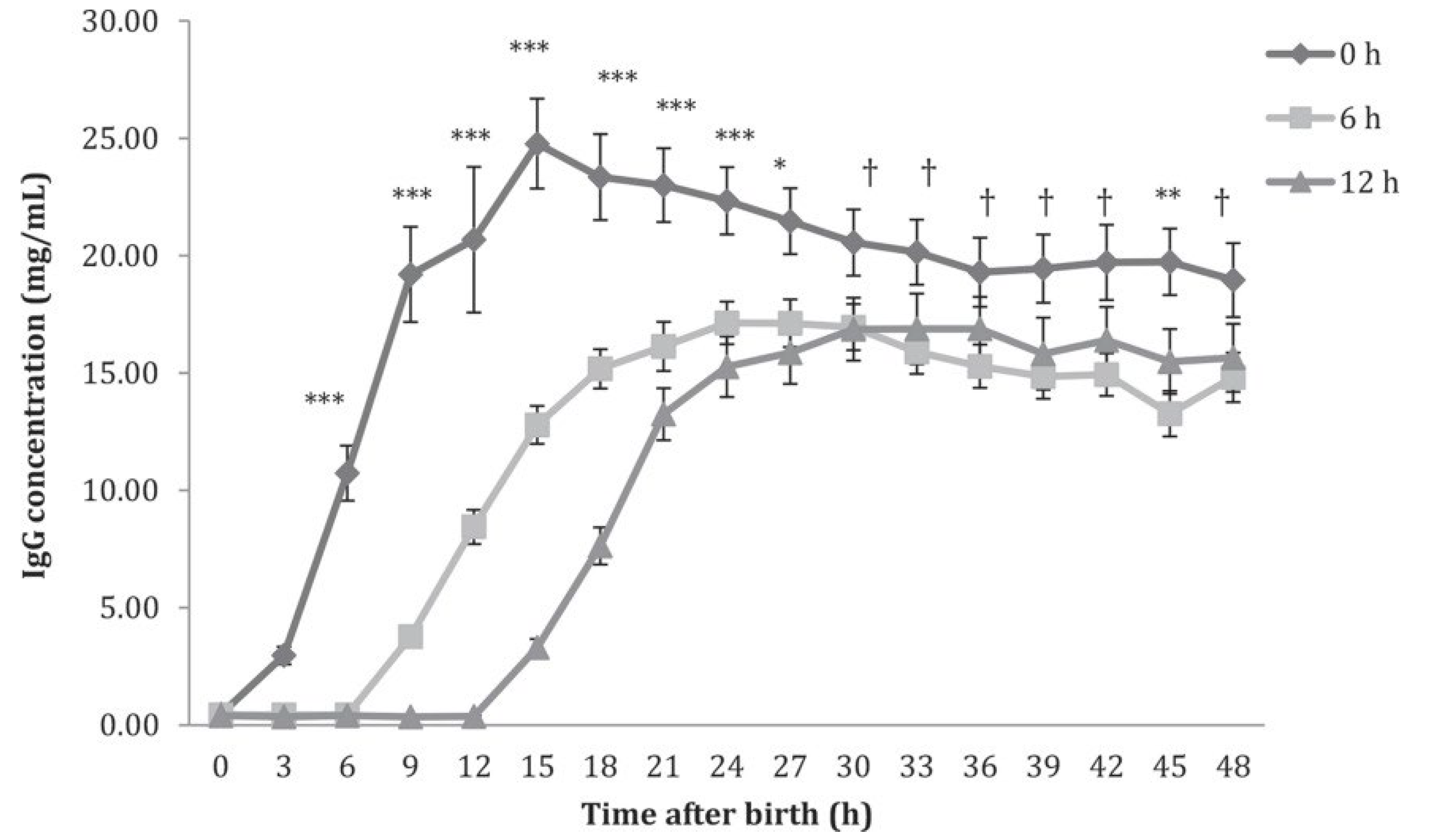
Note. Points represent mean ± SEM. ***P < 0.001, **0.001 < P < 0.01, *0.01 < P < 0.05, †0.05 < P < 0.10.
Source: Fischer et al., 2018
Figure 2. Effect of Delayed Colostrum Feeding (by 0, 6, or 12 hours) on the Prevalence (% of total bacteria) of (a) Bifidobacterium, and (b) Lactobacillus Associated With the Colon Mucosa of Neonatal Calves at 51 Hours of Life
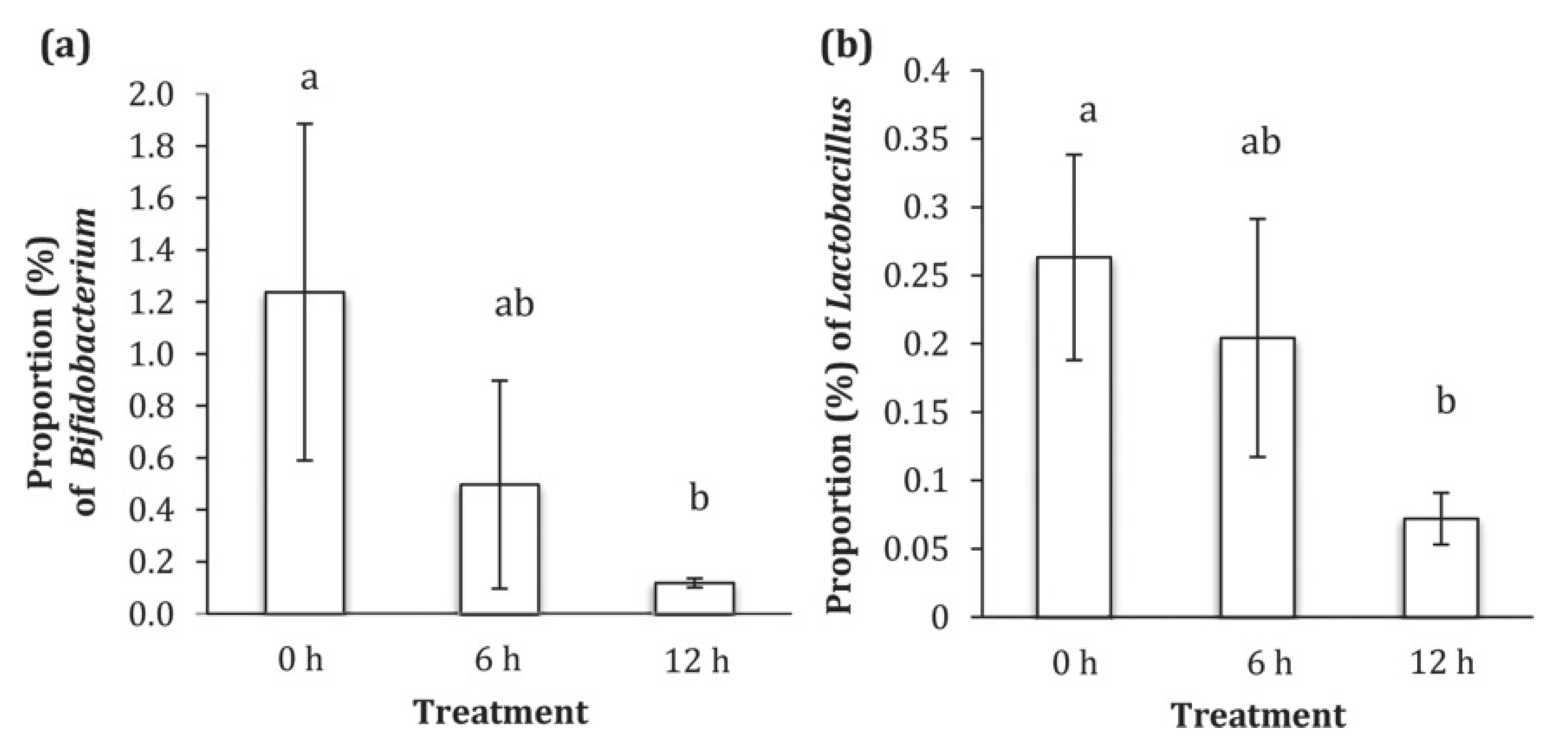
Note. Bars represent mean ± SEM. Different letters (a, b) indicate a tendency to differ among treatments at 0.05 < P < 0.10. Source: Fischer et al., 2018
Colostrum Cleanliness
High bacterial levels in colostrum, particularly coliform bacteria, can interfere with the absorption of immunoglobulins in the calf. Bacteria may bind immunoglobulins in the gut or block their transport across the intestinal lining, reducing the efficiency of passive transfer (James et al., 1981). Several studies have reported a negative relationship between bacterial contamination in colostrum and immunoglobulin absorption in calves (Godden et al., 2012; Morrill et al., 2012). Fresh (raw) colostrum fed to calves should contain less than 100,000 colony-forming units (CFU)/mL total plate count (TPC) and less than 10,000 CFU/mL total coliform count (McGuirk & Collins, 2004).
Research has shown that heat-treating colostrum at 60 °C (140 °F) for 60 minutes can substantially reduce bacterial contamination, while maintaining IgG concentrations and normal colostrum characteristics and eliminating many major pathogens (Godden et al., 2006; McMartin et al., 2006; Donahue et al., 2012).
Studies comparing heat-treated and raw colostrum have demonstrated improved calf outcomes when bacterial contamination is reduced (Godden et al., 2012). In one study, 30.1% of calves fed raw colostrum experienced failure of 5 passive transfer compared with 18.6% of calves fed heat-treated colostrum. Calves fed raw colostrum were also more likely to be treated for illness (36.5% vs. 30.9%) and experience scours (20.7% vs. 16.5%). Additionally, higher coliform counts in colostrum were associated with lower serum IgG concentrations in calves, indicating reduced passive transfer (Figure 3).
Figure 3. Scatter Plot Showing Negative Relationship Between Colostrum Total Coliform Count (log10 cfu/mL) and Calf Serum IgG (mg/mL)
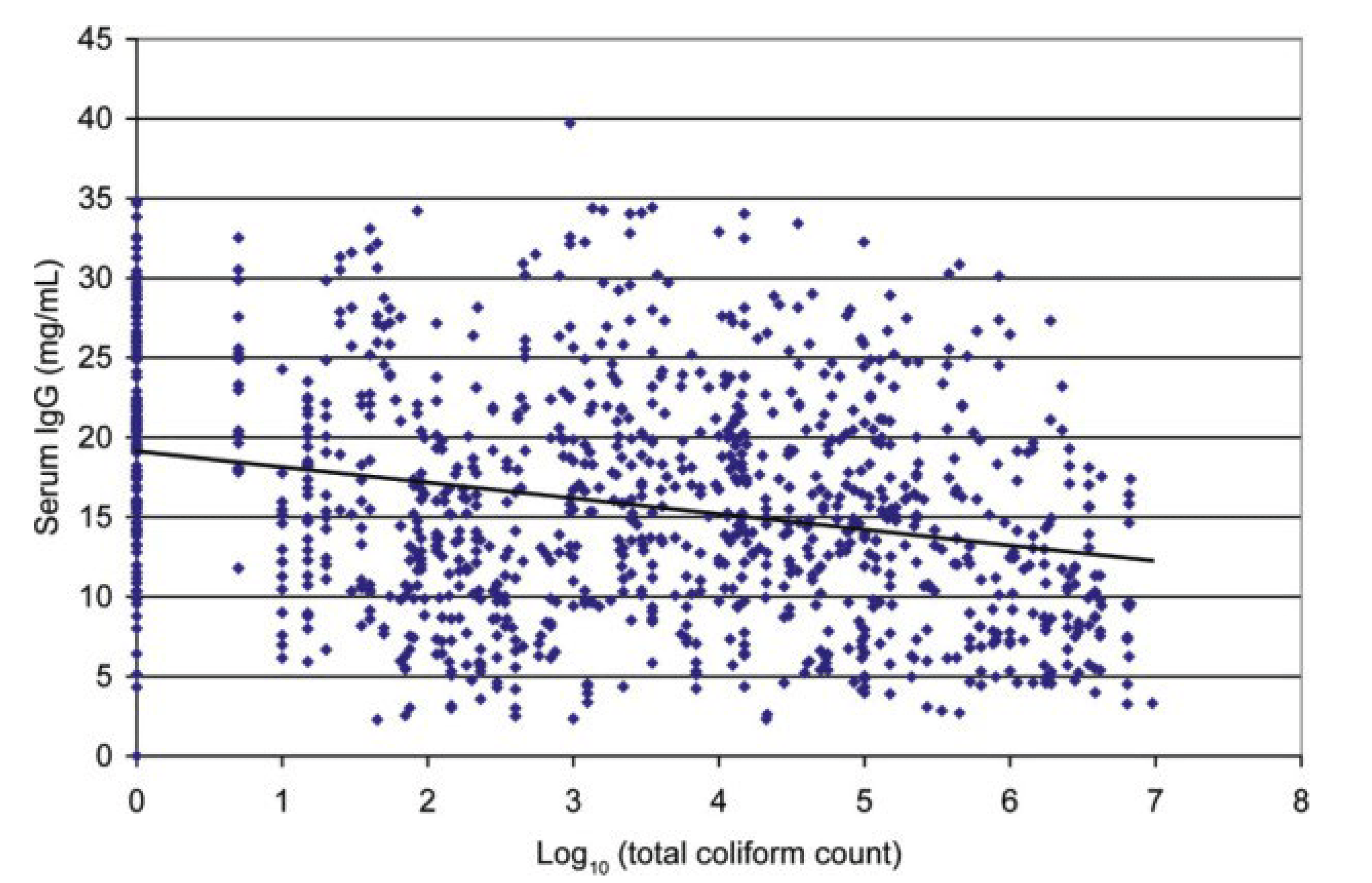
Note. P < 0.0001
Source: Godden et al., 2012
Key takeaway: Fresh colostrum should contain <100,000 CFU/mL total plate count (TPC) and <10,000 CFU/mL coliform bacteria. Regardless of bacterial counts, producers should consider heat-treating colostrum to reduce bacterial contamination and improve passive transfer outcomes.
Colostrum Monitoring
A detailed discussion of passive transfer and its consequences is provided in the fact sheet “Colostrum and Rethinking Passive Transfer in Dairy Calves.” However, monitoring passive transfer in calves provides a practical way to evaluate whether colostrum management practices are working effectively on a farm. Passive transfer is typically evaluated by measuring serum IgG or serum total protein in calves between 24 and 48 hours of age.
Traditionally, failure of passive transfer was defined as serum IgG <10 g/L at 24–48 hours of age (Godden et al., 2019), but more recent recommendations categorize passive transfer into excellent, good, fair, and poor based on serum IgG concentrations (Lombard et al., 2020). Table 1 shows the equivalent values for serum total protein and Brix refractometer measurements used for on-farm monitoring.
Table 1. Consensus Serum IgG Concentrations and Equivalent Serum Total Protein (TP) and Blood Brix Measurements, and Percentage of Calves Recommended in Each Transfer of Passive Immunity (TPI) Category
| TPI category | Serum IgG (g/L) | Equivalent TP (g/dL) | Equivalent % Brix | Consensus target (% calves) |
|---|---|---|---|---|
| Excellent | ≥25.0 | ≥6.2 | ≥9.4 | >40 |
| Good | 18.0–24.9 | 5.8–6.1 | 8.9–9.3 | ~30 |
| Fair | 10.0–17.9 | 5.1–5.7 | 8.1–8.8 | ~20 |
| Poor | <10.0 | <5.1 | <8.1 | <10 |
Source: Lombard et al., 2020
Key takeaway: Passive transfer should be evaluated in calves at 24–48 hours of age using serum IgG, total protein, or Brix measurements, with interpretation based on updated categories (excellent, good, fair, poor) rather than a single cutoff value.
Summary
Colostrum is the first and most important feed a newborn calf receives. It provides essential antibodies, nutrients, and biologically active compounds that support immune protection, gut development, and early growth. Because calves are born without circulating antibodies, successful transfer of immunity depends on proper colostrum management.
Effective colostrum programs focus on providing calves with high-quality, clean colostrum in sufficient quantity and as soon as possible after birth. Monitoring colostrum quality, feeding adequate volumes promptly, and minimizing bacterial contamination can greatly improve passive transfer and reduce disease risk in young calves.
References and Resources
Barrington, G. M., & Parish, S. M. (2001). Bovine neonatal immunology. Veterinary Clinics of North America: Food Animal Practice, 17, 463–476. https://doi.org/10.1016/S0749-0720(15)30001-3.
Buczinski, S., & Vandeweerd, J. M. (2016). Diagnostic accuracy of refractometry for assessing bovine colostrum quality: A systematic review and meta-analysis. Journal of Dairy Science, 99, 7381–7394. https://doi.org/10.3168/jds.2016-10955.
Chigerwe, M., Coons, D. M., & Hagey, J. V. (2012). Comparison of colostrum feeding by nipple bottle versus oroesophageal tubing in Holstein dairy bull calves. American Veterinary Medical Association Publications. https://doi.org/10.2460/javma.241.1.104.
Desjardins-Morrissette, M., van Niekerk, J. K., Haines, D., Sugino, T., Oba, M., & Steele, M. A. (2018). The effect of tube versus bottle feeding colostrum on immunoglobulin G absorption, abomasal emptying, and plasma hormone concentrations in newborn calves. Journal of Dairy Science, 101, 4168–4179. https://doi.org/10.3168/jds.2017-13904.
Donahue, M., Godden, S. M., Bey, R., Wells, S., Oakes, J. M., Sreevatsan, S., Stabel, J., & Fetrow, J. (2012). Heat treatment of colostrum on commercial dairy farms decreases colostrum microbial counts while maintaining colostrum immunoglobulin G concentrations. Journal of Dairy Science, 95, 2697–2702. https://doi.org/10.3168/jds.2011-5220.
Faber, S. N., Faber, N. E., Mccauley, T. C., & Ax, R. L. (2005). Case study: Effects of colostrum ingestion on lactational performance 1. The Professional Animal Scientist, 21, 420–425. https://doi.org/10.15232/S1080-7446(15)31240-7.
Fischer, A. J., Song, Y., He, Z., Haines, D. M., Guan, L. L., & Steele, M. A. (2018). Effect of delaying colostrum feeding on passive transfer and intestinal bacterial colonization in neonatal male Holstein calves. Journal of Dairy Science, 101, 3099–3109. https://doi.org/10.3168/jds.2017-13397.
Foley, J. A., & Otterby, D. E. (1978). Availability, storage, treatment, composition, and feeding value of surplus colostrum: A review. Journal of Dairy Science, 61, 1033–1060. https://doi.org/10.3168/jds.S0022-0302(78)83686-8.
Godden, S., McMartin, S., Feirtag, Stabel, J., Bey, R., Goyal, S., Metzger, L., Fetrow, J., Wells, S., & Chester-Jones, H. (2006). Heat-treatment of bovine colostrum. II: Effects of heating duration on pathogen viability and immunoglobulin G. Journal of Dairy Science, 89, 3476–3483. https://doi.org/10.3168/jds.S0022-0302(06)72386-4.
Godden, S. M., Haines, D. M., Konkol, K. & Peterson, J. (2009). Improving passive transfer of immunoglobulins in calves. II: Interaction between feeding method and volume of colostrum fed. Journal of Dairy Science, 92, 1758–1764. https://doi.org/10.3168/jds.2008-1847.
Godden, S. M., Lombard, J. E., & Woolums, A. R. (2019). Colostrum management for dairy calves. Veterinary Clinics of North America: Food Animal Practice, 35, 535–556. https://doi.org/10.1016/j.cvfa.2019.07.005.
Godden, S. M., Smolenski, D. J., Donahue, M., Oakes, J. M., Bey, R., Wells, S., Sreevatsan, S., Stabel, J., & Fetrow, J. (2012). Heat-treated colostrum and reduced morbidity in preweaned dairy calves: Results of a randomized trial and examination of mechanisms of effectiveness. Journal of Dairy Science, 95, 4029–4040. https://doi.org/10.3168/jds.2011-5275.
Hammon, H. M., Steinhoff-Wagner, J., Flor, J., Schönhusen, U., & Metges, C. C. (2013). Lactation biology symposium: Role of colostrum and colostrum components on glucose metabolism in neonatal calves. Journal of Animal Science, 91, 685–695. https://doi.org/10.2527/jas.2012-5758.
James, R. E., Polan, C. E., & Cummins, K. A. (1981). Influence of administered indigenous microorganisms on uptake of [Iodine-125] γ-globulin in vivo by Intestinal segments of neonatal calves. Journal of Dairy Science, 64, 52–61. https://doi.org/10.3168/jds.S0022-0302(81)82528-3.
Larson, B. L., Heary, H. L., & Devery, J. E. (1980). Immunoglobulin production and transport by the mammary gland. Journal of Dairy Science, 63, 665–671. https://doi.org/10.3168/jds.S0022-0302(80)82988-2.
Lombard, J., Urie, N., Garry, F., Godden, S., Quigley, J., Earleywine, T., McGuirk, S., Moore, D., Branan, M. Chamorro, M., Smith, G., Shivley, C., Catherman, D. Haines, D., Heinrichs, A. J., James, R., Maas, J., & Sterner, K. (2020). Consensus recommendations on calf- and herd-level passive immunity in dairy calves in the United States. Journal of Dairy Science, 103, 7611–7624. https://doi.org/10.3168/jds.2019-17955.
Maunsell, F. P., Morin, D. E., Constable, P. D., Hurley, W. L., & McCoy, G. C. (1999). Use of mammary gland and colostral characteristics for prediction of colostral IgG1 concentration and intramammary infection in Holstein cows. American Veterinary Medical Association Publications. https://doi.org/10.2460/javma.1999.214.12.1817.
McGuirk, S. M., & Collins, M. (2004). Managing the production, storage, and delivery of colostrum. Veterinary Clinics: Food Animal Practice, 20, 593–603. https://doi.org/10.1016/j.cvfa.2004.06.005.
McMartin, S., Godden, S., Metzger, L., Feirtag, J., Bey, R., Stabel, J., Goyal, S., Fetrow, J., Wells, S., & Chester-Jones, H. (2006). Heat treatment of bovine colostrum. I: Effects of temperature on viscosity and immunoglobulin G level. Journal of Dairy Science, 89, 2110–2118. https://doi.org/10.3168/jds.S0022-0302(06)72281-0.
Morin, D. E., McCoy, G. C., & Hurley W. L. (1997). Effects of quality, quantity, and timing of colostrum feeding and addition of a dried colostrum supplement on immunoglobulin G1 absorption in Holstein bull calves. Journal of Dairy Science, 80, 747–753. https://doi.org/10.3168/jds.S0022-0302(97)75994-0.
Morrill, K. M., Conrad, E., Lago, A., Campbell, J., Quigley, J., & Tyler, H. (2012). Nationwide evaluation of quality and composition of colostrum on dairy farms in the United States. Journal of Dairy Science, 95, 3997–4005. https://doi.org/10.3168/jds.2011-5174.
Stott, G. H., Marx, D. B., Menefee, B. E., & Nightengale, G. T. (1979). Colostral immunoglobulin transfer in calves I. Period of absorption. Journal of Dairy Science, 62, 1632–1638. https://doi.org/10.3168/jds.S0022-0302(79)83472-4.
Weaver, D. M., Tyler, J. W., VanMetre, D. C., Hostetler, D. E., & Barrington, G. M. (2000). Passive transfer of colostral immunoglobulins in calves. Journal of Veterinary Internal Medicine, 14, 569–577. https://doi.org/10.1111/j.1939-1676.2000.tb02278.x.
The authors of this content used ChatGPT to improve writing clarity and flow. The tool was not used to identify sources, generate ideas, or interpret findings. Authors reviewed and edited the content provided by the AI tool, and they take full responsibility for the content.

June 2026
Utah State University Extension
Peer-reviewed fact sheet
Authors
Drew Swartz, Jacob Hadfield, Kalen Taylor, and Maggi Mathews

Drew Swartz
Extension Assistant Professor | Dairy Cattle Specialist

Jacob Hadfield
Extension Associate Professor | Agriculture and Natural Resources | Utah and Juab Counties | Juab County Director
Agriculture and Natural Resources

Kalen Taylor
Extension Assistant Professor | Agriculture | Millard County
Agriculture and Natural Resources

Maggi Mathews
Extension Assistant Professor | Weber and Morgan Counties
Agriculture and Natural Resources