
Vines in the Landscape: Japanese Wisteria
Scientific Name
- Wisteria floribunda
'Texas Purple'
Common Name
- Japanese wisteria
- Texas Purple Japanese wisteria
Plant Characteristics
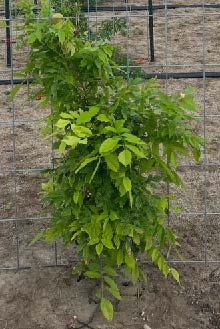
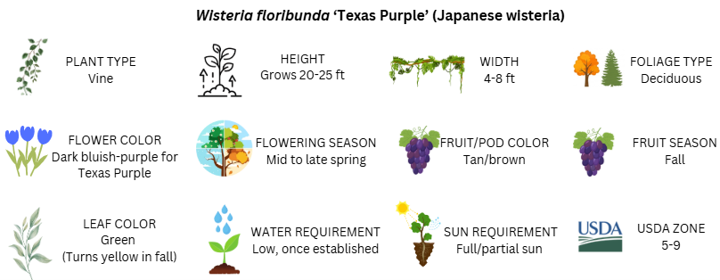
Japanese wisteria (Wisteria floribunda) is a vigorous, woody, deciduous climbing vine known for its spectacular, drooping (pendulous) clusters of pea-like flowers. It can easily be distinguished from Chinese wisteria (Wisteria sinensis) by its twining direction; Japanese wisteria twines clockwise around its support, while Chinese wisteria twines counterclockwise (when viewed from above). The cultivar 'Texas Purple' is highly valued for its early and exceptionally dark bluish-purple blooms. It belongs to the genus Wisteria, with the species native to Japan, and has been widely cultivated worldwide for its ornamental value.
This fast-growing vine can reach 20–25 feet in length (sometimes longer), with a spread of 4–8 feet, making it useful for quickly covering structures and providing shade. It is a vigorous climber that requires very sturdy support, such as pergolas, arbors, strong trellises, fences, or stone walls. It performs best in full sun and grows well in USDA Zones 5–9. Once established, it is vigorous to the point of being aggressive and can spread by layering. It is invasive in many humid eastern U.S. states; however, in arid regions such as Utah, the environment is less favourable for natural spread, so it is not listed as a state noxious weed, though it should be regularly monitored.
Foliage
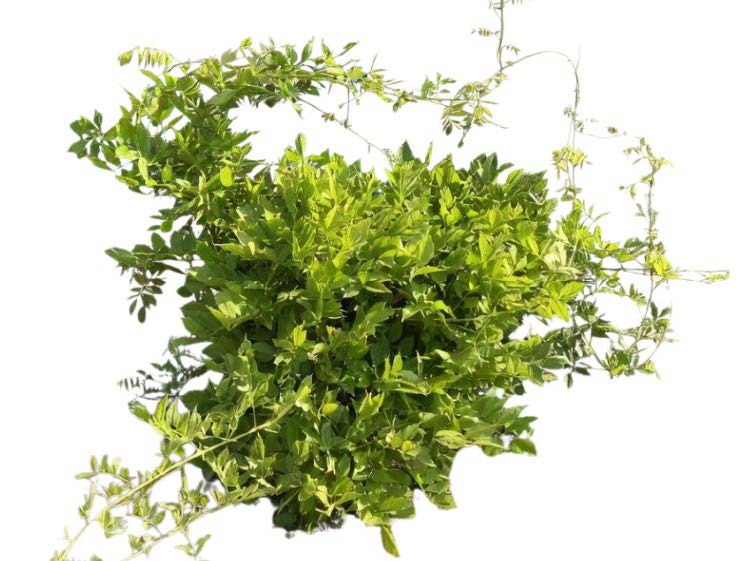
The leaves of Japanese wisteria are pinnately compound and typically 12–16 inches long, consisting of 13–19 narrowly ovate leaflets. Young leaves emerge in spring with an attractive coppery-bronze tint, mature to a rich dark green in summer, and turn a bright golden-yellow in fall before dropping. The foliage is dense and lush, providing excellent summer shade as early as two growing seasons. Leaves are arranged alternately along the stems. Because of its vigorous growth and large compound leaves, it creates a bold, tropical-looking texture in the landscape (Figure 1).
Young Japanese wisteria leaves may naturally emerge light green to coppery bronze before maturing to darker green. However, persistent yellowing on young leaves, especially when the veins remain green and the tissue between the veins turns yellow, may indicate iron chlorosis. This is common in alkaline soils where iron becomes less available to the plant. Applying chelated iron, preferably in the EDDHA form, is the most effective treatment under high-pH conditions, as this chelate remains stable and plant-available across a wider pH range than other iron formulations.
Flowers
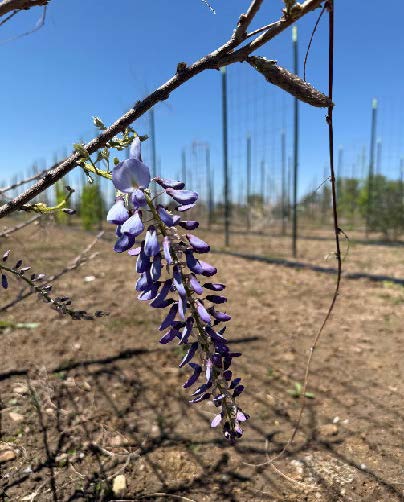
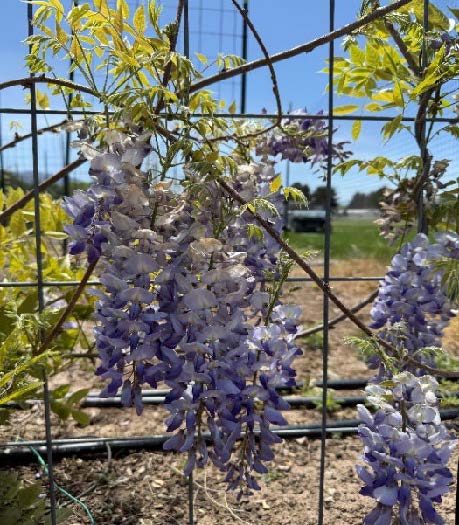
The standout feature of Japanese wisteria is its spectacular, fragrant, pea-like flowers borne in long, pendulous racemes (clusters). Flower color varies by cultivar and may include white, lavender, bluish-purple, deep purple, or pink. On the 'Texas Purple' cultivar, these drooping clusters typically reach 12–18 inches in length and are a rich, dark bluish-purple which is among the darkest shades available for wisteria. Sweetly fragrant flowers open sequentially from the base to the tip of the raceme. They bloom in mid to late spring, usually appearing just as or shortly after the new leaves emerge, so the colorful display is not obscured by foliage (Figure 2). Flowering is usually confined to a single flush in late spring, fading as summer heat increases. Japanese wisteria produces flowers on 1-year-old wood from the previous growing season, so prune carefully to retain enough of these stems for a strong floral display.
Fruits
Following flowering, Japanese wisteria produces attractive, hanging, velvety, bean-like seed pods. These pods grow up to 6 inches long, starting green and maturing to a tan or brown color in fall. They often persist on the vine into winter, adding seasonal interest even after the leaves have dropped. However, the seeds and pods are toxic if ingested and can cause gastrointestinal distress. It is best to remove the pods before they mature and drop seeds to limit potential risks.
Soil
Japanese wisteria grows best in fertile, well-drained soils. While it can tolerate a range of soil textures, including loam, clay, and sand, it prefers a slightly acidic to neutral soil pH (ideally 6.0–7.0). It may develop chlorosis (yellowing of the leaves) in highly alkaline soil due to nutrient lock-up. Japanese wisteria generally requires little nitrogen because it is a legume capable of fixing atmospheric nitrogen. Excess nitrogen can promote vigorous vegetative growth at the expense of flowering. Utah soils generally supply adequate phosphorus and potassium but are often low in organic matter; therefore, adding compost or other organic matter can improve soil structure and support healthy plant growth. Only apply mineral fertilizer if deficiency is confirmed by a soil test, ideally in early spring.
Planting Guidelines
Japanese wisteria is usually propagated by softwood cutting or layering to maintain their flower and growth properties. In commercial nurseries, Japanese wisteria may be propagated by grafting, grown in greenhouses, and sold as container plants. Before planting, allow greenhouse-grown plants to harden off for 2–4 days. For best results, plant Japanese wisteria in early spring or fall at a site that receives at least 6 hours of direct sunlight daily, as full sun promotes the heaviest and most reliable blooming. Dig a planting hole about 1.5 to 2 times wider than the root ball. Gently remove the plant from the container and loosen any circling or compacted roots before placing it in the hole. Set the plant at the same depth it was growing in the container, backfill with native soil, and water thoroughly after planting. Keep the root ball consistently moist during the first few weeks to help the plant establish. Frequent watering is essential during the first growing season to help the plant develop a strong, deep root system. When planting multiple vines, space them 10–15 feet apart to allow adequate room for growth. As this vine is a vigorous and heavy climber that becomes increasingly woody with age, install a very sturdy, permanent support structure, such as heavy timber, steel, or stone, at the time of planting.
Pests and Diseases
Japanese wisteria is generally resilient and has relatively few serious pest and disease problems once established. It can occasionally be affected by fungal diseases such as leaf spot and powdery mildew, especially in humid conditions with poor air circulation. Aphids and scale insects may appear on new spring growth, while root rot can develop if the vine is planted in poorly drained soil or kept too wet. Providing good air circulation, avoiding wet conditions, and monitoring new growth in spring is usually sufficient to keep the plant healthy.
Because it grows vigorously, pruning is the
most important task with Japanese wisteria.
Prune twice annually to encourage abundant
flowering and keep the vine under control.
Management and Cautions
Proper management is essential for Japanese wisteria due to its vigorous growth habit. Pruning is the most important task and should be done twice annually to encourage abundant flowering and keep the vine under control. Structural pruning should be done in late winter to thin out crowded shoots, followed by a summer pruning in mid to late July to shorten long runners. Because of its aggressive nature, regularly monitor the vine to prevent it from escaping into natural areas or twining around and strangling nearby trees and shrubs.
Landscape Performance in Utah
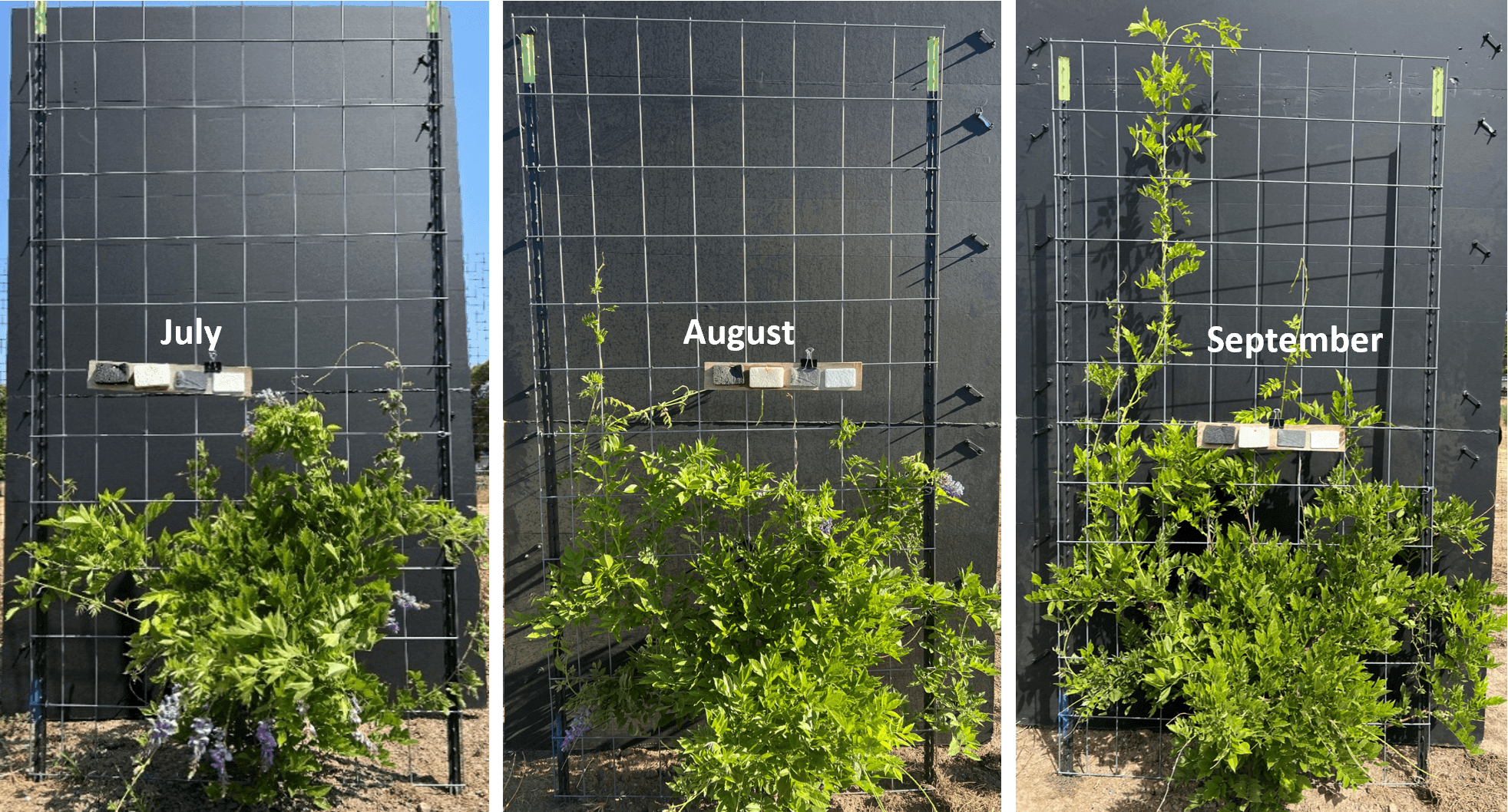
In northern Utah trial conditions, Japanese wisteria has shown strong adaptability, tolerating summer heat, cold winters and limited irrigation once established. It performs best in full sun with fertile, well-drained soil and benefits from protection from drying winter winds. Once established, it is moderately drought tolerant. In Utah’s often alkaline soils, the vine may develop chlorosis (yellowing leaves). Amending the soil with organic matter and applying chelated iron improves soil quality and iron availability. Applying sulfur or sulfur-based fertilizers can also temporarily lower the soil ph. It has a vigorous growth rate once established and adds spring color and fragrance to the landscape. The fragrant, dark bluish-purple flowers attract hummingbirds, bees, and butterflies, and the plant is generally resistant to deer and rabbits. It is ideal for covering patios, rock walls, pergolas, trellises, and other vertical structures, and works well in cottage-style, pollinator, or formal gardens (Figure 3).
Research Performance: USU Greenville Study
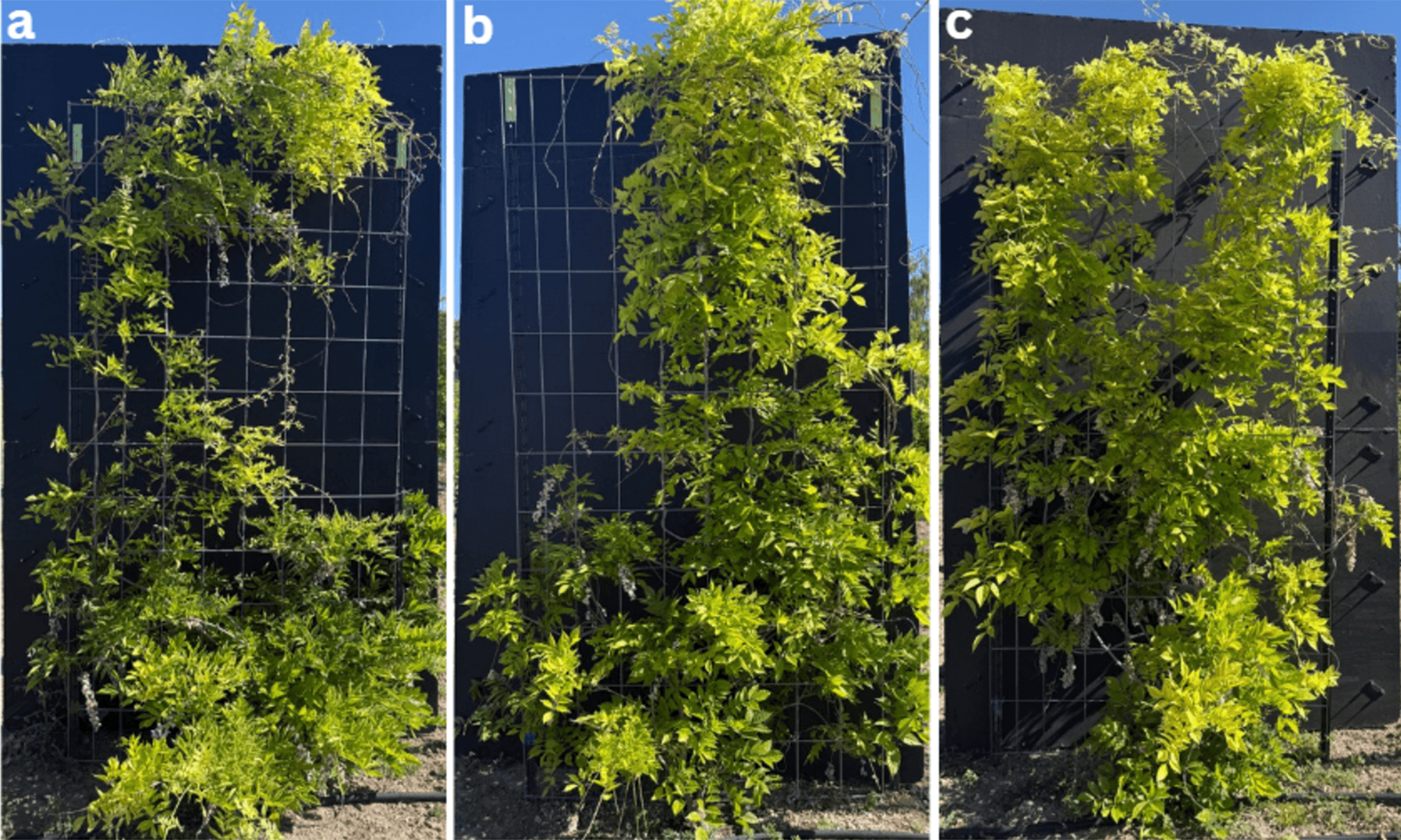
In June 2023, researchers planted twenty-four 1-gallon Japanese wisteria plants at Utah State University’s Greenville Research Farm in Logan, Utah. Each vine was grown on its individual trellis and supplied with drip irrigation outlet. During the establishment year, all vines received ample irrigation, i.e., 80% of reference evapotranspiration. In 2024 and 2025, vines received either low (two irrigations per growing season), medium (four to five irrigations per growing season), or high (eight to nine irrigations per growing season) irrigation; however, no significant differences in growth or performance were observed among irrigation treatments. Despite above-average snowfall in the winter of 2023–24 and an unusually hot and dry summer in 2025, all vines grew vigorously (Figure 4). These findings suggest that Japanese wisteria can perform well in a semiarid, high-elevation landscape in northern Utah when provided with sturdy support.
Disclaimer
The authors used ChatGPT, a generative AI language model by OpenAI, only to assist with flow and readability during this fact sheet’s preparation. All content was reviewed, edited, and verified by the authors, who take full responsibility for the final content.
References
July 2026
Utah State University Extension
Authors
Saroj Burlakoti, Youping Sun, Ph.D., and Shital Poudyal, Ph.D.

Shital Poudyal
Assistant Professor | Ornamental Horticulture Specialist
Plants, Soils and Climate
Related Research