
Painless Water Conservation Ideas
It is very easy to get a little apprehensive when we start talking about water conservation. When one hears about conservation ordinances, water cops, fines, and public shaming it is hard not to imagine drastic changes in life-style and landscapes. Fortunately, there are a lot of ways to save water that don’t require significant change or someone mandating conservation policies.
The following ideas can all save water and most will also improve your landscape. They aren’t in any particular order – just pick the ones that fit your time, expertise, and budget. You should be able to save significant water without really impacting your lifestyle or your landscape. You don’t have to do them all, just the ones that fit.
Check Irrigation System
Check your irrigation system you make sure it is in good repair and running efficiently. Spring is a good time to clean filters, align sprinkler heads, and repair leaks.
Adjust Water Pressure
Adjust your water pressure. Sprinkler systems are actually designed to operate at 30-40 pounds of pressure. Consider a pressure reducer or a booster pump if needed.
Convert To Secondary Water
Convert to secondary (canal) water where available. This may not save any water overall, but it will reduce demand on treated culinary water systems. If you have access and rights to secondary water but aren’t using it, maybe it is time to take a closer look.
Turn Off Clock-Driven Automatic Sprinklers
Turn off your clock-driven automatic sprinkler. Studies have shown that people with automated irrigation systems use more water than with manual systems. It is just too easy to turn them on and forget them. Automated systems are great, but unless you are on vacation, change it to the manual start function. This will help you watch your landscape and water only when needed. When your landscape does need water, just turn the controller on and let it work through the cycle automatically.
Cycle Irrigation
Cycle irrigation to avoid runoff. Sometimes irrigation systems apply water faster than the soil can absorb it. If that is your case, set up your controller so that it irrigates two or three times for shorter periods with enough time in between for the water to be absorbed.
Irrigate Only When Needed
Irrigate only when needed. This is harder than it sounds. There are several ways to determine when plants need to be watered. Unfortunately, using a calendar is not the most efficient. For lawn areas, one way is to use the online Weekly Lawn Watering Guide at conservewater.utah.gov/guide. This is based on weather patterns and evatpotranspiration rates. For shrub and perennial beds, one way is to use an indicator plant. Carefully watch your landscape and when the first plant or spot of grass starts to show water stress (wilting or a change in color), then irrigate. If you watch carefully you will begin to see the changes and can irrigate as needed and without damaging the plants. The soil does not have to be moist all the time, but should be allowed to dry some between irrigations. There are many other ways to determine irrigation needs, such as soil moisture sensors or evapotranspiration reports.
Fill Soil Profile
Fill the soil profile when irrigating. Each time you irrigate, it is best to apply enough that the soil is moistened to a depth of 8-12 inches. This means irrigating for a longer period of time, but less frequently. Your plants will develop a deeper root system and will better withstand any hot, dry periods we may have. You can tell how far the water has gone into the soil by simply seeing how far down you can easily push a screwdriver.
Control Weeds
Control weeds. Why should we go to all the effort of conserving and carefully applying water only to let weeds use it? Remove the weeds and there will be more water for your desirable plants – especially in the garden. An added bonus is that your yard and community will look even prettier than it already does.
Mow Grass High
Mow grass at 3-3.5 inches in height. The higher you mow a grass plant, the deeper its roots will grow. Mowing at this height may not save a lot of water, but your grass will resist stress better and it will resist weeds better. While you are at it, don’t bother to pick up the clippings. If you mow your lawn frequently the clippings can just be allowed to stay. They will decompose and add nutrients to the soil.
Use Mulch
Use mulches. Covering bare soil with organic or rock mulches prevents evaporation from the surface of the soil and can reduce weeds. Mulches can be especially effective between the rows in a garden. It is a fail-proof horticultural technique that has lots of benefits.
Upgrade Irrigation System
Upgrade your irrigation system. If you have a little money to invest to help save on your water bill, consider changing to more efficient sprinkler heads or drip irrigation systems. Such an upgrade will save water by helping you irrigate more uniformly.
Create Hydrozones
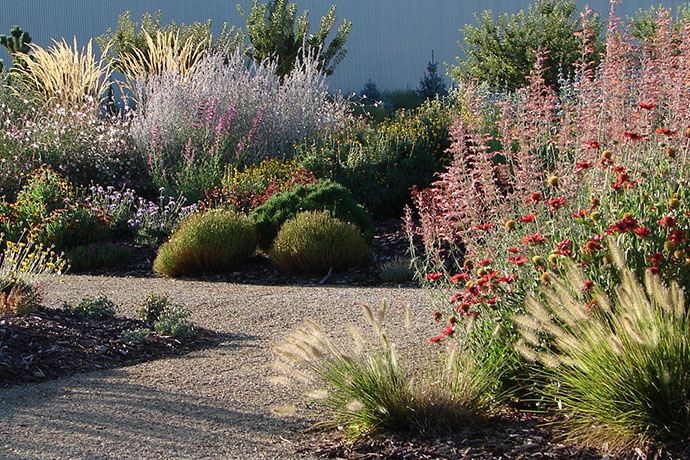
Create hydrozones and irrigate them separately. If you are just designing your landscape, consider grouping plants by their irrigation requirements. Put all the drought tolerant plants in one spot and all the water loving plants in another, and then water them accordingly. It will reduce plant stress because both groups will get what they need, without wasting any water.
Irrigate Chronic Dry Spots By Hand
Irrigate chronic dry spots by hand. If you have a spot that is always dry, consider irrigating it by hand rather than turning on the whole system just to irrigate one little spot.