
Interseeding Cover Crops Into Corn in the Intermountain West

Introduction
Highlights
- Interseeding cover crops into corn is most effective between the V4–V6 growth stages.
- Wider corn row spacing improves light availability for cover crop growth but may reduce corn yield.
- Reducing corn planting density can improve conditions for interseeded cover crops without impacting corn yield.
- Drilling cover crops with high-clearance or modified equipment often results in the best cover crop establishment and fall biomass.
- Interseeded cover crops can reduce weed pressure (by up to 31%) and help manage nitrogen.
- Proper timing and type of irrigation significantly affect cover crop success. Extra water may be needed postharvest to promote fall cover crop growth and maximize benefits.
- Multiple studies from Utah, Idaho, and other states show that interseeded cover crops have no significant negative impact on corn grain or silage yield, provided nutrient requirements are met.
- While cover crops incur upfront costs, they can become profitable, especially when grazed by livestock or supported by incentive programs like the Conservation Stewardship Program.
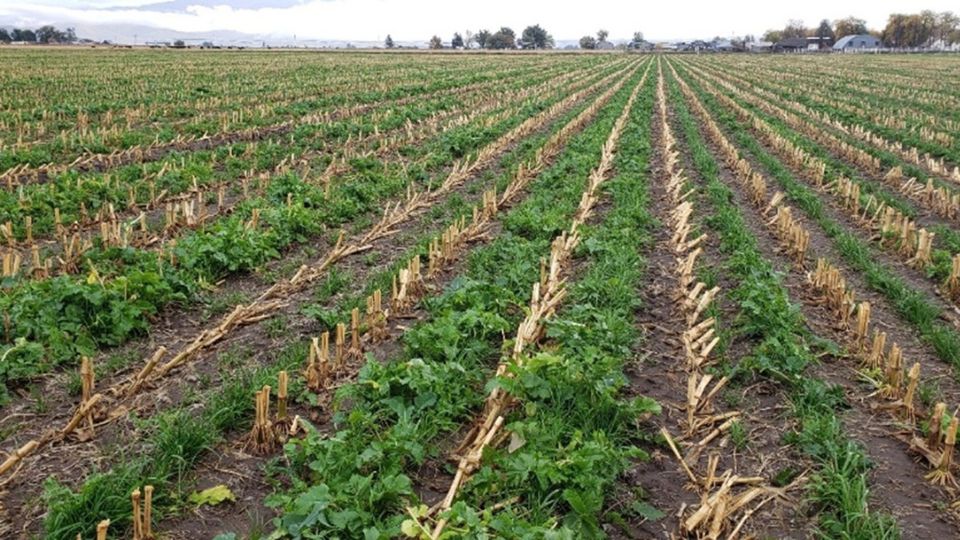
Cover crops are often grown to protect or enhance the soil rather than for harvesting. Cover crops can offer a wide array of benefits, including an enhanced opportunity for grazing livestock, improving ground cover and erosion control, capturing and holding nutrients for the next crop, adding carbon to the soil, helping improve water infiltration and retention, and improving soil health over time.
Corn is a crop that can benefit greatly from using a cover crop because the wide row spacing used for corn leaves large areas of bare soil early in the growing season, and in the fall and winter months after corn is harvested. Depending on the crop rotation, cover crops can be planted after corn harvest and terminated before the next crop is planted to provide winter cover. Cover crops are not necessary when corn follows a winter small grain crop, as the small grain serves as a cover.
In the Intermountain West, a short growing season combined with limited or no irrigation water availability and little rainfall makes it difficult to establish cover crops following corn harvest. Interseeding cover crops into corn allows the covers to establish during the summer and early fall when water is available. Once corn is harvested, the interseeded cover crops will require irrigation or rainfall to continue growing, but the established covers can more effectively use fall precipitation than newly seeded covers. This practice is usually more successful in silage corn vs. grain corn because the earlier harvest allows for more cover crop growth before the first fall freeze.
Interseeding covers into corn may provide many benefits, such as weed suppression, nitrogen fixation from legume covers, and, most importantly, soil cover and forage for livestock after corn harvest. It also has the potential to negatively impact corn production if competition with covers for water and nutrients is too high. The purpose of this guide is to discuss recent research and experience with interseeding cover crops in the Intermountain West.
Cover Crop Species Selection and Seeding
When selecting a cover crop species, it is important to consider the goals for the field. It is also important to select a cover crop mix intended for interseeding rather than a general cover crop mix. This is because general cover crop mixes are selected for their ability to grow independently in an off-season, whereas a mix for interseeding needs to include varieties that can withstand the stress of germinating and growing underneath a corn canopy. Further, if cover crops are going to be grazed after corn harvest, it is important to select species with high forage quality and growth. Use species that climb, such as peas, with caution. Early observations in Utah of interseeding peas with silage corn showed significant corn yield loss because the peas could climb up corn plants, capture more light, and compete with the corn. Thus, each cover crop species offers different strengths and benefits that need to be matched to the field’s needs.
Some common cover crop mixes for interseeding into corn include various small grain species, bunchgrass such as annual ryegrass, and various brassica (e.g., kale, radish, turnip) and legume species. The Utah State University (USU) Extension “Cover Crops for Utah” guide lists many common cover crops used in Utah, their uses and limitations, and recommended seeding rates and depths. Some of the special considerations for seeding are discussed briefly below.
Seed size must be considered depending on whether the cover crop mix will be broadcast or drilled. One challenge with using cover crop mixes is selecting a planting depth that is ideal for various seed sizes of all the species in the mix. For example, ideal depths for small grains are ¾ to 1 ¼ inches deep, but kale or other small-seeded species should be planted less than ⅛ inch. Options for addressing these differences include using different seed boxes on a drill, planting with two separate passes to include deep and then shallow species or selecting an average planting depth for all species in the mix. Furthermore, closing wheel adjustments or removal might be another method for increasing germination and establishing covers of various seed sizes. In Utah’s Uintah Basin region, farmers have cooperated with the National Resources Conservation Service (NRCS) and have found that some of the most successful cover crop establishments have been with an interseeder with no press wheel behind disk openers. Farmers have drilled various seeds as 1 inch to 1 ¼ inches and left the seed trenches open to allow seeds to have quicker and better access to soil moisture as the open trenches collect water. Proper seed-to-soil contact is still important for successful germination in this and all situations where cover crops are interseeded into corn.
Timing of Interseeding Cover Crop
Successfully interseeding cover crops into corn is dependent on the timing and planting method (Figure 1). Growers should aim to plant the cover crop after the establishment of the corn and weed herbicide applications, but before corn canopy closure. It is a delicate balance between allowing the corn crop to develop without the competition from the cover crop, while at the same time allowing the cover crop as much time as possible to establish roots before they lose direct solar exposure from the canopy closing.
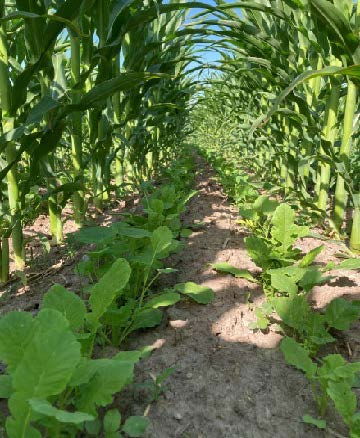
In a Michigan trial in 2015–2018 with cover crops (annual ryegrass, crimson clover, and oilseed radish) broadcast into corn at the V2–V7 corn growth stages (vegetative corn stages when corn has 2 to 7 leaves), the cover crop density was highest with later interseeding timings between V4–V7, but maximum fall cover crop biomass was greatest at the earlier interseeding timings of V2, V3, and V5 (Brooker et al., 2020). This suggests that V4 and V5 may be the sweet spot for optimizing cover crop density and fall biomass. The same Michigan study also showed that cover crops broadcast into corn at the V2–V7 corn growth stages did not affect corn yield. In contrast to these results with broadcast covers, a study of cover crops (annual ryegrass, legumes, or a ryegrass-legume mixture) drilled into corn in Pennsylvania showed that corn grain yields at one site over 2 years were 8%–20% lower when cover crops were interseeded before the V3 growth stage compared to those interseeded at V5 or V6 (Curran et al., 2018). These studies confirm that early planting of covers before V4 can result in corn yield loss due to elevated competition from covers.
The timing of a drilled cover crop mix has also been studied recently in Utah. In 2021, a study at five sites in Box Elder, Cache, Weber, and Sevier counties compared no cover crop and the interseeding of a cover crop mix (daikon radish, kale, turnip, yellow mustard, buckwheat, intermediate ryegrass, annual ryegrass, hairy vetch, red clover, and brown flax) into 30-inch corn rows at the V2, V4, V6, V8, and V10 growth stages (Table 1). Researchers observed that drilling cover crops at all five growth stages had no detrimental or beneficial effect on corn silage yield. The study also showed that cover crop planting time influenced forage quality at only one of five sites where the corn that was interseeded with cover crops at the V4 stage had 3% to 5% more total digestible nutrient (TDN) levels (73%) than corn interseeded at the V2, V8, and V10 stages (69%–71%) (Hadfield et al., 2023a). It was unclear why TDN was increased at this site, but results indicated minimal to no effects on silage quality.
| Interseeding stage | Box Elder County | Cache County | Sevier County | Sevier County 2 | Weber County |
|---|---|---|---|---|---|
| tons of dry matter per acre | |||||
| V2 | 13.1 | · | 10.6 | 10.9 | 12.9 |
| V4 | 12.5 | · | 11.1 | 10.9 | 12.1 |
| V6 | 13.8 | 8.6 | 11.8 | 12.0 | 12.7 |
| V8 | 12.0 | · | 11.2 | 13.6 | 12.2 |
| V10 | 13.5 | · | 11.3 | 10.8 | 12.3 |
| No cover crop | 13.2 | 8.5 | 11.0 | 11.5 | 12.3 |
Note. There were no statistical differences in corn yield among treatments at any of the five sites.
Timing Takeaways
- Interseeding at V2 can interfere with weed management and corrugation in furrow irrigation.
- If damage occurs to corn when seeding cover crops early in the season, before V3, it can cause irreversible damage.
- Using GPS guidance, smaller/narrower tractor tires, and larger-width equipment is best practice.
- Interseeding at the V4–V6 growth stages should result in the best outcomes.
These studies in Utah and other places show that, overall, there is minimal effect from the interseeding timing of various cover crop mixes on corn yield, with a few trials showing reduced yield (8%–20% loss) from interseeding before V3, and one Utah site with higher silage corn quality when interseeding at V4. Despite these minimal impacts of timing, some management practices make certain growth stages more practical than others. Interseeding at V2 can interfere with weed management and corrugation in furrow irrigation. Be aware that if weeds are not properly controlled prior to cover crop interseeding, it can cause a weed control disaster. Waiting until after V6 makes it difficult to plant without damaging the corn, and the cover crop will likely not establish due to corn canopy closure (USDA, 2022; Hadfield et al., 2023a). If corn is damaged when seeding cover crops early in the season, prior to V3, it can be irreversible. However, damage to corn at the V4–V5 stages would have less impact, as the growth point is above the soil surface and the corn may recover more readily. Using GPS guidance, smaller/narrower tractor tires, and larger-width equipment may help alleviate or avoid damage to corn when interseeding. Therefore, interseeding before the V3 growth stage is not recommended, while seeding at the V4–V6 growth stages should result in the best outcomes for interseeding cover crops into corn.
Corn Row Spacing
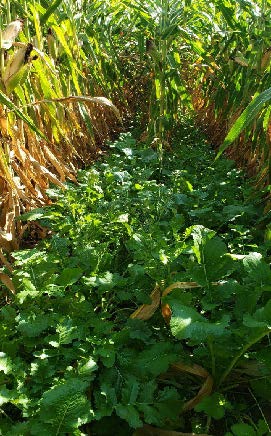
Cover crops require light to germinate and grow. Light exposure to cover crops is restricted when interseeding them into corn stands. Therefore, when interseeding cover crops into corn, consider using a wider row spacing. The traditional 30-inch corn row spacing is designed to maximize corn’s use of available sunlight without leaving excess for weeds or wasted space. This scenario may not be the most conducive for optimal growth of both corn and interseeded cover crops. In general, the wider the corn row spacing, the greater the potential for cover crop yield, but also the greater the potential for corn yield loss.
A simple and common method for increasing corn row spacing with existing equipment is to skip every other row. This results in 60-inch rows (Figure 2) and allows growers to use the same equipment they already own. A study in Kimberly, Idaho, in 2020–2022 compared 30-inch rows with no cover crops to 44-inch and 60-inch twin row spacings with cover crops (Table 2). The results showed that the 60-inch twin row spacing had lower corn yields than the 44-inch twin rows and 30-inch standard production fields (Hines et al., 2023). With interseeded cover crops, the 44-inch twin rows maintained a statistically equivalent silage yield as 30-inch rows. The wider row spacing, in theory, should enhance cover crop growth. However, the 60-inch spacing did not improve cover crop growth beyond the 44-inch spacing and suggests that widening beyond 44 inches may not provide any additional cover crop yield benefits. The corn and cover crop performance findings together indicate that 44-inch spacings may optimize performance for both crops (Table 2).
| Corn yield (ton/acre @ 70% moisture) | 2020 | 2021 | 2022 |
|---|---|---|---|
| 30-inch, no cover crop | 30.7 ab* | 35.5 a | 37.3 a |
| 44-inch + cover crop | 34.7 a | 36.0 a | 36.5 a |
| 60-inch + cover crop | 27.1 b | 32.0 b | 31.3 b |
| Cover crop yield (tons/acre dry matter) | 2020 | 2021 | 2022 |
| 44-inch | 0.58 a§ | 0.49 a | 1.02 a |
| 60-inch | 0.91 a | 0.33 a | 1.47 a |
* Within the column for corn yield, yields followed by the same letters are statistically similar according to the least significant difference at the 0.05 probability level. Data were analyzed separately each year.
§Within the column for cover crop yield, yields followed by the same letters are statistically similar according to two-sample t-test at the 0.05 probability level.
Corn Plant Population
Adjusting corn planting widths from 30 inches to 44 inches may be difficult for many growers because most corn planters are built for a 30-inch spacing, and a wider spacing may require significant adjustments, especially if interseeding does not occur on all corn acres on a given farm. An easier option for increasing light access to interseeded cover crops is to decrease corn populations while maintaining the standard 30-inch row spacing.
A one-year study in Utah in 2022 with four sites in Box Elder, Cache, Weber, and Sevier Counties studied how reducing plant populations impacted interseeding performance. Three corn populations were evaluated – a common target population of about 33,000 plants per acre, and two reduced target populations of 30,000 and 28,000 plants per acre. The study used cover crops at each of the three populations and compared them to a control of the common target population of 33,000 plants per acre with no cover crops. The results showed no significant difference in corn yield or cover crop yield among treatments (Hadfield et al., 2023b; Table 3 & 4).
| Corn population and cover crops | Actual population | Corn silage yield | Cover crop yield |
|---|---|---|---|
| 33k without cover | 33,454 a | 26.8 a | - |
| 33k with cover | 32,670 a | 23.9 a | 0.08 a |
| 30k with cover | 30,108 b | 25.3 a | 0.11 a |
| 28k with cover | 28,418 c | 23.8 a | 0.10 a |
Note. Corn populations are in total seeds per acre, corn silage yields are in tons per acre at 65.5% moisture, and cover crop yields are in dry matter tons per acre. The yields or populations with the same letters were not statistically different. Cover crop yields were measured at corn harvest.
| Corn population and cover crops | Box Elder County | Cache County | Sevier County | Weber County |
|---|---|---|---|---|
| 33k without cover | 35.0 a | 25.6 a | 16.3 a | 28.6 ab |
| 33k with cover | 30.4 ab | 28.1 a | 13.3 a | 22.7 b |
| 30k with cover | 29.4 ab | 26.8 a | 15.9 a | 27.7 ab |
| 28k with cover | 25.5 b | 24.8 a | 13.7 a | 29.8 a |
Note. Corn yields are in dry matter tons/acre. Within each trial, the yields with the same letters are not statistically different.
Cover Crop Planting Equipment
Interseeded cover crops can be planted using various methods such as broadcasting without incorporation, broadcasting with light incorporation, drilling with conventional or special high-clearance drills (Figure 3), or by various forms of aerial seeding (Figure 4). Drills can either be purchased specifically for interseeding cover crops, or existing conventional drills can sometimes be adapted for this purpose. Some soil conservation districts in Utah and Idaho have purchased interseeder drills that can be leased. In all cases, it is important to ensure proper clearance so the planter does not damage corn plants while interseeding. A study in Minnesota conducted during 2014–2016 compared seeding methods for interseeding cover crops into corn. The study had two sites (a loam soil and a clay loam soil) and compared broadcasting with and without incorporation and drilling. The drill methods delivered the best establishment and fall biomass for most interseeded cover crop species (Noland et al., 2018).
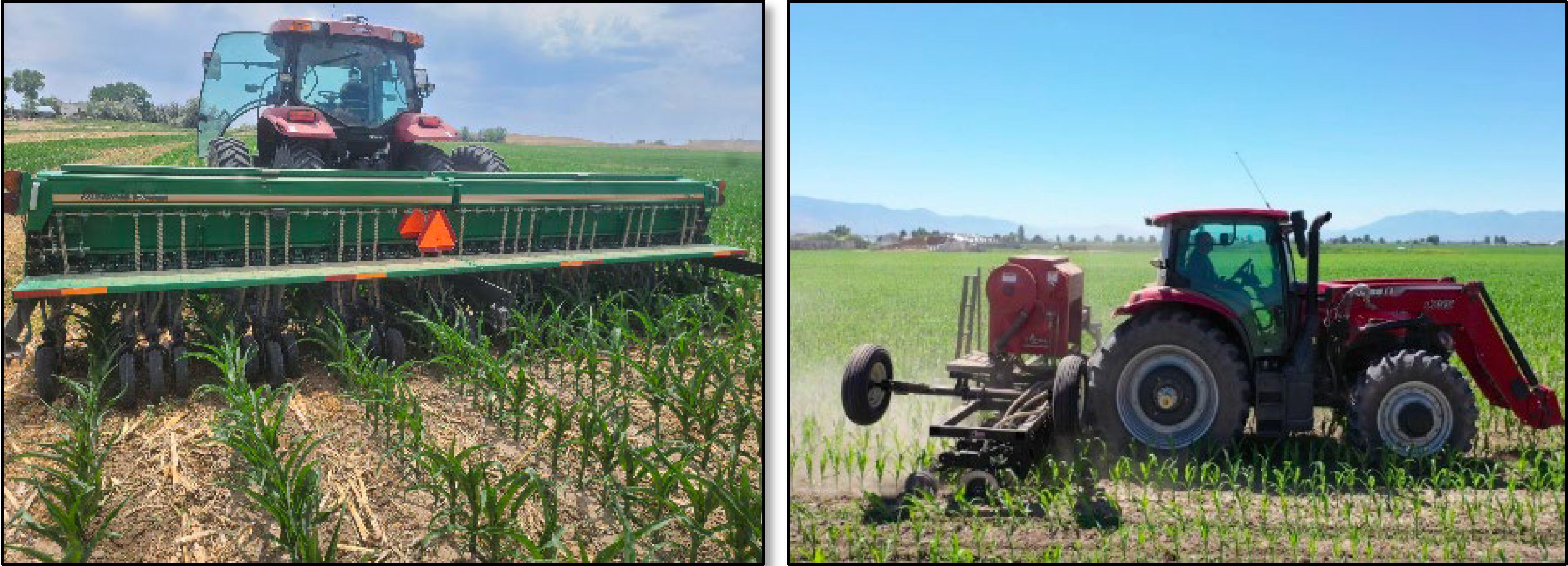
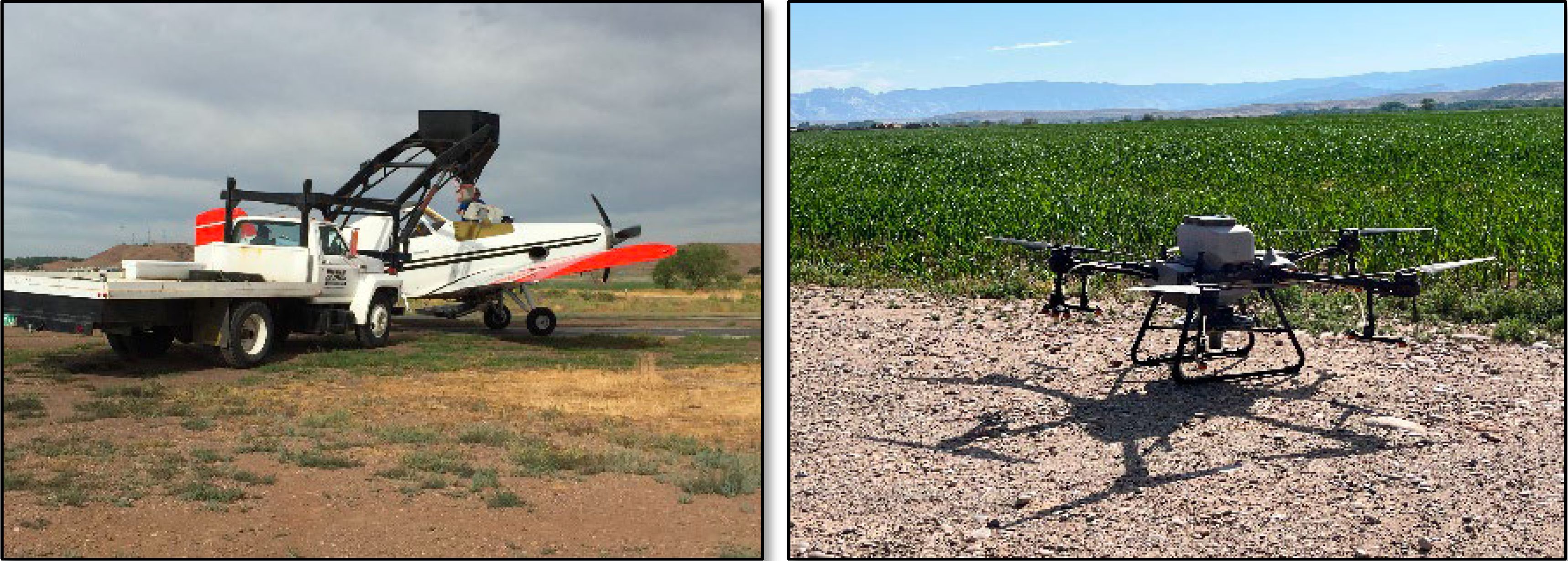
Various forms of broadcasting cover crops into corn have been evaluated in Utah, and drilling has been shown to be more successful than broadcasting. In Utah’s Uintah Basin region, broadcasting seed has been especially problematic on sandy soils or in pivot-irrigated fields because it is difficult to keep the newly seeded covers sufficiently wet for rapid germination. In broadcast scenarios, keeping the soil and seed wet for about 2 weeks is critical for successful establishment. One method that has improved the success of broadcasting in Utah has been the use of clay-coated seeds, especially for brassica and legume seed. The results of the Minnesota study and the experience of the authors and cooperating farmers in recent years all support the concept that the greatest opportunity for interseeding cover crop success is to drill cover crops rather than broadcast.
Seeding cover crops by aerial broadcast has been evaluated in the Uintah Basin region of Utah. Some observations included the following: cover crops could be seeded in corn at V5 using a drone without causing corn damage. Cover crop seeds can get caught in corn whirls when aerial seeding. The downward wind from the drone does help get seed to the ground compared to a 3-point mounted whirly-bird broadcast seeder. Drones can be quickly calibrated to the correct seeding rate and may be a faster application option than ground-based options.
Weed Management
Aside from the initial goals of improving soil health characteristics and increasing corn yield, interseeding cover crops into corn may also reduce weed pressure. Cover crops in general have a long track record of suppressing weeds in the season they are grown, and they can also sometimes decrease future weed populations by limiting the weed seeds deposited in the soil each year from mature weeds, thereby lowering the weed seed reserve in the soil (Baraibar et al., 2018). On the other hand, they can also increase weed pressure if the covers prevent the use of select herbicides or herbicides that provide residual control. Further, improperly managed cover crops can become weeds (e.g., rye, buckwheat) that affect the user of the cover and neighboring farms. Therefore, care is needed to adequately control weeds before interseeding a cover crop and to plan for weed control after cover seeding. This is especially important where barnyard or other grass pressure exists, as the weeds can outpace cover crops and cause severe weed outbreaks.
A second research topic in the northeastern U.S. study previously mentioned was to observe weed biomass in medium-density corn with and without interseeded cover crops. The study showed there were 31% fewer weeds in October with interseeded cover crops than without (Youngerman et al., 2018). Despite the goal of cover crops reducing weed pressure, they will likely not provide complete control on their own, and growers should be prepared with other options.
When interseeding cover crops into corn, herbicide use in corn becomes more complicated. Residual herbicides can damage interseeded cover crops, especially when cover crops are a mix of broadleaf and grass species, where no selective herbicides can be used. Thus, growers should select herbicide programs carefully to minimize residual effects on the cover crop. For example, glyphosate cannot be used in Roundup Ready® corn after covers emerge because it is nonselective and will kill anything that lacks the herbicide tolerance gene. In this situation, plant corn into a clean seedbed and administer the final glyphosate application right before or right after the cover crop is interseeded (but before cover emerges). Growers could also consider using a single species of grass cover crop that tolerates the same herbicides as corn (except for glyphosate). The USU Extension Utah Vegetable Production Guide for sweet corn presents a table of common herbicides used in corn and their limitations with cover crops.
Irrigation Management
Due to the dry climate of the arid western U.S., irrigation is essential for growing crops. Irrigation systems create different considerations when interseeding cover crops into corn, but interseeding can be successful in all types of irrigation (Figure 5). Flood irrigation represents nearly half of the irrigated crop land in the Intermountain West. A common type of flood irrigation for corn production is furrow irrigation. When using furrow irrigation, furrows should be created before planting the cover crop. If the cover crop is planted first and then the field is furrowed, germination and early growth can be significantly reduced. This damage to an interseeded cover crop was observed in a recent study in Utah. At one of the research sites, an interseeded cover crop was planted before the field was furrowed. While cover crop growth was not eliminated by furrowing, it did disrupt the ideal conditions for germination and growth (Hadfield et al., 2023a). Another consideration for furrow irrigation is that furrows tend to widen with each irrigation. This can wash out cover crops over time, especially for covers planted in the middle of the space between corn rows. Thus, it becomes a balancing act of where to position the cover crop row so it captures the most sunlight without being washed out by irrigation.
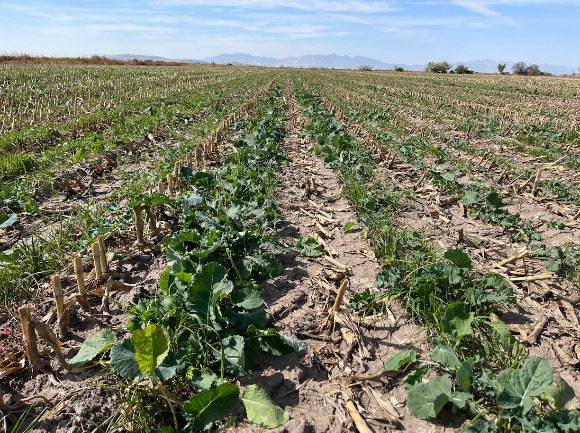
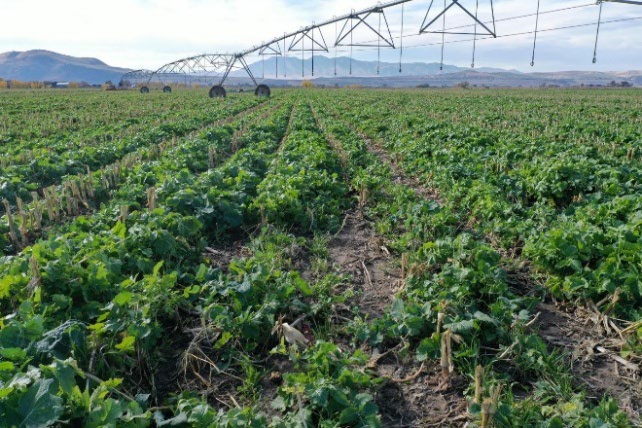
The irrigation system can also influence the success of interseeded cover crops due to residual soil moisture in the spring and irrigation frequency and amount. In recent Utah research trials, it was observed that interseeded cover crops established better in some flood irrigation fields compared to pivot-irrigated fields in the spring of 2021 and 2022 during extreme drought conditions in Utah. Flood irrigation often provides better moisture conditions in the soil profile due to prolonged, deep water infiltration and greater winter carryover moisture. Irrigation frequency and amounts are also important to consider. Sprinkler irrigation is often more frequent and at lower application rates than flood irrigation. This can be adequate for corn production but can sometimes limit cover crop establishment and growth.
Proper soil moisture and irrigation management are critical for cover crop establishment and success. Cover crop seed is an expensive addition to corn production (up to $40/acre), so be sure that ideal moisture conditions are present before and after interseeding. Water requirements may increase during early cover crop growth stages to support both corn and cover crop growth, and the cover crop should be watered at least once after corn harvest, if possible, to support fall growth. Also be aware that excessive cover crop growth in furrow irrigation may impede water movement down the furrow. Therefore, interseeded covers may often increase irrigation requirements, but they can also insulate the soil, keep soil temperatures cooler, and improve soil structure and water holding capacity. This means there is potential to reduce water use with covers, but the topic needs further study to better understand the balance.
A potential benefit of increased water use by cover crops is the more rapid drying of the soil in the fall near corn harvest time. It has been observed in eastern Utah that cover crops interseeded into corn on heavy-textured soils can assist in soil and corn grain dry-down, allowing for grain harvest to occur 1–2 weeks earlier than without covers.
Nutrient Management
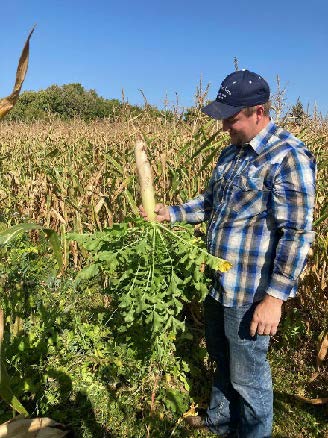
One of the potential nutrient benefits of cover crops interseeded into corn is that they can scavenge (Figure 6) or fix nutrients from the environment. Legume cover crops are especially renowned for their ability to fix atmospheric nitrogen into the soil and make it available for the plant to use. However, it is important to have realistic expectations for what legume cover crops can offer to corn in the growing season. Trials in Minnesota studied the use of Kura clover in alfalfa corn rotations. The trial had a control treatment with no nitrogen (N) fertilizer compared to five N fertilizer rates ranging from 45 to 280 pounds N/acre. The study found that the first year of corn with clover after alfalfa, with no N fertilizer, yielded 193 bushels/acre, and that there was no yield increase in the treatments with added N fertilizer. The second year, the control treatment with no N fertilizer did have yield reductions, and at least 107 pounds N/acre was needed to maintain the maximum yield for that field at 197 bushels/acre. Recommendations for continuous corn in the area of this study are to add 145 to 200 pounds N/acre. Therefore, in this study, the use of Kura clover interseeded into corn reduced N fertilizer needs by at least 38 pounds N/acre (University of Minnesota Extension, 2018).
Non-legume cover crops are known for their ability to produce a lot of residue and help address other non-nutrient challenges in the soil, like erosion and weed control. They do offer some potential nutrient benefits as well, but it is a delicate balance to ensure that the non-legume cover crops are not using N needed for corn growth. This is because, unlike legumes that offer additional N in the current season, non-legume cover crops use available nutrients from the soil and store them in plant tissues. Those nutrients can become available in the following season as the plant residues break down. For this reason, non-legume cover crops are particularly valuable for their ability to store nutrients at the end of the season, where they have consistently been known to scavenge 30 to 50 pounds N/acre. This scavenging can be much greater (up to 150 pounds N/acre) after a manure application or other scenarios where large amounts of N are left in the soil (Sustainable Agriculture Research & Education [SARE], n.d.).
In 2023, USU evaluated how an interseeded cover crop of annual rye grass, vetch, and radish affected nutrient leaching at a site near Logan, Utah. Results showed that the interseeded cover crop reduced the amount of nitrate leaching below the root zone by half (Figure 7). This suggests that the cover crop was able to use excess nitrate and possibly increase fertilizer nitrogen use efficiency in silage corn production, without harming silage corn yield.
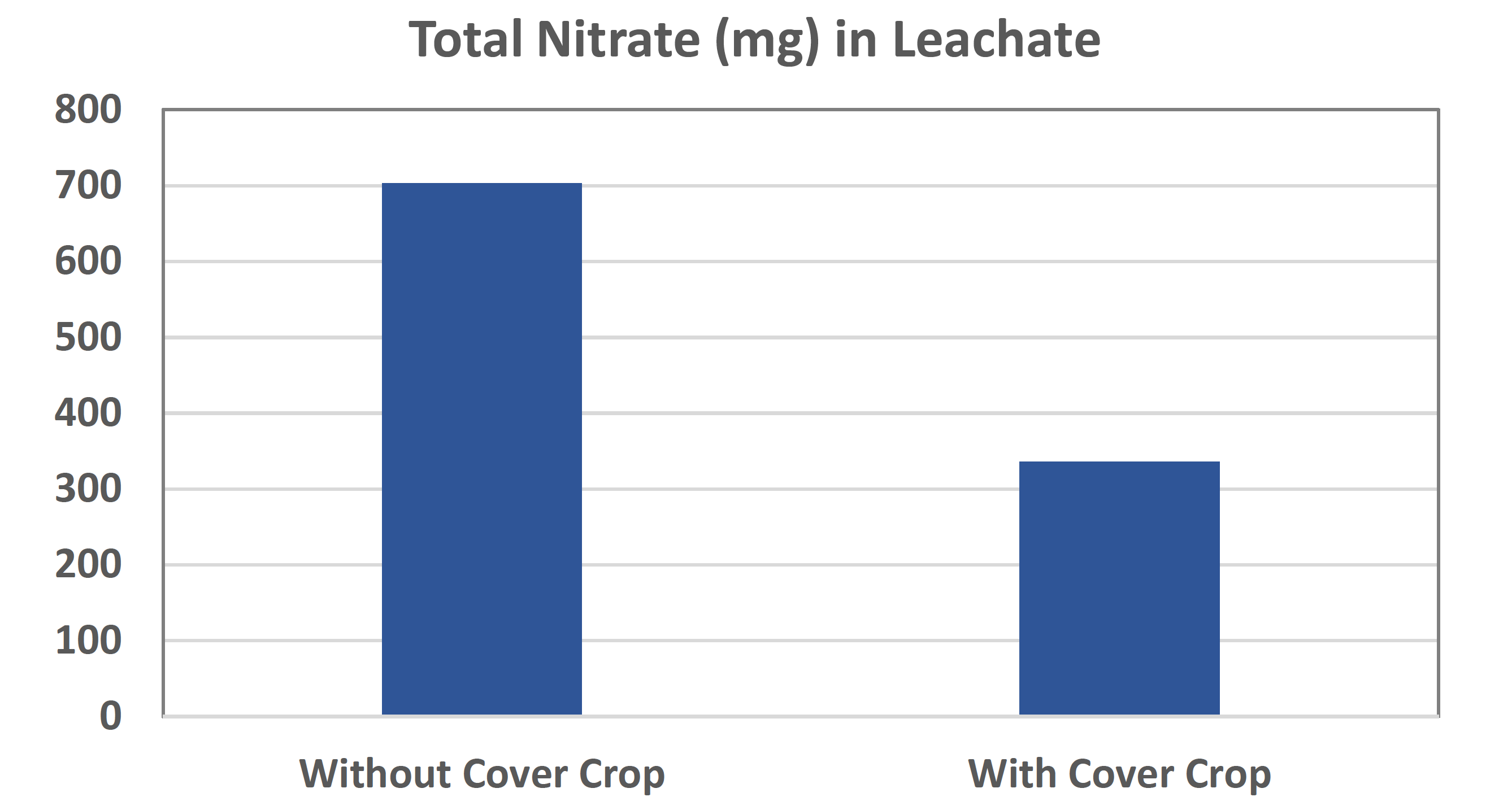
The nutrients that were scavenged and prevented from being leached and otherwise lost to the environment are stored in the plant material and will become available in the following season. The plant-available N expected to be released from the plant in the upcoming season is estimated to be net zero for cover crop mixes that are 75% cereal and 25% legume (Oregon State University Extension Service, n.d.). Therefore, cover crops that include more than 25% legume may reduce N fertilizer needs for silage corn. However, the use of other cover crops, particularly cereals, may require additional N requirements of 20–50 pounds N/acre after the corn is removed (Cover Crop Strategies, 2023; Penn State Extension, n.d.). Overall, it is recommended to use a cover crop mixture of both legumes and non-legumes to balance in-season cover crop N requirements. Further in the season following an interseeded cover, include any potential carryover N in the calculations for corn or other non-legume N requirements.
Impacts of Interseeding on Corn Yield and Forage Quality
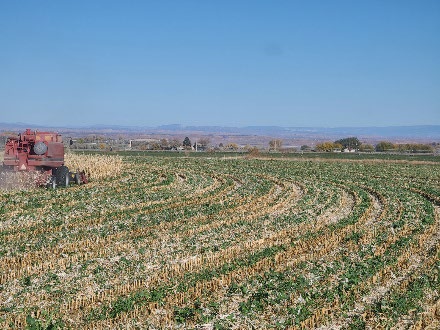
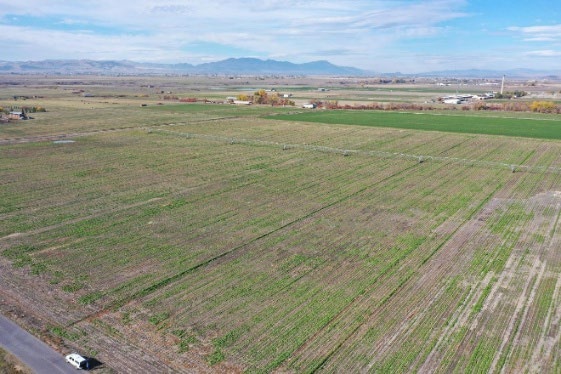
Multiple research studies in the southern and eastern states have shown no effect of interseeded cover crops on corn grain or silage yield (Noland et al., 2018; Belfry &Van Eerd, 2016; Brooker et al., 2020; Youngerman et al., 2018). However, others have found frequent reductions in corn yield. For example, interseeded covers at V3–V5 reduced corn grain yield in six of 14 trials in Nebraska during 2019–2022 (Brhel et al., 2023). The studies in Utah (Figure 8) and Idaho on corn row spacing and plant populations with cover crops agree with several studies showing that corn yield was not affected by the presence of cover crops (Tables 1 and 3). Further, USU conducted replicated strip trials in 2023 at two fields in Cache County, Utah, to compare the effects of interseeded cover crops in silage corn. This research also showed no significant reductions in corn silage yield. Collectively, these studies show that interseeding cover crops in corn can be successful with little or no impact on corn production, provided nutrient requirements are met. The long-term impacts of interseeded cover crops have not been studied, and corn yield increases from these cover crops could occur over time if they impact soil health properties in positive ways.
Another potential way cover crops may benefit corn is by increasing the nutrient content of the forage. In the USU study of interseeded corn, quality metrics were measured and compared for the corn silage. In the one-year study, no difference was observed.
Economics and the Added Value of Grazing Livestock
In a Utah survey of growers and producers regarding soil health practices in 2024, 93% said that cost influenced their ability to implement soil health practices either “a lot” or “somewhat” (Petrzelka et al., 2024). While it is true that cover crops are an additional cost, they can also reduce costs in other regards. It is best to evaluate cover crops over a multi-year timeline because the National Cover Crop Survey by Sustainable Agriculture Research and Education (SARE) reported that, on average, it takes at least 3 years for cover crops to begin to pay for themselves (SARE, 2019).
The SARE survey highlighted a few field scenarios in which cover crops can pay for themselves more quickly such as: having herbicide-resistant weeds, soil compaction, soil moisture deficit (applicable in rainfed but not irrigated settings), high fertilizer costs, nutrients from manure that need to be sequestered, grazing the cover crop (Figure 9), using the cover crop to help transition to a no-till system, or when incentive payments were received. Regarding corn, the report also noted that rainfed corn systems with cover crops had 9.6% higher yields in the drought year of 2012 (SARE, 2019). As the study mentioned, incentive payments can make cover crops more feasible and profitable. In Utah, the Conservation Stewardship Program offers payments for cover crops and the State of Utah’s AgVIP program has incentives for implementing conservation practices including cover crops. The USDA’s Environmental Quality Incentives Program can also pay towards cover crops. The programs are based on factors such as costs, income, and expected benefits. Growers should work with their local NRCS office to determine whether this is a possibility.
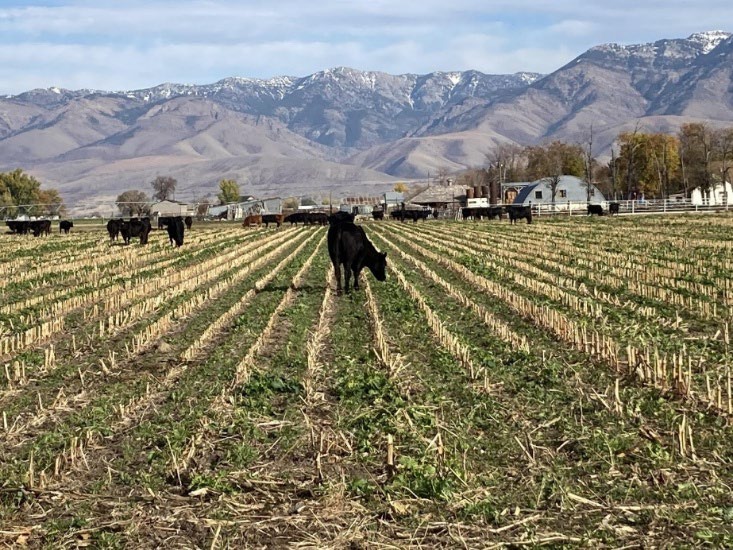
One of the largest financial benefits of growing cover crops with corn is that the cover crop can be harvested as a second crop after corn harvest. The cover crop can be either grazed by livestock or mechanically cut and harvested in the fall. Drying and baling the crop late in the season can be difficult, so if a mechanical harvest is used, it may need to be green chopped. Depending on the species of cover crop and their winter resilience, it can be harvested again in the spring before planting the next cash crop. In fact, the SARE study in 2019 mentions that livestock grazing of cover crops is one of the easiest ways to have positive first-year returns from incorporating cover crops. In the Cache Valley region of Utah, mixtures of interseeded cover crops that cost around $30/acre, which were irrigated once after corn harvest and allowed to grow for 45 days, provided 4–6 weeks of grazing for livestock. This could greatly help offset the costs of cover crop seed. Moreover, reducing legume seeding rates in cover crop mixtures can help reduce seed costs.
A Minnesota trial evaluated the economic value of interseeding various cover crop mixes (annual ryegrass, red clover, crimson clover, berseem clover, bayou kale, field radish, purple top turnip, teff, African cabbage, and cow pea) into grain corn in a few different scenarios: standard 30-inch row spacing with no cover crop, 30-inch with cover crop, 30-inch with two skipped rows every four rows with cover crop, and 60-inch row spacing with cover crops (Black et al., 2023). Corn seeding rates were doubled with the 60-inch rows. Corn grain yield was highest in standard 30-inch rows without a cover crop, and cover crop growth was highest with the 30-inch rows with two skipped rows every four rows. In their economic analysis, the standard 30-inch rows with no cover crop were compared with the 60-inch rows with cover crops. It was determined that the 60-inch rows cost $11 more per acre than the standard 30-inch rows. However, both scenarios were profitable when considering additional profit from harvested cover crops. Models were created to calculate a breakeven point. If a 13% reduction in corn grain yield occurs with 60-inch rows, the additional costs of cover crops can break even. This shows that a corn yield reduction greater than 13% due to interseeding will likely decrease overall profits. However, it is important to remember that local studies in Utah and Idaho have shown that corn yield was not reduced with the use of interseeded cover crops, provided corn rows were less than 44 inches wide (Hines et al., 2023). Therefore, there is an opportunity for profitable returns as long corn yield reductions are minimal. It is important to note that this economic study from Minnesota is one of the first of its kind, and the results need to be replicated in the Intermountain West based on the recommendations given in this guide to be more reliable for local growers.
Crop Insurance
In most circumstances, corn remains insurable when an interseeded cover crop is used. However, it is wise to check your policy and verify with your insurance company/agent/agency before planting a cover crop to ensure that the interseeded cover does not interfere with your insurance or that you are comfortable with any stipulations.
Conclusions
Interseeding cover crops into corn is a promising soil health practice. The research currently available in Utah and Idaho suggests that corn experiences no yield loss from interseeding cover crops, while allowing the opportunity to increase profits and further benefit the soil by incorporating fall livestock grazing. Studies outside the Intermountain West show that fall grazing has the potential to be both economical and provide resilience to corn cropping systems.
Photo Credit
The authors provided all the photos in this guide.
References
Baraibar, B., Hunter, M. C., Schipanski, M. E., Hamilton, A., & Mortensen, D. A. (2018). Weed suppression in cover crop monocultures and mixtures. Weed Science, 66(1), 121–133. https://doi.org/10.1017/wsc.2017.59
Belfry, K. D., & Van Eerd, L. L. (2016). Establishment and impact of cover crops intersown into corn. Crop Science, 56, 1245–1256. https://doi.org/10.2135/cropsci2015.06.0351
Black, K. L., Wells, S., Johnson, G. A., Lazarus, W. F., & Kraus, A. (2023). Interseeding wide-row corn with forage cover crops: Investigating system potential for expanded economic opportunities in corn production systems. Agronomy, 13(2), 307. https://doi.org/10.3390/agronomy13020307
Brhel, J., Melvin, S., Thompson, L., Lexow, T., Koehler-Cole, K., & Drewoski, M. (2023). On-farm research early-season interseeding into corn and soybean results (2019-2022). University of Nebraska Extension. https://cropwatch.unl.edu/2023/farm-reseach-early-season-interseeding-corn-and-soybean-results-2019-2022/.
Brooker, A. P., Renner, K. A., & Sprague, C. L. (2020). Interseeding cover crops in corn. Agronomy Journal, 112, 139–147. https://doi.org/10.1002/agj2.20046
Cover Crop Strategies. (2023, March 28). Consider killing non-legume cover crops early this year. Cover Crop Strategies. https://www.covercropstrategies.com/articles/2277-consider-killing-non-legume-cover-crops-early-this-year
Curran, W. S., Hoover, R. J., Mirsky, S. B., Roth, G. W., Ryan, M. R., Ackroyd, V. J., Wallace, J. M., Dempsey, M. A., & Pelzer, C. J. (2018). Evaluation of cover crops drill interseeded into corn across the Mid‐Atlantic region. Agronomy Journal, 110(2), 435–443. https://doi.org/10.2134/agronj2017.07.0395
Hadfield, J. A., Zesiger, C., Taylor, K., Clawson, J., Pace, M., Gale, J., Creech, E., & Yost, M. (2023a). Identification of effective planting times of cover crops interseeded into corn in Utah. Journal of the NACAA, 16(1). https://www.nacaa.com/file.ashx?id=53daf7a5-a0d6-4fc2-b342-7419d56d77e6
Hadfield, J., Zesiger, C., Taylor, K., Clawson, J., Pace, M., Gale, J., Creech, J., Yost, M., & Larsen, R. (2023b). The effect of lowering corn populations on interseeded cover crop yield and quality. ResearchGate. https://doi.org/10.13140/RG.2.2.13121.74089
Hines, S., Packham, J., Loomis, G., Thomas, J., & Adjesiwor, A. (2023). Impacts of interseeding cover crop into silage corn grown on wide row spacings. Journal of the NACAA, 16(2). https://www.nacaa.com/file.ashx?id=be32e2e1-db05-426b-be8a-800c711befb3
McConnell, C. A., Rozum, R. K. N., Shi, Y., & Kemanian, A. R. (2023). Tradeoffs when interseeding cover crops into corn across the Chesapeake Bay watershed. Agricultural Systems, 209, 103684. https://doi.org/10.1016/j.agsy.2023.103684
Myers, R., Weber, A., & Tellatin, S. (2019). Cover crop economics: Opportunities to improve your bottom line in row crops. Sustainable Agriculture Research & Education. https://www.sare.org/resources/cover-crop-economics/
Noland, R. L., Wells, M. S., Sheaffer, C. C., Baker, J. M., Martinson, K. L., & Coulter, J. A. (2018). Establishment and function of cover crops interseeded into corn. Crop Science, 58, 863–873. https://doi.org/10.2135/cropsci2017.06.0375
Oregon State University Extension Service. (n.d.). Estimating plant available nitrogen release from cover crops. https://extension.oregonstate.edu/catalog/pub/pnw-636-estimating-plant-available-nitrogen-release-cover-crops
Penn State Extension. (n.d.). Cereal rye as a cover crop. https://extension.psu.edu/cereal-rye-as-a-cover-crop
Petrzelka, P., Ulrich-Schad, J. D., Yost, M., Dean, J., Creech, E., Schott, L., Richards, T., & Davis, K. (2024). Utah producers and soil health: Statewide survey results. Utah State University Extension.
Sustainable Agriculture Research & Education (SARE). (n.d.). Cover crops. https://www.sare.org/resources/cover-crops/
University of Minnesota Extension. (2018, August 9). Kura clover living mulch provides multiple benefits for crop production. https://blog-crop-news.extension.umn.edu/2018/08/kura-clover-living-mulch-provides.html
University of Nebraska–Lincoln, Institute of Agriculture and Natural Resources. (2021, May 6). Interseeding cover crops into corn and soybean: What we’ve learned. CropWatch. https://cropwatch.unl.edu/2021/interseeding-cover-crops-corn-and-soybean/
University of Vermont Extension. (2024, February). Guide to interseeding cover crops into corn systems in the Northeast. University of Vermont Extension Northwest Crops and Soils Program. https://www.uvm.edu/sites/default/files/Northwest-Crops-and-Soils-Program/Articles_and_Factsheets/Guide_to_interseeding_cover_crops_in_northern_New_England.pdf
United States Department of Agriculture. (2022, March). Interseeding into corn. https://www.nrcs.usda.gov/sites/default/files/2022-09/InterseedingCCIntoCorn.pdf

January 2026
Utah State University Extension
Peer-reviewed fact sheet
Authors
Matt Yost, Jenae Dean, Michael Pace, Tony Richards, Andrew Wallace, Jacob Hadfield, Steven Hines, Cody Zesiger, Jody Gale, Rhonda Miller, Earl Creech, and Matthew Palmer

Matt Yost
Agroclimate Specialist
PSC Dept

Mike Pace
Extension Professor | Horticulture & Agronomy | Box Elder County Director
Agriculture and Natural Resources

Jacob Hadfield
Extension Associate Professor | Agriculture and Natural Resources | Utah and Juab Counties | Juab County Director
Agriculture and Natural Resources

Cody Zesiger
Extension Associate Professor | Horticulture | Agriculture & Natural Resources | Davis County
Agriculture and Natural Resources

Rhonda Miller
Agricultural Environmental Quality Specialist
ASTE Dept


Matt Palmer
Extension Associate Professor | Agriculture, Natural Resources, 4-H | Sanpete County Director
Agriculture and Natural Resources