
Cloud Seeding: Enhancing Winter Snowpack to Bolster Utah's Water Supply

Highlights
- Cloud seeding is a safe form of weather modification that has been used in Utah since the 1950s to increase snowfall in targeted areas.
- Comparisons of seeded and unseeded areas in Utah indicate that cloud seeding increases precipitation by 3%–13%.
- Cloud seeding can increase precipitation when existing clouds are within an ideal temperature range and contain supercooled liquid water.
- Warmer winter temperatures in Utah’s mountains could decrease the percentage of clouds suitable for seeding from 60% to 40%.
For decades, Utah has been experiencing a declining snowpack paired with a shorter period of snow accumulation (Hotaling & Becker, 2024). These changes are negatively impacting Utah because the state relies heavily on snowpack for its water supply, agriculture, and recreation––especially for winter sports such as skiing and snowmobiling. Warmer winter temperatures driven by climate change will continue to decrease Utah’s snowpack (Hotaling & Becker, 2024).
In this fact sheet, we describe what cloud seeding is, where it is currently used in Utah, and the safety measures and management practices that ensure its responsible use.
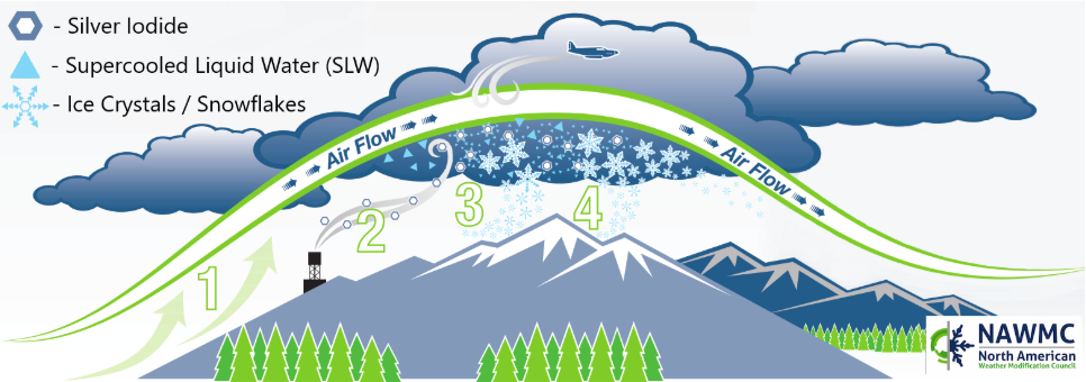
Source: North American Weather Modification Council (NAWMC), n.d.-a, used with permission
What Is Cloud Seeding and How Does It Work?
Cloud seeding is the most common weather modification technique in the United States (National Oceanic and Atmospheric Administration [NOAA], 2024). When clouds are present and their temperature is within an ideal range, the process starts with the release of a seeding agent, typically silver iodide, into the existing cloud (Pokharel et al., 2021). In nature, water molecules bond with “ice nuclei,” such as dust, pollen, or aerosols, to form ice crystals (Desert Research Institute, 2023). During cloud seeding, particles of the seeding agent act in the same way, serving as additional surfaces for bonding, thereby creating more ice crystals that can eventually fall as precipitation (Figure 1). The best seeding agents are nontoxic with a molecular structure that resembles the hexagonal shape of ice. Silver iodide fits these requirements, and because its structure is so similar to natural ice, silver iodide allows ice crystals to form and grow at warmer temperatures than would otherwise be possible in nature (Idaho Department of Water Resources, 2024).
- Ground-based generators, with wind carrying the particles into the clouds.
- Aircraft flying through or above an active storm to deliver the particles directly into the clouds.
Seeding agents are released by ground-based generators (Figure 2) or aircraft (Desert Research Institute, 2023). Ground-based generators burn seeding agents on the windward side of a mountain. Prevailing wind then carries the particles up and into the target clouds (Figure 1). Alternatively, airborne seeding involves flying through or above an active storm and burning or ejecting flares that deliver the seeding agent directly into the clouds (Figure 1; Idaho Department of Water Resources, 2024).
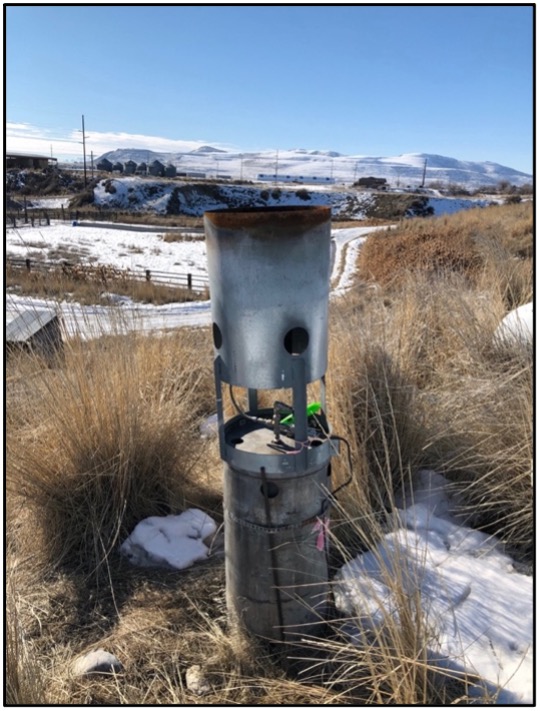
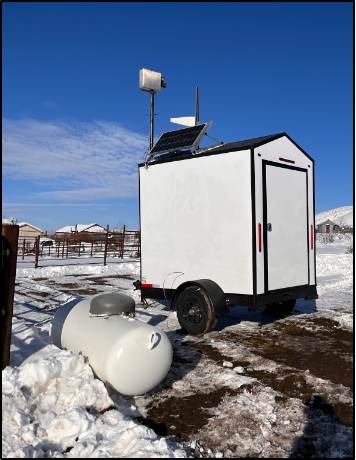
Note. Manual generators (left) are being phased out in Utah. Remote-controlled generators (right) are replacing them.
Photo credits: (left) Binod Pokharel; (right) Jonathan Jennings
Clouds can only be seeded when atmospheric conditions meet certain requirements. Two key atmospheric variables are (1) temperature and (2) the presence of supercooled liquid water (Pokharel et al., 2021). To successfully seed clouds in the winter and enhance snowfall, the average temperature about 0.6 miles above the ground should be between -4 °F and 23 °F. This represents a “Goldilocks” temperature range where the addition of silver iodide yields optimal results (Pokharel et al., 2021). If clouds are too cold (below -4 °F), they likely already contain sufficient ice nuclei, so adding more will not increase precipitation (Griffith et al., 2009; Pokharel et al., 2021). If clouds are too warm (above 23 °F), silver iodide becomes ineffective as a nucleating agent (Griffith et al., 2009).
Supercooled liquid water commonly occurs in nature and refers to water that stays in liquid form despite being below the freezing point. When supercooled liquid water contacts a physical surface––such as dust or silver iodide––it instantly freezes into an ice crystal and increases in size, eventually becoming a snowflake that can fall as precipitation (Tabazadeh et al., 2002). Currently, about 60% of winter clouds in Utah’s mountains meet the temperature conditions and contain supercooled liquid water, making them suitable for seeding (Pokharel et al., 2021). In recent years, suitable seeding conditions have occurred in Utah’s mountains more than 20% of the time on average between November 1 and March 31 (Pokharel et al., 2021).
Cloud Seeding in Utah
With over 170 cloud seeding generators already in use, Utah has one of the largest cloud seeding programs in the country (Figure 3; Larsen, 2023). The state has funded cloud seeding for over 50 years, dedicating about $200,000 to $350,000 annually (Larsen, 2023). Utah also receives about $500,000 annually from Arizona, California, and Nevada since water supply in these Lower Colorado River Basin states depends on snowfall in the Upper Basin, which spans parts of Colorado, Utah, and Wyoming (Hager, 2025). Where cloud seeding has been implemented in Utah, comparisons of seeded and unseeded areas with similar characteristics indicate that cloud seeding increases total winter precipitation by 3%–13% (Flanagan, 2024c, 2024d; Osborne & Yorty, 2024a, 2024b; Yorty, 2024a, 2024b). The additional water produced by cloud seeding is estimated to cost $5 to $10 per acre-foot (Utah Division of Water Resources [DWR], 2024a). To put this in context, Utah’s Demand Management Pilot Program is preparing to pay selected farmers $390 per acre-foot to not irrigate their land so more water can remain in the Colorado River (Condos, 2025).
In 2023, Utah’s legislature designated $12 million in one-time funding and $5 million in ongoing funding to go toward 185 remote-controlled generators and aerial cloud seeding operations in the state (Figure 3; Larsen, 2023). In the winter of 2023–2024, cloud seeding was used during 184 storm events statewide with aerial seeding by aircraft occurring during 20 of these (Flanagan, 2024a, 2024b, 2024c, 2024d; Osborne & Yorty, 2024a, 2024b; Yorty, 2024a, 2024b). As of 2025, traditional aerial operations have been paused, pending cost estimates for planes better equipped for extreme icing scenarios; meanwhile, the effectiveness of drones as cloud-seeding tools is being assessed. Utah’s Division of Water Resources is also partnering with the University of Utah, Utah State University, and the National Center for Atmospheric Research to study the impact of cloud seeding on water resources in the Weber River Basin in northern Utah.
Utah uses cloud seeding to bolster the state’s snowpack, largely because 95% of Utah’s water supply comes from seasonal snowmelt (Julander & Clayton, 2018; DWR, 2024b). However, despite the state’s cloud seeding efforts, the proportion of winter precipitation falling as snow has still declined by about 9% since 1960, leading to a 16% decline in snowpack statewide since 1979 (Gillies et al., 2012; Hotaling & Becker, 2024). Moreover, projections indicate that by 2062 there will be years when seasonal snowpack hardly accumulates at all (Siirila-Woodburn et al., 2021). Since Utah relies heavily on snowpack for water supply, these observed and projected declines in snowpack are concerning. A primary goal of continuing and expanding cloud seeding in Utah is to increase the amount of precipitation falling as snow to bolster snowpack and subsequent water supply.
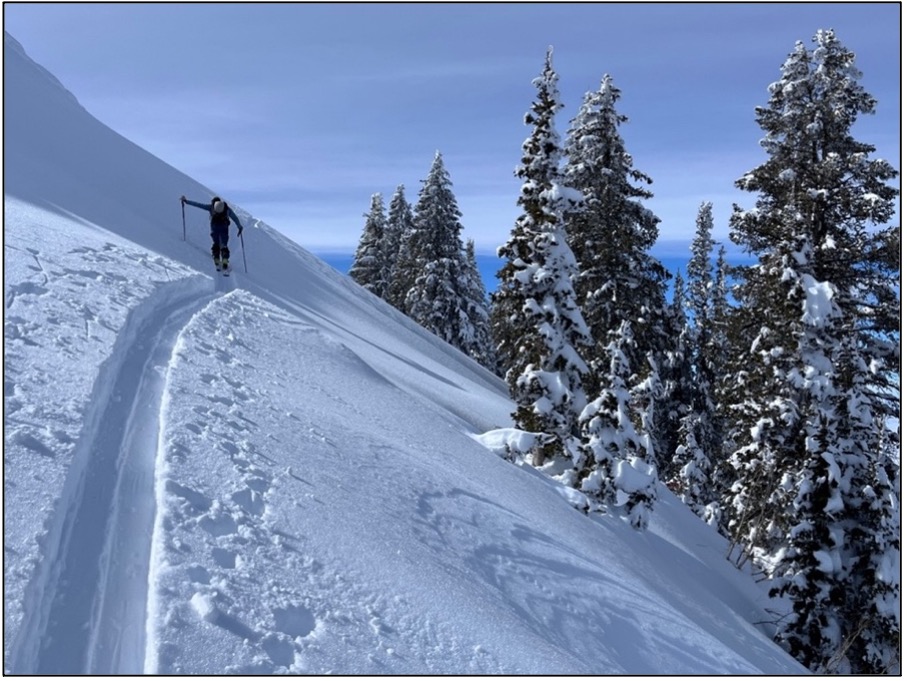
Photo: Scott Hotaling
Ultimately, water from cloud seeding supports Utah’s economy, especially the ski and agricultural industries. Utah’s ski industry is an iconic part of the state’s economy, attracting visitors from around the world to ski “the greatest snow on Earth.” In general, more snow in Utah appears to translate to higher tourism revenue. For instance, during the record-breaking winter of 2022–2023, Utah’s ski industry brought in $1.94 billion from nonresident visitor spending and $694 million from in-state spending ($2.63 billion in total; Kem C. Gardner Policy Institute, 2024). Comparatively, the 2021–2022 season, which had less snow, generated about $1.92 billion from nonresident visitor spending and $433 million from in-state spending ($2.35 billion in total; Kem C. Gardner Policy Institute, 2024). By enhancing snowfall totals, Utah’s cloud seeding can directly benefit ski areas at a time when global warming is negatively impacting them. Between 1980 and 2018, every ski area in Utah warmed, with increases in average minimum daily temperatures ranging from 4.7 °F at Snowbird to 12.1 °F at Powder Mountain (Wilkins et al., 2021). However, increasing mountain temperatures also pose a risk to cloud seeding operations.
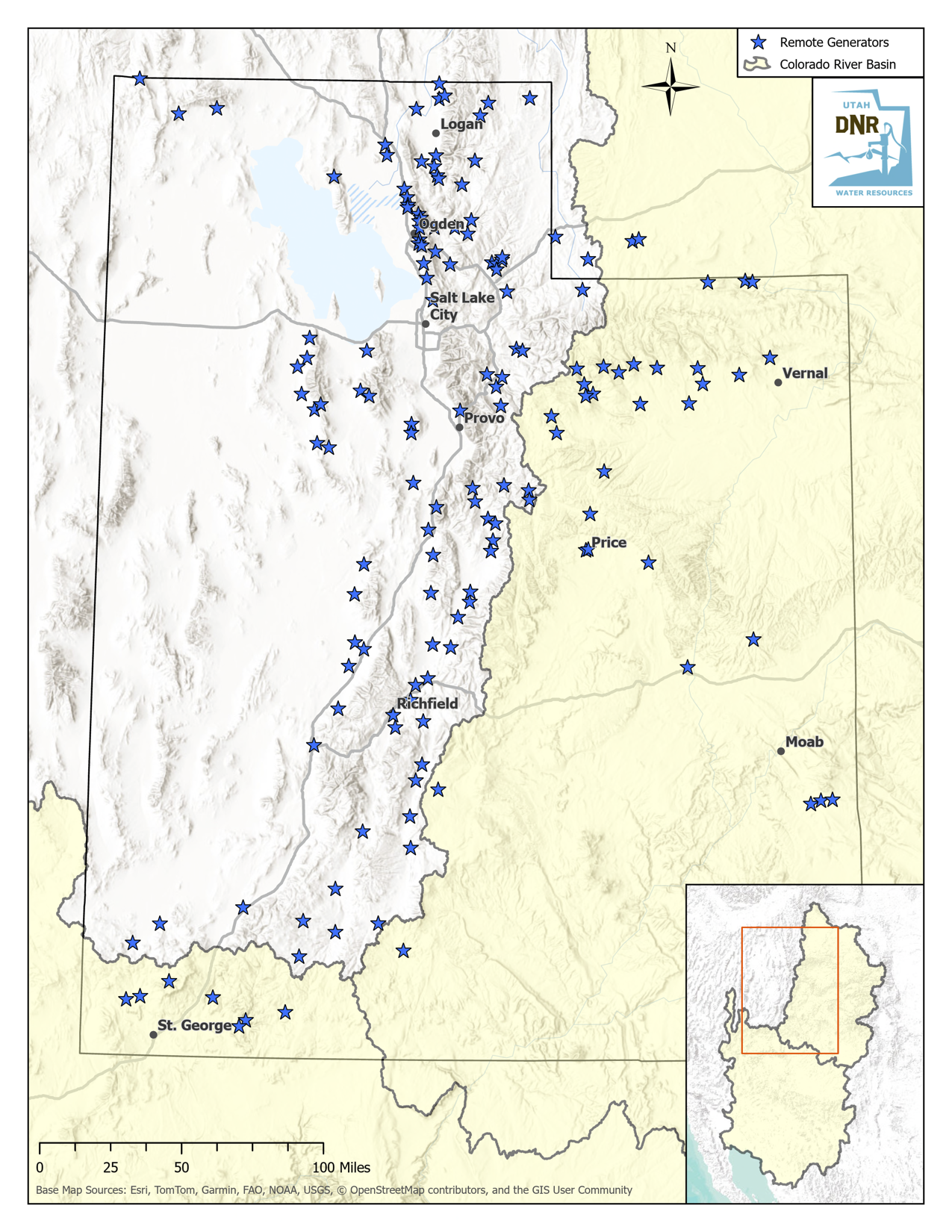
Note: As of November 2025, 185 ground-based, remote-controlled generaators will be operational in Utah.
Source: Jonathan Jennings, Utah Division of Water Resources, used with permission
Does Cloud Seeding Work?
Cloud seeding is not new technology (Rauber et al., 2019). The first cloud seeding experiment was done in 1946 (Desert Research Institute, 2023). Since then, cloud seeding has been implemented worldwide, with major programs in Australia, Chile, China, France, Greece, India, Israel, Saudi Arabia, and Spain (North American Weather Modification Council, n.d.-b). In the United States, cloud seeding is currently used by 11 states: California, Colorado, Idaho, Kansas, Nevada, New Mexico, North Dakota, Oklahoma, Texas, Utah, and Wyoming (Desert Research Institute, 2023). However, given the complexity of artificially influencing precipitation, it is difficult to definitively evaluate the direct impact of cloud seeding on precipitation totals (Friedrich et al., 2020). From January to March in 2017, a landmark study—the Seeded and Natural Orographic Wintertime Clouds: Idaho Experiment, or “SNOWIE”—took place in the Sawtooth Mountains of Idaho. This experiment combined radar measurements during cloud seeding with on-the-ground measurements of precipitation to quantify the water resource contributions of individual aerial cloud seeding events. In one instance, cloud seeding yielded 275 acre-feet of additional water from snowfall in just 24 minutes of the seeding agent being dispensed (Friedrich et al., 2020). For reference, that is enough water to support 550 households for a year or fill 136 Olympic-sized swimming pools. The two other cloud seeding events analyzed as part of the study yielded 100 acre-feet and 196 acre-feet of additional water (Friedrich et al., 2020).
- In 2017, radar and ground-based precipitation measurements were used to track individual cloud seeding events.
- In one instance, cloud seeding resulted in 275 acre-feet of additional water in snowfall.
- Cloud seeding in a target area typically increases precipitation up to 125 miles downwind.
Robust evidence from the SNOWIE experiment that showed cloud seeding can increase precipitation in target areas raises a common question: Does successful cloud seeding in one area “steal” precipitation from other areas? Research actually suggests the opposite. One study in Utah based on historical natural precipitation data and measurements from 34 cloud-seeded winters showed that cloud seeding increased precipitation both where the cloud seeding operations took place and up to 125 miles downwind (DeFelice et al., 2014). Two mechanisms could explain this: (1) the transport of artificially seeded snowflakes before they fall, and (2) other changes to the storm system due to cloud seeding that increase natural precipitation (DeFelice et al., 2014). In general, most of the water vapor in a storm system remains in the atmosphere and does not naturally fall as precipitation (DeFelice et al., 2014). Although cloud seeding can increase the fraction of water vapor that forms snowflakes and falls, this additional precipitation may not have naturally fallen downwind, or anywhere, as part of that storm event.
Is Cloud Seeding Safe?
Silver iodide exists naturally at low concentrations and is not known to be harmful to the environment, humans, or wildlife (DWR, 2024a). Because silver iodide is insoluble in water, it is not toxic to terrestrial or aquatic organisms(Williams & Denhom, 2009). While silver iodide cloud seeding programs do result in elevated silver levels in precipitation, these levels remain below the U.S. Environmental Protection Agency’s secondary maximum contaminant level for silver (LaCross, 2014). In the 50 years that cloud seeding has been used in Utah, no silver-iodide-related environmental impacts have been observed.
Following recent hurricanes in the southeastern United States and devastating flooding in Texas, cloud seeding has been the subject of a variety of inaccurate claims (Desert Research Institute, 2023; NOAA, 2024). It is true that cloud seeding is the only weather modification approach that is commonly practiced in the United States. However, as described above, its impact is relatively small and localized to specific storm events (DWR, 2024a). Moreover, it is practiced under the supervision of state managers with conservative safety guidelines (North American Weather Modification Council, n.d.-c). In Utah, if the winter snowpack in an area exceeds the 95th percentile, managers suspend cloud seeding operations to limit the potential for flooding during spring runoff (Jennings, 2025). Suspension also occurs during severe weather warnings or heightened avalanche forecasts (Jennings, 2025).
Is There a Limit to Cloud Seeding Impacts?
The stress of widespread drought and snowpack decline on Utah’s water resources raises an important question: Could we offset these impacts if we performed enough cloud seeding? That is, is there a limit to our cloud seeding capacity? Unfortunately, even with unlimited funding, there is still a limit to Utah’s cloud seeding capacity. As described above, cloud seeding requires appropriate atmospheric temperatures and the presence of supercooled liquid water in clouds (Pokharel et al., 2021). The goal of a cloud seeding operation is to get more of that supercooled liquid water to become snowflakes. So, if supercooled liquid water is not present (i.e., there are no clouds or the clouds are too warm), no cloud seeding can occur. And, as any Utahn knows, Utah’s winter weather is variable, with moisture-laden storm systems commonly followed by periods of clear, dry weather that can last for weeks to months. Thus, atmospheric conditions already greatly limit cloud seeding capacity. Furthermore, adding more silver iodide particles to a storm does not necessarily lead to more precipitation. In fact, too much silver iodide can suppress droplet growth and reduce the overall effectiveness of cloud seeding operations (Chen et al., 2021). Warming winter temperatures in Utah are also likely to decrease the percentage of clouds suitable for cloud seeding from 60% to 40%, leading to fewer “seedable” storms (Pokharel et al., 2021).
Conclusion
As Utah’s climate warms, the state is working to combat the decline in winter snowpack caused by rising temperatures (Hotaling & Becker, 2024). Cloud seeding is a safe technology that, under the right conditions, can boost snowfall. However, it is not a one-stop solution to Utah’s broader water resource challenges. Rather, it should be viewed as one of many tools that collectively make up a comprehensive solution. Other tools include water conservation (e.g., Clark et al., 2024; Cottam et al., 2025) and bolstering water levels in the Great Salt Lake (e.g., Francis et al., 2024; Null & Wurtsbaugh, 2020), which, in turn, will enhance lake-effect snow in the region (Alcott & Steenburgh, 2013). To learn more about cloud seeding in Utah and how the Utah Division of Water Resources implements the program and ensures that it is done safely, we recommend reading their four-part blog series.
Acknowledgments
This publication was produced as part of the Climate Adaptation Intern Program (CAIP) at Utah State University. CAIP was supported by the “Secure Water Future” project, funded by an Agriculture and Food Research Initiative Competitive Grant (#2021-69012-35916) from the USDA National Institute of Food and Agriculture, as well as support from the USGS Southwest Climate Adaptation Science Center, USU Extension, and the USU Extension Water Initiative. We improved this fact sheet based on feedback from Jonathan Jennings, Matthew Morris, and CAIP participants. Any opinions, findings, conclusions, or recommendations expressed in this publication are those of the author(s) and should not be construed to represent any official USDA or U.S. Government determination or policy.
For correspondence, contact Scott Hotaling: scott.hotaling@usu.edu.
References
- Alcott, T. I., & Steenburgh, W. J. (2013). Orographic influences on a Great Salt Lake–effect snowstorm. Monthly Weather Review, 141(7), 2432–2450. https://doi.org/10.1175/MWR-D-12-00328.1
- Chen, S., Xue, L., & Yau, M. K. (2021). Hygroscopic seeding effects of giant aerosol particles simulated by the Lagrangian‐particle‐based direct numerical simulation. Geophysical Research Letters, 48(20), e2021GL094621. https://doi.org/10.1029/2021GL094621
- Clark, C., Becker, K. M. L., Wagner, K., & Hotaling, S. (2024). Policies and programs for water-wise residential landscaping in Utah [Fact sheet]. Utah State University Extension. https://extension.usu.edu/climate/research/water-wise-policies-and-programs-utah
- Condos, D. (2025, February 14). Utah seems ready to pay farmers to leave more water in the Colorado River. KUER. https://www.kuer.org/science-environment/2025-02-14/utah-seems-ready-to-pay-farmers-to-leave-more-water-in-the-colorado-river
- Cottam, M., Becker, K. M. L., Stemmler, K., Poudyal, S. Crump, W., Kogan, L, & Hotaling, S. (2025). Reducing residential landscape water use in Utah: Technologies and strategies [Fact sheet]. Utah State University Extension.
- DeFelice, T. P., Golden, J., Griffith, D., Woodley, W., Rosenfeld, D., Breed, D., Solak, M., & Boe, B. (2014). Extra area effects of cloud seeding: An updated assessment. Atmospheric Research, 135–136, 193–203. https://doi.org/10.1016/j.atmosres.2013.08.014
- Desert Research Institute. (2023, March 15). Making it snow: A brief history and review of the science behind cloud-seeding. https://www.dri.edu/making-it-snow/
- Flanagan, T. F. (2024a). Annual cloud seeding report: Northern Utah aerial program 2023–2024 winter season. https://water.utah.gov/wp-content/uploads/2024/07/Northern-Utah-Aerial-Program-Report-2023-2024.pdf
- Flanagan, T. F. (2024b). Annual cloud seeding report: Southern Utah aerial program 2023–2024 winter season. https://water.utah.gov/wp-content/uploads/2024/07/Southern-Utah-Aerial-Program-Report-2023-2024.pdf
- Flanagan, T. F. (2024c). Annual cloud seeding report: Book Cliffs/Tavaputs cloud seeding program 2024 winter season. https://water.utah.gov/wp-content/uploads/2024/08/Book-Cliffs-Tavaputs-Report-2023-24.pdf
- Flanagan, T. F. (2024d). Annual cloud seeding report: Southern and central Utah cloud seeding program 2023–2024 winter season. https://water.utah.gov/wp-content/uploads/2024/08/Southern-and-Central-Utah-Report-2023-24.pdf
- Francis, C., Becker, K. M. L., Yost, M., & Hotaling, S. (2024). Irrigation companies and the Great Salt Lake: Managing water in Utah amidst climate change [Fact sheet]. Utah State University Extension. https://digitalcommons.usu.edu/extension_curall/2458/
- Friedrich, K., Ikeda, K., Tessendorf, S. A., French, J. R., Rauber, R. M., Geerts, B., Xue, L., Rasmussen, R. M., Blestrud, D. R., Kunkel, M. L., Dawson, N., & Parkinson, S. (2020). Quantifying snowfall from orographic cloud seeding. Proceedings of the National Academy of Sciences, 117(10), 5190-5195. https://doi.org/10.1073/pnas.1917204117
- Gillies, R. R., Wang, S. Y., & Booth, M. R. (2012). Observational and synoptic analyses of the winter precipitation regime change over Utah. Journal of Climate, 25(13), 4679–4698. https://doi.org/10.1175/JCLI-D-11-00084.1
- Griffith, D. A., Solak, M. E., & Yorty, D. P. (2009). 30+ winter seasons of operational cloud seeding in Utah. The Journal of Weather Modification, 41(1), 23–37.
- Hager, A. (2025, April 21). Snowflakes, death threats and dollar signs: Cloud seeding is at a crossroads. KUNC. https://www.kunc.org/news/2025-04-21/snowflakes-death-threats-and-dollar-signs-cloud-seeding-is-at-a-crossroads
- Hotaling, S., & Becker, K. M. L. (2024). Recent climate change in Utah, 1870–2023 [Fact sheet]. Utah State University Extension. https://digitalcommons.usu.edu/extension_curall/2453/
- Idaho Department of Water Resources. (2024, November 25). Science behind cloud seeding. https://idwr.idaho.gov/iwrb/programs/cloud-seeding-program/science-behind-cloud-seeding/
- Jennings, J. (2025). Cloud seeding part 3: How Utah ensures safe and best practices. https://water.utah.gov/cloud-seeding-part-3/
- Julander, R. P., & Clayton, J. A. (2018). Determining the proportion of streamflow that is generated by cold season processes versus summer rainfall in Utah, USA. Journal of Hydrology: Regional Studies, 17, 36–46. https://doi.org/10.1016/j.ejrh.2018.04.005
- Kem C. Gardner Policy Institute. (2024). The economic contributions of Utah’s ski industry [Fact sheet]. University of Utah. https://d36oiwf74r1rap.cloudfront.net/wp-content/uploads/2024/05/Ski-Industry-FS-May2024.pdf
- LaCross, N. L. (2014). Concerns regarding silver iodide cloud seeding. Environmental Epidemiology Program, Bureau of Epidemiology, Utah Department of Health. https://appletree.utah.gov/wp-content/uploads/2021/10/Silver_Iodide_Cloud_Seeding.pdf
- Larsen, L. L. (2023, September 29). Utah put millions into cloud seeding this year: Here’s what it expects in return. The Salt Lake Tribune. https://www.sltrib.com/news/environment/2023/09/29/utah-put-millions-into-cloud/
- National Oceanic and Atmospheric Administration (NOAA). (2024, October 23). Fact check: Debunking weather modification claims. U.S. Department of Commerce. https://www.noaa.gov/news/fact-check-debunking-weather-modification-claims
- North American Weather Modification Council (NAWMC). (n.d.-a). Understanding cold season cloud seeding. http://www.nawmc.org/publications/winter%20r19%20press_final.pdf
- North American Weather Modification Council (NAWMC). (n.d.-b). Cloud seeding: The environment and the climate. http://www.nawmc.org/publications/Environment%20r11%20press_final.pdf
- North American Weather Modification Council (NAWMC). (n.d.-c). Weather modification rules and regulations. http://www.nawmc.org/cloudseeding/
- Null, S. E., & Wurtsbaugh, W. A. (2020). Water development, consumptive water uses, and Great Salt Lake. In Great Salt Lake biology: A terminal Lake in a time of change (pp. 1–21). Cham: Springer International Publishing. https://digitalcommons.usu.edu/cgi/viewcontent.cgi?article=2138&context=wats_facpub
- Osborne, C. & Yorty, D. (2024a). Annual cloud seeding report: High Uintas cloud seeding program 2023–2024 season. https://water.utah.gov/wp-content/uploads/2024/08/High-Uintas-Report-2023-24.pdf
- Osborne, C. & Yorty, D. (2024b). Annual cloud seeding report: Northern Utah cloud seeding program 2023–2024 season. https://water.utah.gov/wp-content/uploads/2024/08/Northern-Utah-Report-2023-24.pdf
- Pokharel, B., Wang, S.-Y., Gu, H., LaPlante M. D., Serago, J., Gillies, R., Meyer, J., Beall, S., & Ikeda, K. (2021). A modeling examination of cloud seeding conditions under the warmer climate in Utah, USA. Atmospheric Research, 248, 105239. https://www.sciencedirect.com/science/article/abs/pii/S0169809520311765
- Rauber, R. M., Geerts, B., Xue, L., French, J., Tessendorf, S. A., Blestrud, D. R., Kunkel, M. L., & Parkinson, S. (2019). Wintertime orographic cloud seeding—A review. American Meteorological Society, 58, 10. https://journals.ametsoc.org/view/journals/apme/58/10/jamc-d-18-0341.1.xml
- Siirila-Woodburn, E. R., Rhoades, A. M., Hatchett, B. J., Huning, L. S., Szinai, J., Tague, C., Nico, P. S., Feldman, D. R., Jones, A. D., Collins, W. D., & Kaatz, L. (2021). A low-to-no snow future and its impacts on water resources in the western United States. Nature Reviews Earth & Environment, 2(11), 800–819. https://doi.org/10.1038/s43017-021-00219-y
- Tabazadeh, A., Djikaev, Y. S., & Reiss, H. (2002). Surface crystallization of supercooled water in clouds. Proceedings of the National Academy of Sciences, 99(25), 15873–15878. https://doi.org/10.1073/pnas.252640699
- Utah Division of Water Resources (DWR). (2024a). Cloud seeding. Utah Department of Natural Resources. https://water.utah.gov/cloudseeding/
- Utah Division of Water Resources (DWR). (2024b). Snowpack. Utah Department of Natural Resources. https://water.utah.gov/snowpack/
- Williams, B. D., & Denhom, J. A. (2009). An assessment of the environmental toxicity of silver iodide—with reference to a cloud seeding trial in the snowy mountains of Australia. The Journal of Weather Modification, 41(1), 75–96.
- Wilkins, E. J., Akbar, H., Saley, T. C., Hager, R., Elkin, C. M., Belmont, P., Flint, C. G., & Smith, J. W. (2021). Climate change and Utah ski resorts: Impacts, perceptions, and adaptation strategies. Mountain Research and Development, 41(3), R12. https://doi.org/10.1659/MRD-JOURNAL-D-20-00065.1
- Yorty, D. (2024a). Annual cloud seeding report and evaluation: Six Creeks cloud seeding program 2023–2024 winter season. https://water.utah.gov/wp-content/uploads/2024/08/Six-Creeks-Report-2023-24.pdf
- Yorty, D. (2024b). Annual cloud seeding report: Western Uintas cloud seeding program 2023–2024 winter season. https://water.utah.gov/wp-content/uploads/2024/08/Western-Uintas-2023-24.pdf

October 2025
Utah State University Extension
Peer-reviewed fact sheet
Authors
Lily Lambert1, Kendall Becker1,2, Binod Pokharel3,4, Scott Hotaling1,2
1 Utah State University (USU) Climate Adaptation Intern Program
2 USU Department of Watershed Sciences
3 Utah Climate Center, USU
4 USU Department of Plants, Soils, and Climate

Scott Hotaling
Assistant Professor | Climate Resiliency Specialist
Watershed Sciences
Related Research