
Agrivoltaics: Combining Food and Solar Power on Agricultural Lands
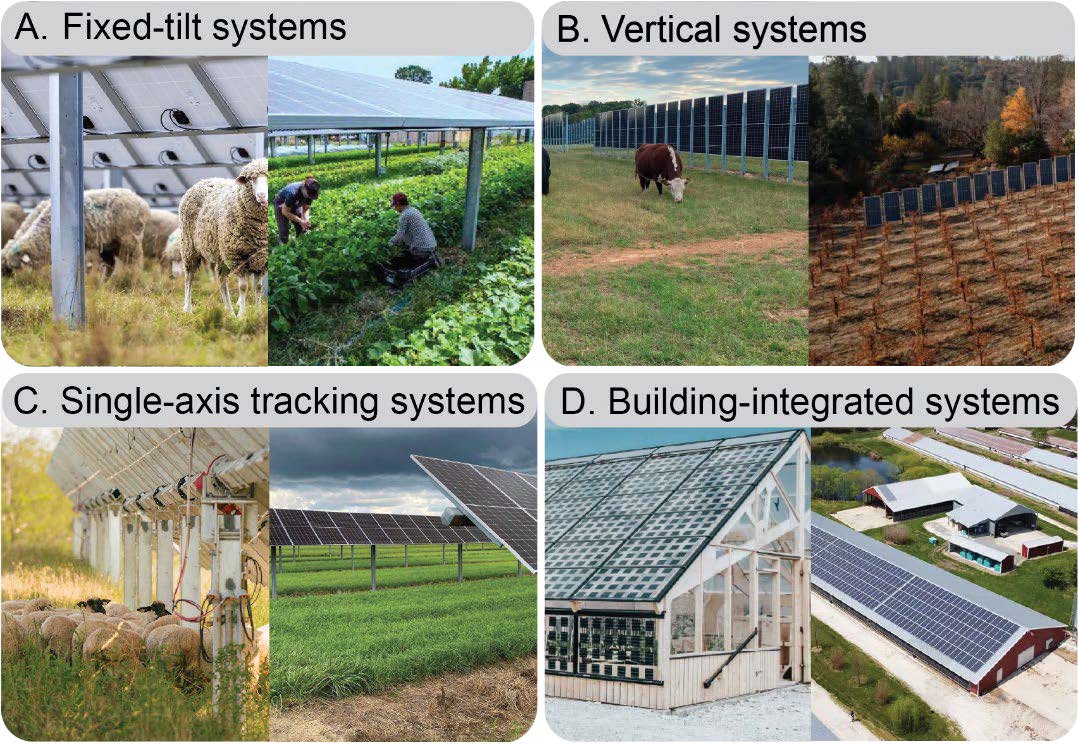
Utah’s ranchers and farmers face pressure to sell land to developers, conserve water, and manage increasing production costs (Li et al., 2019). One way producers can continue to grow food while diversifying and increasing their revenue is by integrating agriculture and solar electricity generation on the same land, a practice known as agrivoltaics (Figure 1). In Utah’s arid environment, solar panels can generate electricity from abundant sunshine. Meanwhile, the partial shade from these structures can reduce heat stress and water needs for both livestock and crops with minimal changes in yield (Pandey et al., 2025). Here, we describe agrivoltaic setup options, summarize the impacts of agrivoltaics on livestock and crop production, and discuss the economics of implementation.
What Is Agrivoltaics?
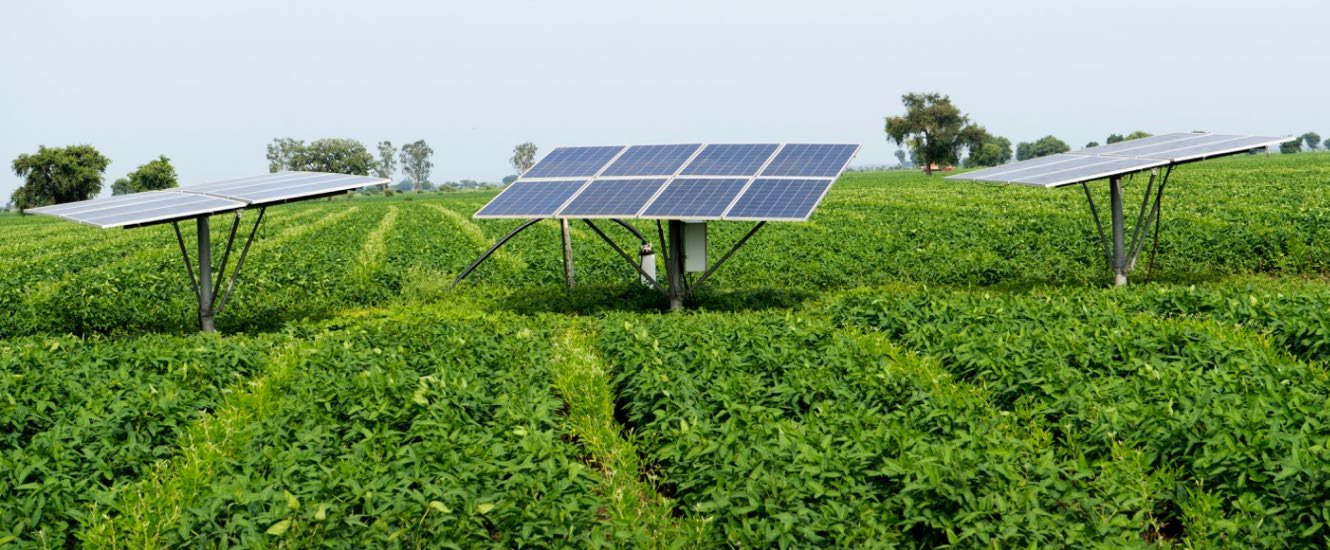
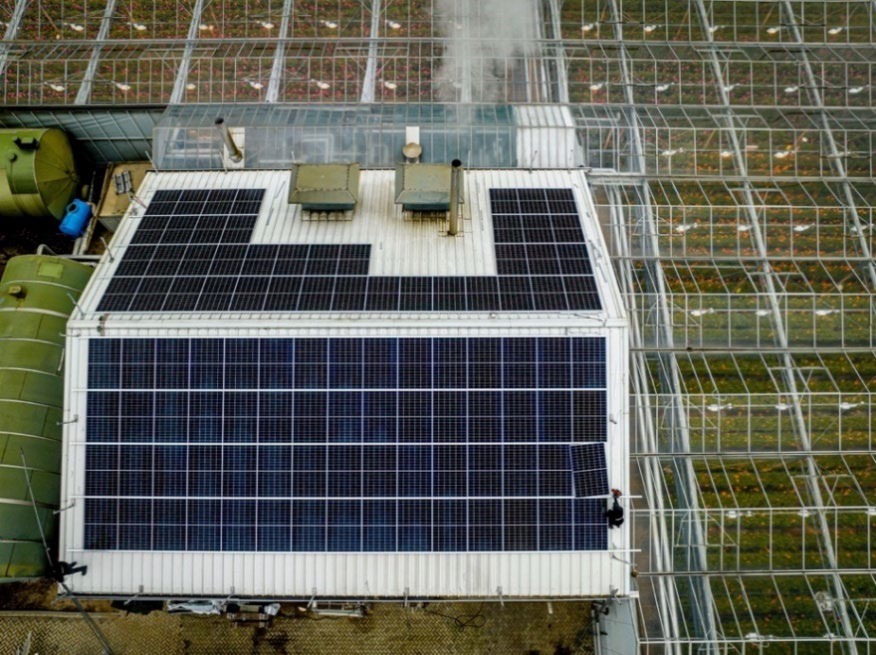
Agrivoltaics combines agricultural activities (e.g., livestock grazing, pollinator habitat, crop production) with energy production by installing solar panels on working farmland or associated buildings (Goetzberger & Zastrow, 1982). These systems range from solar panels elevated above pastures or crops to rooftop installations on barns or greenhouses (Figure 1). The core principle of agrivoltaics is that combining agriculture and electricity production can increase the total production value of agricultural land while bolstering both food and energy security.
The concept of agrivoltaics was introduced in 1982, but its implementation did not begin in the United States until 2009 (Trommsdorff et al., 2022). By 2021, agrivoltaics had a global electricity generating capacity of 14 gigawatts (GW). For context, Utah’s utility-scale solar capacity was 3.2 GW in 2025 and generated about 15% of the state’s electricity (Vanden Berg, 2026).
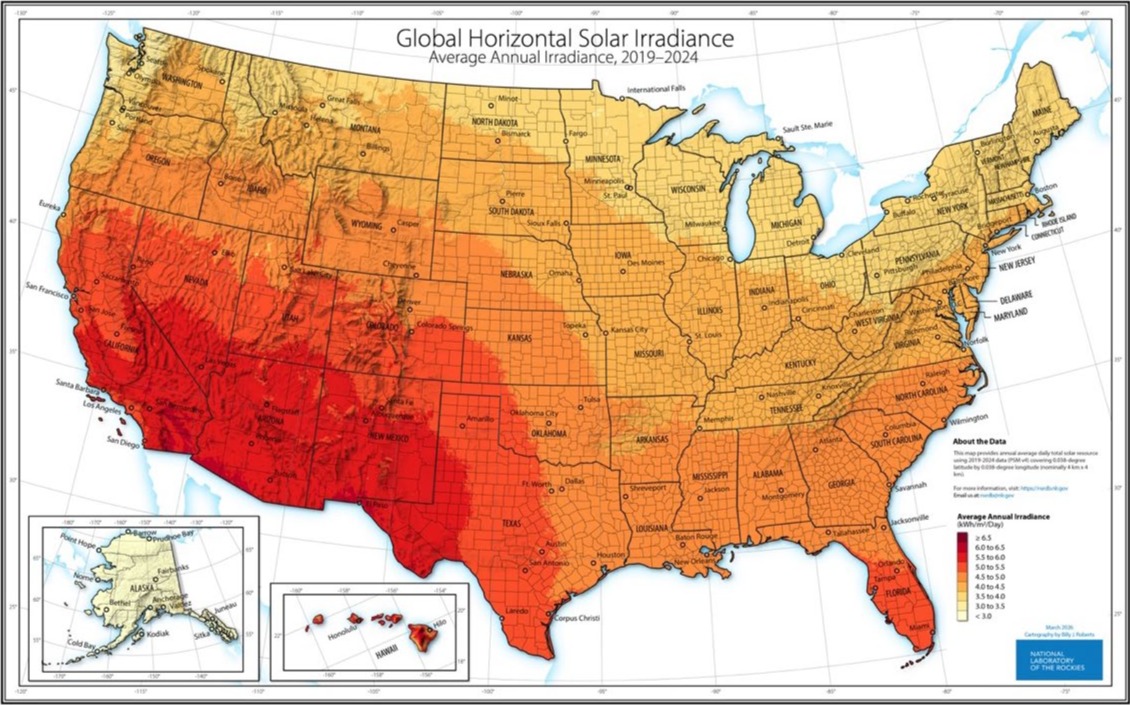
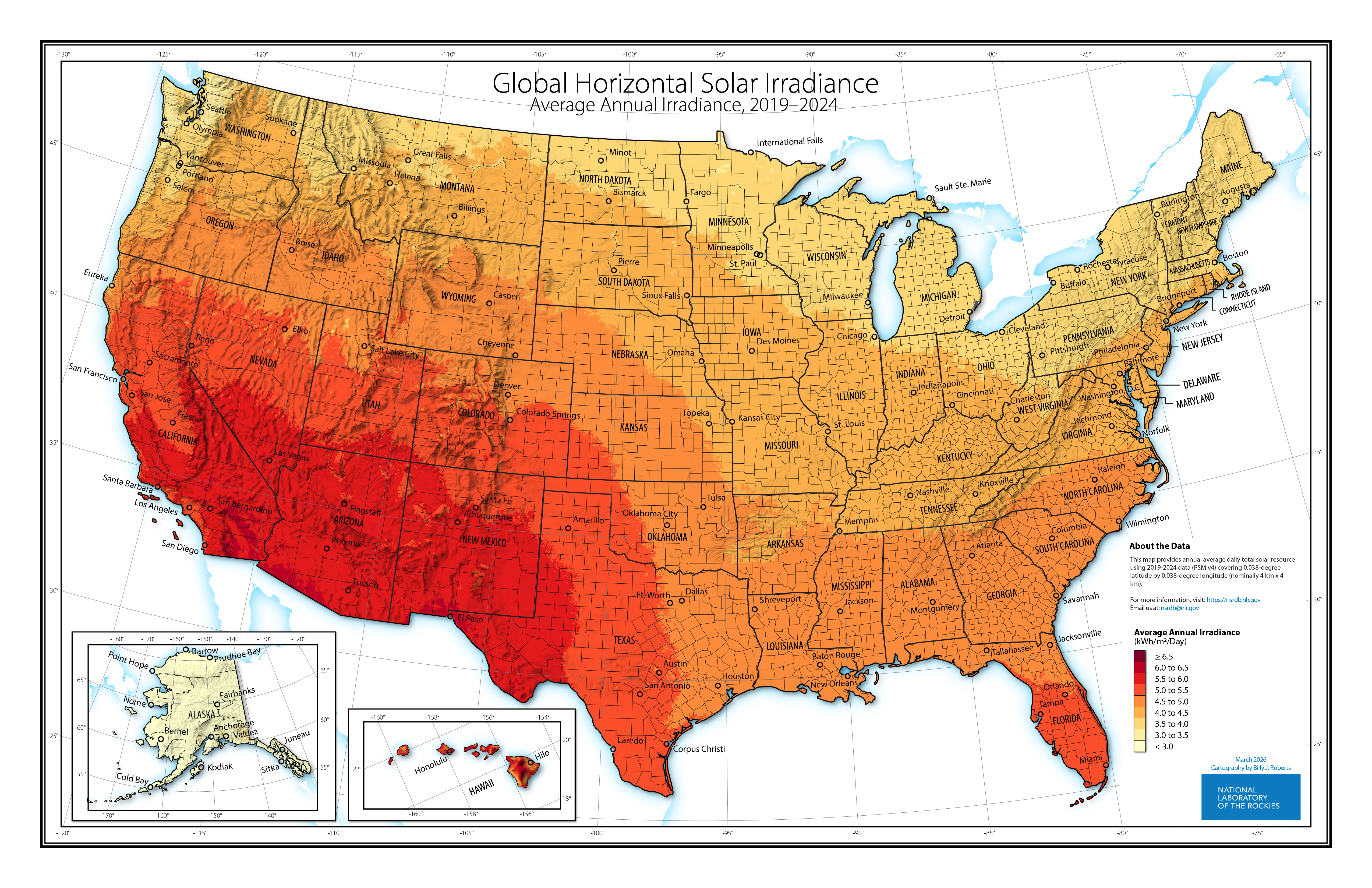
In 2025, the United States had 671 agrivoltaic installations with a total electricity capacity of 13,803 megawatts (MW; InSPIRE, 2025). Most of these installations are in the eastern United States and are integrated with sheep grazing, pollinator habitat, and/or crop production (Table 1). Even though agrivoltaics is well-suited to semiarid climates, farms in only five western states––Arizona, California, Colorado, New Mexico, and Oregon––have reported implementing agrivoltaics according to InSPIRE (2025). Of these 59 installations, 34 are integrated with sheep grazing and 22 with crops. In Utah, agrivoltaic implementation remains limited or potentially absent, despite the access roads, available grid connections, and high density of incoming sunlight (Figure 2).
Table 1. Agrivoltaics Installations in the United States in 2025
| Type of agriculture | Farms | Acres | Electricity capacity (MW) |
Panel type (No. farms) | |
|---|---|---|---|---|---|
| Fixed | Tracking | ||||
| Sheep | 252 | 72,430 | 11,051 | 114 | 107 |
| Pollinator habitat | 458 | 34,758 | 6,322 | 184 | 261 |
| Crops | 58 | 5,036 | 967 | 26 | 30 |
| Cattle | 9 | 50 | 13 | 4 | 5 |
| Greenhouse | 3 | 2 | 0.05 | 3 | 0 |
| Total | 671 | 85,276 | 13,803 | 274 | 375 |
Notes. Fixed panels are set at a fixed angle or vertical. Tracking panels can move, typically to follow the sun. The sums of the values in each column do not equal the “total” value for two reasons: (1) Some agrivoltaics operations include multiple types of agriculture (e.g., pollinator habitat and sheep), so a farm could be included multiple times, and (2) the total includes all types of agriculture, including types not considered here.
Source: InSPIRE, 2025
Potential for Agrivoltaics in Utah
Livestock Production
The United States has about 270 agrivoltaics operations with grazing on over 70,000 acres, providing over 11,000 MW of electricity capacity (InSPIRE, 2025). Of these, 252 operations include sheep, and nine include cattle (Table 1). Agrivoltaics has more frequently been paired with sheep grazing, likely because the animals can easily fit underneath the panels. Raising the panels high enough to accommodate cattle has historically been expensive because the structures are made of steel. However, a new design where cattle are rotated among pastures and angled tracking panels are switched to a horizontal orientation when cattle are present could make agrivoltaics with cattle grazing more affordable (Webber & Bickel, 2026).
Studies in areas with climates like Utah
show that agrivoltaics implemented with
sheep and cow grazing had no adverse
effects on animal production and
improved animal welfare.
In Utah, ranchers manage about 270,000 sheep and 750,000 cattle, including 90,000 dairy cows, on 8.4 million acres of dedicated pastureland each year (Albers, 2025; National Agricultural Statistics Service [NASS], 2024). Studies conducted in areas with climates like Utah show that agrivoltaics implemented with grazing had no adverse effects on animal production and improved animal welfare (Table 2). One study compared sheep grazing under rows of solar panels with sheep grazing in open pastures. Under the panels, forage was reduced, but nutrient content was higher, leading to no difference in body weight between sheep grazing under panels and those in open pasture (Andrew et al., 2021). Grazing under solar panels may also improve wool quality (Carroll, 2024).
Another study compared dairy cows that had access to a solar panel shade structure versus cows in open pasture. Cows opted to graze in the shade of the solar panel structure over 40% of the time, even though the structure covered only about 4% of the paddock. Cows with access to shade had lower respiration rates and body temperature during the day but no change in milk, fat, or protein production compared to cows in open pasture (Sharpe et al., 2021).
Utah farms also have over 8.2 million chickens and 205,000 pigs (NASS, 2024). Installing solar panels on the roofs of chicken and pig barns can increase cost efficiency by powering operations, including temperature control systems that improve production (Pork, 2022; Lee et al., 2025).
Table 2. Impacts of Agrivoltaics on Sheep and Dairy Cows in Climates Like Utah
| Livestock | Heads in Utah | Description of solar installation |
Production impacts | Source |
|---|---|---|---|---|
|
Sheep  |
270,000 | 50% shade from rows of fixed-tilt panels |
|
Andrew et al., 2021 |
|
Dairy cows  |
90,000 | 4% shade from a cluster of panels |
|
Sharpe et al., 2021 |
Notes. Data for heads in Utah reflect 2023 values (NASS, 2024). The percentage of shade for dairy cows was based on the estimated size of a 30-kW solar array (Sharpe et al., 2021).
Crop Production
The United States has 58 reported agrivoltaics operations integrated with crop production on about 5,000 acres that provide nearly 1,000 MW of electricity capacity (Table 1; InSPIRE, 2025). In Utah, farmers manage over 1.4 million acres of cropland each year, about 60% of which is irrigated (Albers, 2025). Alfalfa hay generates the most revenue, followed by winter wheat and corn (NASS, 2024). Many studies have examined the effects of solar panels in different configurations on crop yield, including over 80 studies in climates like Utah (Pandey et al., 2025). Several of these field experiments have focused on Utah’s most lucrative crops (Table 3). Broadly, crop research has demonstrated that agrivoltaics can:
- Reduce daytime air temperature underneath panels, which can reduce crop heat stress, water loss, and irrigation needs.
- Reduce daytime soil temperatures underneath panels, which can allow crops to produce more biomass per amount of water.
- Increase nighttime air temperature underneath panels, which can improve frost protection for crops.
- Reduce soil erosion and evaporation losses by providing wind buffering for crops.
Table 3. Impacts of Agrivoltaics on Alfalfa, Winter Wheat, and Corn in Climates Like Utah
| Crop | Acres in Utah |
Description of solar installation |
Production impacts (relative to an open field) |
Source |
|---|---|---|---|---|
|
Alfalfa  |
490,000 | 35%–44% shade from rows of panels | Yield increased under panels 6%–80% during dry seasons and decreased under panels 39%–57% during a wet spring. | Edouard et al., 2023 |
| Rows of fixed-tilt panels | Yield was lower under panels and higher between panels. On average, yield was similar to the open field. | Gelley & Romich, 2023 | ||
|
Winter wheat  |
87,000 | 30% shade from rows of panels | No difference in yield under panels, except during a wet year when yield was about 25% lower under panels. | Pataczek et al., 2023 |
|
Corn  |
73,000 | 21%, 26%, or 32% shade from rows of panels | Yield was 6% higher with 21% shading but lower with more shading. | Kim et al., 2023 |
| Vertical, bifacial panels 7 ft aboveground, in rows 35 ft apart | No difference in yield. | Kumari et al., 2025 | ||
| Fixed-tilt panels 9 ft aboveground Low-density: rows 6 ft apart High-density: rows 2 ft apart |
Yield was 6% higher under the low-density configuration but lower with more shading. | Sekiyama et al., 2019 |
Note. Data for acres in Utah reflect 2023 values (NASS, 2024).
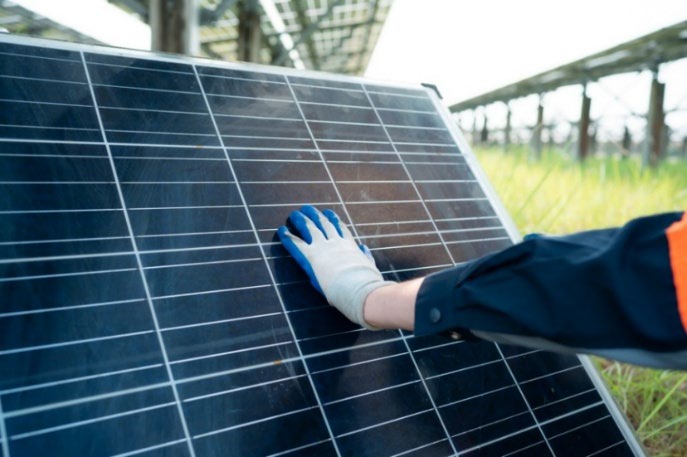
In general, solar panels are more likely to increase crop yield if the crop is more limited by water than by light––conditions typical in Utah. In one instance, shading from panels increased yield for shade-tolerant berries, fruits, and seed-bearing vegetables (Pandey et al., 2025). And, in greenhouse settings, less than 25% shading from solar panels has been shown to have no impact on crop yield or quality, but higher levels of shading can reduce yield (Widmer et al., 2024). Crops between panels typically receive more light and have higher yields but require more water than crops underneath panels (Pandey et al., 2025).
Energy Production
Utah’s high density of solar radiation has attracted solar developers since 1980 (Figure 2; Utah Office of Energy Development & Utah Geological Survey, n.d.). So far, an estimated 18,000 acres in Utah have been developed for utility-scale solar panel installations, providing 15% of Utah’s electricity in 2025 (Bolinger & Bolinger, 2022; Vanden Berg, 2026). Agrivoltaics could greatly expand this capacity. Nationwide, establishing agrivoltaics on just 1% of existing U.S. farmland (8.4 million acres) could generate an estimated 20% of the nation’s electricity (Proctor et al., 2021).
In Utah, because crop growth is typically
more limited by water than by light, solar
panels are more likely to increase crop yield.
Compared to solar-only installations, agrivoltaics typically produces less electricity both per panel and per land area because panels are positioned to accommodate agricultural activities rather than maximize light interception. However, aspects of agrivoltaics support efficient electricity production (Pandey et al., 2025):
- Plants transpiring water beneath panels can cool the panels and increase their efficiency.
- Vertical panels, which can be effective in agrivoltaic settings as fences or other barriers, are less prone to accumulating dust, which reduces panel efficiency.
Economics of Agrivoltaics
Diversifying Revenue Streams
Agrivoltaics can offer ranchers and farmers a way to diversify revenue streams, increase revenue per acre, and improve crop performance. In Canada, the return on investment from combining sheep operations with agrivoltaics ranged from 16% to 43%, well above the 12% sheep-only industry average (Gasch et al., 2025). Solar Panel Installation for an Agrivoltaic Setup In Utah, because crop growth is typically more limited by water than by light, solar panels are more likely to increase crop yield.
Similarly, studies on broccoli, corn, grape, and lettuce production show that agrivoltaic systems can generate 5–15 times more total revenue (combined crop and electricity sales) per acre than conventional farming (Pandey et al., 2025). However, in Utah, the regulatory and economic environment is likely to make that figure much lower (see “Agrivoltaics in Utah’s Regulatory Environment” section below).
Long-Term Investment
The potential gain in revenue with agrivoltaics is a long-term investment, and the 25- to 30-year lifespan of a solar panel system must be weighed against the initial investment required. In general, setting up solar panel configurations that are compatible with agriculture is more expensive than building solar-only, ground-based arrays for two reasons:
- Protecting the soil from compaction during site preparation and installation is important, and
- Panel designs and capabilities that maintain agricultural functions typically raise costs.
However, these differences can vary depending on the application. For instance, in the case of agrivoltaics with sheep or pollinators, the initial investment is only about 5% higher than solar-only arrays because the setup is similar (Pandey et al., 2025). If panels must be elevated or have tracking capabilities, installation costs can be 40%–70% higher than a conventional, fixed-tilt solar array (Pandey et al., 2025). However, higher installation costs can be outweighed by higher long-term revenue. For example, bifacial (double-sided) panels are about 10% more expensive than monofacial (single-sided) panels but can lead to greater profits over the lifespan of the system (Pandey et al., 2025). Additionally, if bifacial panels are oriented vertically and used as a windbreak between crop rows, they can reduce erosion and evaporation while generating revenue from electricity.
After the initial investment, operating costs for agrivoltaic systems are typically lower than or similar to solar-only arrays. For instance, when agrivoltaics is paired with sheep, operating costs can be 8%–13% lower because the sheep naturally manage the vegetation underneath the panels (Pandey et al., 2025).
Mutual Benefits for Producers, Solar Developers, and Communities
Economically, agrivoltaics can be mutually beneficial for ranchers, farmers, and solar developers. One option is for sheep owners to graze their sheep under solar installations and receive a fee for the vegetation management service the animals provide. Alternatively, farmers can lease their land to solar developers in exchange for a percentage of the revenue from electricity sales. However, solar developers may be less likely to choose agrivoltaics over conventional solar arrays because accommodating agriculture means that panels cannot be placed as densely, leading to lower revenue. In contrast, if ranchers and farmers can fund the initial investment, they may see substantial financial gains. For an agrivoltaic system, the bulk of the revenue, 75%–90%, typically comes from the electricity sales (Pandey et al., 2025). This means that by adding solar electricity generation to their operation, ranchers and farmers could significantly increase their total income.
Agrivoltaics in Utah’s Regulatory Environment
However, the potential for agrivoltaics to bolster revenue streams depends heavily on the regulatory and economic landscape where the installation operates. In Utah, Rocky Mountain Power (RMP) is the largest electricity provider and manages much of the state’s infrastructure for connecting small power production facilities––which would include agrivoltaic systems––to the grid. This process stems from the federal Public Utility Regulatory Policies Act of 1978 (PURPA), which created an obligation for utilities to offer to purchase power from, and interconnect with, qualifying generation projects (Joskow, 1979). For small power production facilities with less than 3,000 kW of installed capacity, RMP has outlined the prices they will pay for solar-generated power through 2043 (Rocky Mountain Power, 2025). These prices vary by:
- Year.
- Season (winter: October–May vs. summer: June–September).
- Time of day (on-peak: 6:00 a.m. to 10:00 p.m. vs. off-peak: 10:00 p.m. to 6:00 a.m.).
For power generated from tracking solar panels during the sunniest times of year (i.e., on-peak hours during summer), RMP will pay 4.633 cents/kWh. During on-peak hours in winter, the purchase rate drops to 2.779 cents/kWh (15-year levelized rate, 2025–2039; Rocky Mountain Power, 2025).
Thus, adding solar panels to farms in Utah could substantially increase total revenue but likely by a lower amount compared to places with more favorable economic environments for solar production.
Example
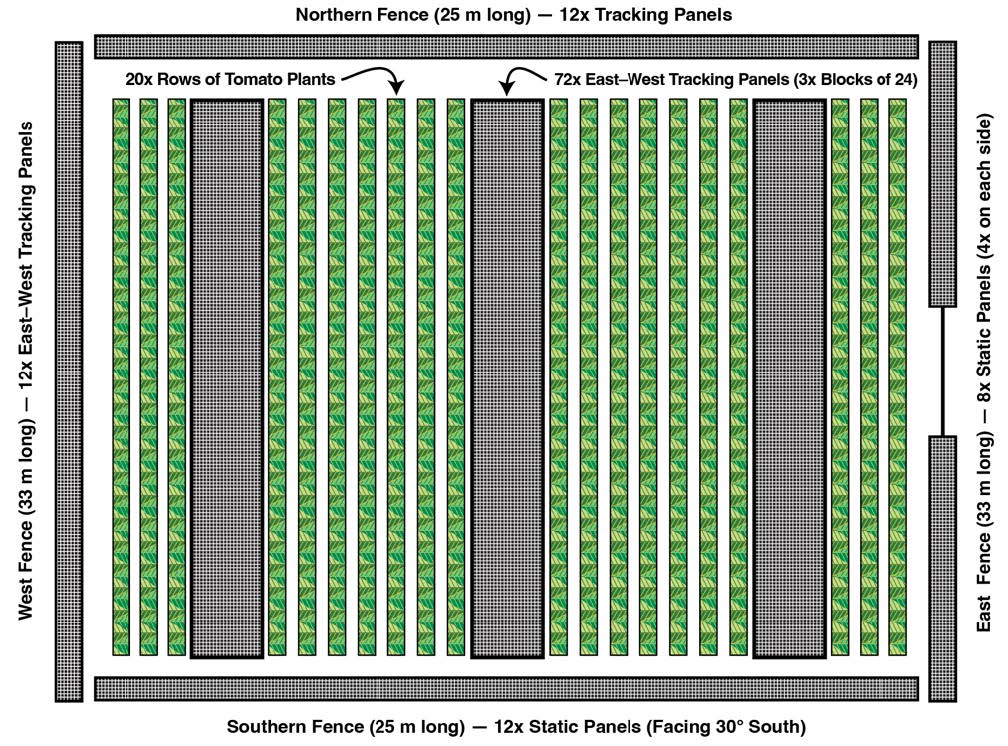
- If a Utah producer installed a 60-kW agrivoltaic system with mostly tracking panels on 1.5 acres of land, they could expect to generate around 600,000 kWh of electricity per year (Figure 3; Naim et al., 2025).
- If they were compensated all year at the on-peak summer rate (4.633 cents/kWh), their electricity would generate about $28,000 in revenue. Given the mix of summer vs. winter production, the actual revenue would be a bit lower.
- For comparison, the typical annual revenue from agricultural production for a farm in Utah was $30,809 in 2022 (Albers, 2025).
Conclusion
Globally, the importance of keeping farmland in production––paired with the financial realities for solar developers––has motivated policies to encourage agrivoltaics. Low-interest loans, long-term higher purchase rates for the electricity produced, and tax benefits can shorten the payback period on the initial investment to 5–10 years (Pandey et al., 2025; Tajima & Iida, 2021). Another way to reduce up-front costs is community solar, where neighboring ranches and farms share the initial investment (e.g., Thistle Whistle Farm, Hotchkiss, Colorado).
Utah has 10.5 million acres of agricultural land where agrivoltaics presents an opportunity for diversifying and expanding revenue streams for producers (Albers, 2025). Beyond benefits for agricultural operations, agrivoltaics provides a way for producers to help address Utah’s environmental challenges, including conserving water during increasingly hot growing seasons (Hotaling & Becker, 2024). In Utah, dedicated policy support, such as a grant program or utility pilot program, could encourage the implementation of agrivoltaics and promote efficient land use that meets multiple societal goals (Truman et al., 2026).
Additional Resources
- InSPIRE agrivoltaics calculator: Recognizing that each ranch and farm is unique, this tool allows landowners to gauge the financial feasibility of implementing agrivoltaics. Inputs include farm location, size, and pre-solar agricultural profit. Users can then specify potential solar panel configurations, power purchase agreement rates, and incentives to estimate initial costs and long-term revenue.
- The Colorado Agrivoltaic Learning Center: Explore agrivoltaics in practice or watch a Colorado-based film that highlights firsthand experiences.
- American Solar Grazing Association: This resource provides information for farmers and solar firms.
Acknowledgments
This publication was produced as part of the Climate Adaptation Intern Program (CAIP) at Utah State University. CAIP was supported by the “Secure Water Future” project, funded by an Agriculture and Food Research Initiative Competitive Grant (#2021-69012-35916) from the U.S. Department of Agriculture (USDA) National Institute of Food and Agriculture, as well as the USGS Southwest Climate Adaptation Science Center (#G24AC00611). CAIP is also supported by the Utah Climate Workforce Fund, USU Extension, and the USU Extension Water Initiative. We improved this fact sheet based on feedback from CAIP participants.
The authors did not use generative AI in creating this content; it is solely their work.
For correspondence, contact Scott Hotaling: scott.hotaling@usu.edu.
References
Albers, E. (2025). A portrait of agriculture in Utah. Kem C. Gardner Policy Institute. https://d36oiwf74r1rap.cloudfront.net/wp-content/uploads/2025/12/Portrait-of-Agriculture-Dec2025.pdf
American Solar Grazing Association. (2026). Media gallery. https://solargrazing.org/media-gallery/
Andrew, A. C., Higgins, C. W., Smallman, M. A., Graham, M., & Ates, S. (2021). Herbage yield, lamb growth and foraging behavior in agrivoltaic production system. Frontiers in Sustainable Food Systems, 5:659175. https://doi.org/10.3389/fsufs.2021.659175
Bellini, E. (2021). Solitek unveils 12.6%-efficient solar panel for greenhouses. PV Magazine. https://www.pv-magazine.com/2021/11/19/solitek-launches-12-6-efficient-solar-panel-for-greenhouses/
Bolinger, M., & Bolinger, G. (2022). Land requirements for utility-scale PV: An empirical update on power energy density. IEEE Journal of Photovoltaics 12(2), 589–594. https://doi.org/10.1109/JPHOTOV.2021.3136805
Pork producer uses solar power technology to improve environment and operation. (2022, July 25). Brownfield Ag News. https://www.brownfieldagnews.com/news/pork-producer-uses-solar-power-technology-to-improve-environment-and-operation/
Carroll, D. (2024). Study shows sheep grazing under solar panels produces higher-quality wool. PV Magazine. https://www.pv-magazine.com/2024/11/06/study-shows-sheep-grazing-under-solar-panels-produces-higher-quality-wool/
Edouard, S., Combes, D., Van Iseghem, M., Ng Wing Tin, M., & Escobar-Gutiérrez, A. J. (2023). Increasing land productivity with agriphotovoltaics: Application to an alfalfa field. Applied Energy, 329, 120207. https://doi.org/10.1016/j.apenergy.2022.120207
Gasch, A., Lara, R., & Pearce, J. M. (2025). Financial analysis of agrivoltaics sheep: Breeding and auction lamb business models. Applied Energy, 381, 125057. https://doi.org/10.1016/j.apenergy.2024.125057
Gelley, C., & Romich, E. (2023). Agrivoltaics: Intercropping hay in solar alleys. Ohio State University. https://energizeohio.osu.edu/sites/energizeohio/files/imce/BTR%20Forage%20Quality%20FINAL%20%28V_10.0%29.pdf
Goetzberger, A., & Zastrow, A. (1982). On the coexistence of solar-energy conversion and plant cultivation. International Journal of Solar Energy, 1(1), 55–69. https://doi.org/10.1080/01425918208909875
Hotaling, S., & Becker, K. (2024). Recent climate change in Utah, 1870–2023 [Fact sheet]. Utah State University Extension. https://digitalcommons.usu.edu/extension_curall/2453/
InSPIRE. (2025). Agrivoltaics map [Data set]. National Renewable Energy Laboratory. openei.org/wiki/InSPIRE/Agrivoltaics_Map
Joskow, P. L. (1979). Public utility regulatory policy act of 1978: Electric utility rate reform. Natural Resources Journal, 19, 787. https://digitalrepository.unm.edu/cgi/viewcontent.cgi?article=3070&context=nrj
Kim, Y., Kim, S., & Kim, S. (2023). An integrated agent-based simulation modeling framework for sustainable production of an agrophotovoltaic system. Journal of Cleaner Production, 420, 138307. https://doi.org/10.1016/j.jclepro.2023.138307
Kumari, D., Davey, J., & Uchanski, M. E. (2025). Impacts of a vertical bifacial agrivoltaics system on field corn in northern Colorado, USA: Performance of silage corn in the establishment year. AgriVoltaics Conference Proceedings, 4. https://doi.org/10.52825/agripv.v4i.2812
Lee, T., Liou, Y., & Chang H. (2025). Is solar panel adoption a win-win strategy for chicken farms? Evidence from agriculture census data. Agriculture, 15, 2124. https://doi.org/10.3390/ agriculture15202124
Li, E., Endter-Wada, J., & Li, S. (2019). Dynamics of Utah’s agricultural landscapes in response to urbanization: A comparison between irrigated and non-irrigated agricultural lands. Applied Geography, 105, 58–72. https://doi.org/10.1016/j.apgeog.2019.02.006
Naim, Y. B., Ladell, C. & Cohen, Y. (2025). Agri-Photovoltaic technology allows dual use of land for tomato production and electricity generation. Scientific Reports, 15, 43717. https://doi.org/10.1038/s41598-025-27602-9
National Agricultural Statistics Service (NASS). (2024). Utah agricultural statistics (Utah Annual Bulletin 2024). U.S. Department of Agriculture. https://www.nass.usda.gov/Statistics_by_State/Utah/Publications/Annual_Statistical_Bulletin/2024-Agricultural-Statistics.pdf
National Laboratory of the Rockies. (2026). Global horizontal solar irradiance, average annual irradiance 2019–2024. https://www.nlr.gov/docs/libraries/gds-maps/global-horizontal-solar-irradiance-average-annual-irradiance-2019-2024.jpg?sfvrsn=4f077f28_2
Pandey, G., Lyden, S., Franklin, E., Millar, B., & Harrison, M. T. (2025). A systematic review of agrivoltaics: Productivity, profitability, and environmental co-benefits. Sustainable Production and Consumption, 56, 13–36. https://doi.org/10.1016/j.spc.2025.03.006
Paradise Energy Solutions & Fox Chase LLC. (n.d.). Fox Chase Poultry Farm goes solar. https://www.paradisesolarenergy.com/project/fox-chase/
Pataczek, L., Weselek, A., Bauerle, A., Högy, P., Lewandowski, I., Zikeli, S., & Schweiger, A. (2023). Agrivoltaics mitigate drought effects in winter wheat. Physiologia Plantarum, 175(6), e14081. https://doi.org/10.1111/ppl.14081
Proctor, K. W., Murthy, G. S., Higgins, C. W., Proctor, K. W., Murthy, G. S., & Higgins, C. W. (2020). Agrivoltaics align with Green New Deal goals while supporting investment in the US’ rural economy. Sustainability, 13(1), 137. https://doi.org/10.3390/su13010137
Rocky Mountain Power. (2025). Electric service schedule No. 37. https://www.rockymountainpower.net/content/dam/pcorp/documents/en/rockymountainpower/rates-regulation/utah/rates/037_Avoided_Cost_Purchases_from_Qualifying_Facilities.pdf
Rutgers Agrivoltaics Program. (2026a). Single-axis tracker. Image Gallery of Agrivoltaic Installations. https://agrivoltaics.rutgers.edu/image-gallery-of-agrivoltaic-installations/
Rutgers Agrivoltaics Program. (2026b). Vertical bifacial (1p) portrait orientation. Image Gallery of Agrivoltaic Installations. https://agrivoltaics.rutgers.edu/image-gallery-of-agrivoltaic-installations/
Sekiyama, T., & Nagashima, A. (2019). Solar sharing for both food and clean energy production: Performance of agrivoltaic systems for corn, a typical shade-intolerant crop. Environments, 6(6), 65. https://doi.org/10.3390/environments6060065
Sharpe, K. T., Heins, B. J., Buchanan, E. S., & Reese, M. H. (2021). Evaluation of solar photovoltaic systems to shade cows in a pasture-based dairy herd. Journal of Dairy Science, 104(3), 2794–2806. https://doi.org/10.3168/jds.2020-18821
Slocum, W. (2021). 065573.jpg [Photograph]. National Laboratory of the Rockies. https://nlr.canto.com/v/gallery/library?keyword=slocum%20065573.jpg&viewIndex=0&display=fitView&referenceTo=&from=fitView&filter=%7B%22keywordLiteral%22:%22solar%20energy%22%7D&column=image&id=v48mfn3mh15dlfl8ok7poa7b4s&origin=classic

Sunzaun. (2026). Somerset gourmet. https://sunzaun.com/project/somerset-gourmet/
Tajima, M., & Iida, T. (2021). Evolution of agrivoltaic farms in Japan. AIP Conference Proceedings, 2361(1), 030002. https://doi.org/10.1063/5.0054674
Trommsdorff, M., Dhal, I. S., Ozdemir, O. E., Ketzer, D., Weinberger, N., & Rosch, C. (2022). Chapter 5 Agrivoltaics: Solar power generation and food production. In Solar energy advancements in agriculture and food production systems, 159–210. https://doi.org/10.1016/B978-0-323-89866-9.00012-2
Truman, A., Becker, K., Behrens, M., Null, S., & Hotaling, S. (2026). How water banking can help refill the Great Salt Lake [Fact sheet]. Utah State University Extension.
Vanden Berg, M. (2026). Utah’s 2025 energy landscape and outlook for 2026 and beyond. Kem C. Gardner Policy Institute. https://d36oiwf74r1rap.cloudfront.net/wp-content/uploads/2026/04/ERG2026-Energy-RB-Apr2026.pdf
Webber, T., & Bickel, J. A. (2026). Solar ranch in Tennessee aims to prove grazing cattle under the panels is a farmland win-win. AP News. https://apnews.com/article/solar-cattle-grazing-silicon-ranch-tennessee-67e0ab41c0c3f55230401dfd228a924f
Widmer, J., Christ, B., Grenz, J., & Norgrove, L. (2024). Agrivoltaics, a promising new tool for electricity and food production: A systematic review. Renewable and Sustainable Energy Reviews, 192, 114277. https://doi.org/10.1016/j.rser.2023.114277
Utah Office of Energy Development and Utah Geological Survey. (n.d.). Solar production. https://geology.utah.gov/apps/energy-resources/solar/?page=Solar-Production
Yang, H. (2024). Sheepish solar symbiosis: Two very different industries work together on the green energy transition. MPR News. https://www.mprnews.org/story/2024/07/10/minnesota-solar-farms-and-sheep-lead-way-in-green-energy
October 2026
Utah State University Extension
Authors
Dharla Soteros1, Kendall Becker1,2, Spencer J. Good1,3, Ngoni Mufute3, Matt Yost3, Logan Mitchell4, Scott Hotaling1,2
1 Utah State University (USU) Climate Adaptation Intern Program
2 USU Department of Wildland Resources
3 USU Department of Plants, Soils, and Climate
4 Utah Clean Energy

Matt Yost
Agroclimate Specialist
PSC Dept

Scott Hotaling
Assistant Professor | Climate Resiliency Specialist
Watershed Sciences
Related Research