
Weaning Already?
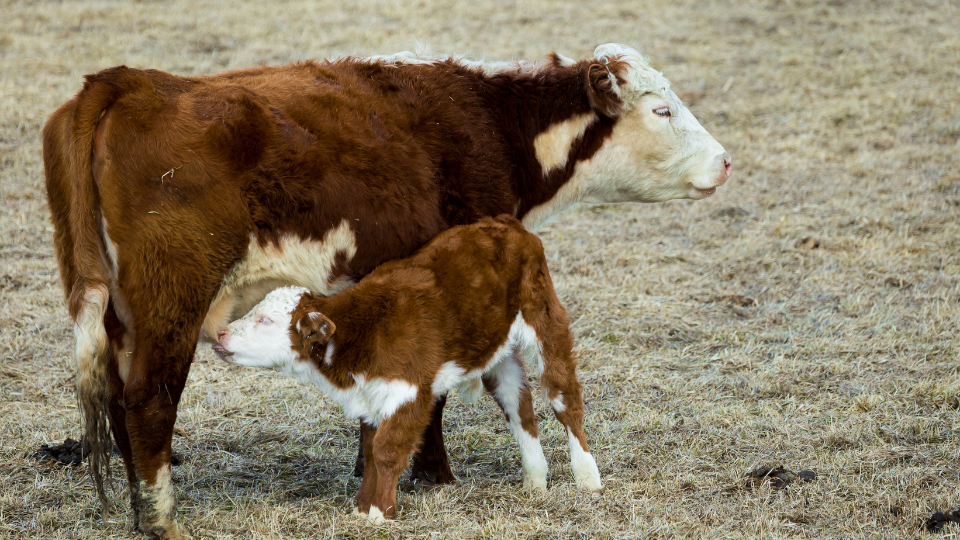
August is upon us, and fall is right around the corner. It's not too early to start thinking about weaning calves. Whether you are planning a normal weaning schedule or drought is forcing you to consider weaning a little early, a good plan with even better execution can protect calf health and productivity.
Weaning is likely the most stressful event that will occur in the life of your calves. The future growth and reproductive performance of your calves hinge on a low-stress weaning process. Research has shown that health problems experienced during weaning can impact the feedlot performance of your steers and the lifetime reproductive performance of your heifers. It’s critical to get this one right.
Ideally, your calf was vaccinated at 2-3 months of age for the common respiratory (IBR, BVD, PI3, BRSV) and clostridial (7-way or 8-way) diseases. If possible, it is beneficial to vaccinate again approximately 2 weeks before weaning, along with both an internal and external parasiticide. This can be done when the calves are weaned if it is not practical to do it before. Be sure to check out the BQA resources (www.bqa.org/resources/manuals) to ensure proper vaccine handling and technique.
Solid data demonstrate the value of a 2-step weaning process compared to the abrupt removal of the calf from the cow. The 2-step process involves stopping the calf from nursing for 4-7 days before completely separating the pair. This can be done in one of two ways. A commercially produced nose-flap can be placed in the nose of the calf to keep it from nursing the cow. The flap is also an irritant to the cow, and she will move away from the calf when it tries to nurse. A second method is fence-line weaning. It has the advantage of not handling the calf before weaning. The calves are separated from the cows and placed on opposite sides of a well-built, barbed-wire or net-wire fence. The pairs can stand together but not nurse. A hot wire may also be required to keep calves from crawling through the fence. This works best when the calves have access to good-quality forage. After 4-7 days, the cows can be moved away, and the calves will spend much less time and effort walking and bawling. Both methods have been shown to reduce sickness and improve gain in weaned calves.
There are a few other things you can do to reduce the stress of weaning on your calves. If possible, provide access to the feed your calves will be fed for a few days before weaning. Momma will show them how to eat, and the transition will be smoother. The same goes for water. If the calves will be drinking from a water tank, ensure they know where the water is by running the tank over or placing a hose in a way that the calves can hear it. Last but not least, dust is a significant irritant to the calf's respiratory system. If they must be kept in a dry lot, place bedding in the pen to encourage them to lie down and keep the dust at a minimum.
High-quality feed is a must. Often, the calves don’t eat much right after weaning. Encouraging them to eat with a clean, high-quality feed that is familiar to them is best. Grass hay may be more familiar and can encourage them to eat. High-quality alfalfa is rich in protein and energy. Additional energy can be added in the form of a commercial pelleted supplement if needed. Mineral is also a crucial component of the nutrition program. A loose mineral specifically formulated for high-stress calves is recommended for 45 days.
Lastly, if you are experiencing drought conditions and your cows are losing body condition, consider weaning a little early. A dry cow will consume 80% of the feed a wet cow consumes. In addition to sparing the feed resource, your cows will efficiently gain weight to prepare them for the next season. In drought conditions, your calves will likely gain better if they have access to higher-quality feed, even if they have to be weaned. Plan now for the best possible weaning outcomes!
On a different note, the Western Ranch Management Academy will present a seminar titled "Managing Wildlife as Part of the Ranching Operation" at the Utah State University campus in Logan on August 20 and 21. This will be an excellent opportunity to learn more about the wildlife that share your ranch and how you can benefit both. Register and get more information at www.wrma.usu.edu
Please feel free to reach out anytime.
david.secrist@usu.edu
Contact
David Secrist, PhD
David.secrist@usu.edu