
Should You Buy Feed or Sell Cows During Drought?
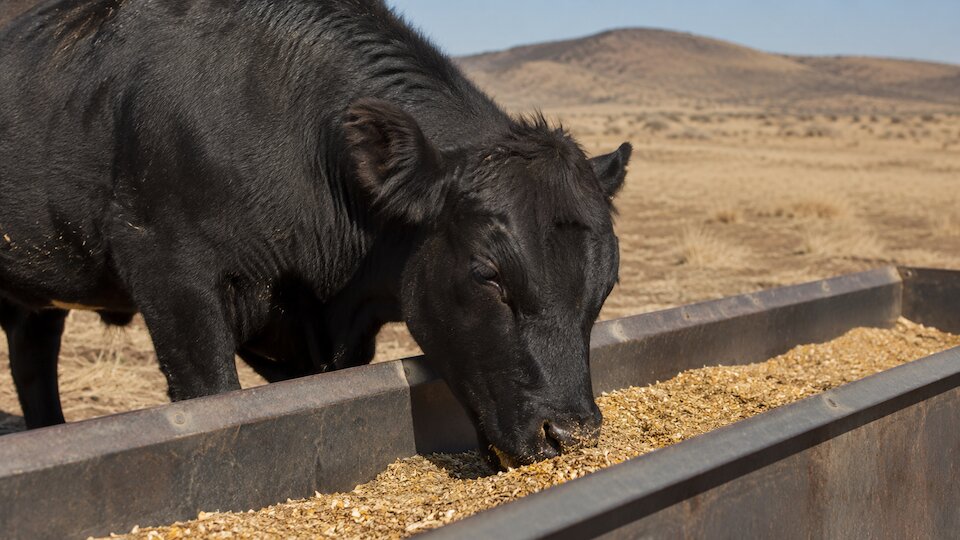
I have recently traveled across the state, attending Drought Meetings with other USU Extension specialists and the Utah Department of Agriculture. We discussed the decisions that many of you have or may soon face regarding the prospects of continued drought. At the end of the day, the chosen path is driven by both short- and long-term economics.
Historical weather data for Utah indicate frequent drought conditions across the state. Precipitation records since 2000 show an even greater tendency toward below-average moisture.
Stocking rate is a critical component for spreading fixed costs and thereby maintaining ranch profitability. Due to the length of the cattle production cycle, ranchers struggle to maintain optimal stocking rates amid highly variable precipitation, leading to significant swings in forage production. Forage can be purchased as hay or rented pasture outside the drought area, but the cost may be prohibitive…Or is it?
Ultimately, short-term and long-term economic factors come into play in determining the best course of action for ranchers. Market factors, including the cost of hay, rented pasture, freight, labor, replacement cost, and cattle revenue, all bear on the decision to buy feed or grass or to liquidate the herd.
At the end of the day, you may be forced to choose between selling cows or buying feed. In the March issue, we discussed other management options, but in this article, I will focus on the decision between liquidating cows and purchasing feed.
Although supplemental feed or rented pasture poses a significant cost, their value relative to feeder cattle value and female replacement cost is critical to understanding the best course when faced with persistent drought conditions.
First, we need to recognize that cows are a depreciating capital asset, with their value estimated based on future production and salvage value. Inputs such as labor may or may not be a variable cost depending on the source of that labor (long-term employees or temporary care). A sold cow is not only lost for the current year, but she is not available to produce in the coming years when grass may be more plentiful.
Using the Decision-Making Tool
USU Applied Economics specialists Andrew Anderson and Ryan Larsen have put together a decision-making tool to assist in making the buy feed/pasture OR sell cows decision. Before making a knee-jerk decision, gather key numbers from your operation and run them through this useful tool.
What Are Your Current Variable Costs?
- Supplemental feed cost including salt and mineral on a per head basis
- Labor cost per head
- Veterinary and animal health per head (vaccines, preg-check, etc.)
- Hauling costs per head
- Bull cost per cow
- Other variable costs
Key Questions to Ask
- What is the normal grass carrying capacity of my ranch, excluding normal hay feeding? Calculate this in Animal Unit Days or the number of grazing days × number of cows.
- What will be the Animal Unit Days under drought conditions?
- How can I cover the days reduced by drought, and what will it cost? This can include hay purchases or rented pasture (be sure to include freight and extra labor).
Once you have these numbers, you are ready to make an informed decision. Log on to the Drought Management Decision tool at www.farmanalysis.usu.edu.
Best of luck this spring and summer.
Please feel free to reach out with any questions or comments.
david.secrist@usu.edu
Contact
David Secrist, PhD
Beef Extension Specialist, Utah State University
David.secrist@usu.edu