
Conservation Through Collaboration: A New Era for Ranchers, Hunters, and Wildlife Agencies
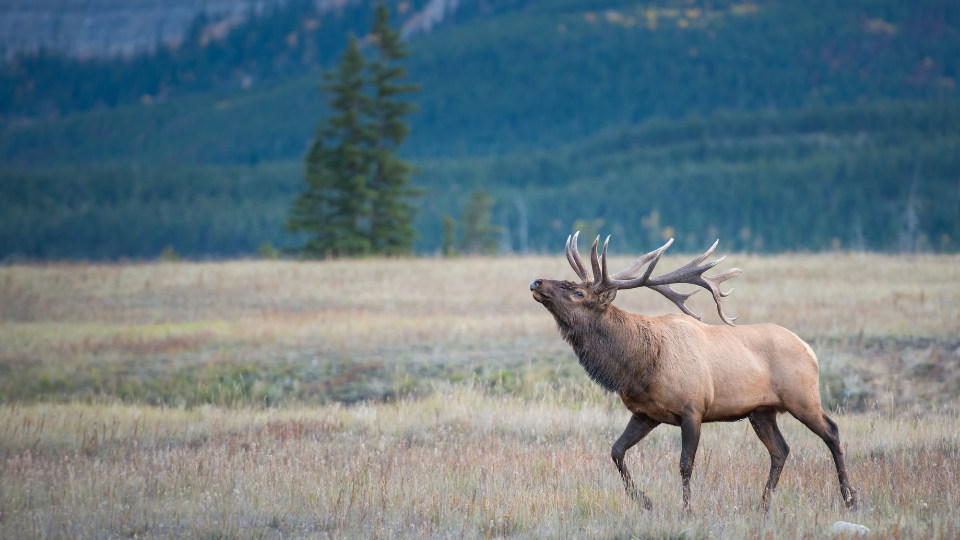
The cool fall air is a welcome respite after the drought and fires of summer. With the turning fall foliage to red and gold, also comes blaze orange. The fall hunts may be a welcome sight for some, but not for others. Like most of you, I have always enjoyed the outdoors and the wildlife that inhabit the range and ranches in the west. However, I have always preferred to enjoy it in relative seclusion. The fall hunt usually brings people and noise to otherwise tranquil places. The public interest in wildlife and hunting has also brought significant opportunities to ranchers in Utah and across the West.
Recently, an event held in Logan by the Western Ranch Management Academy (WRMA) highlighted the key role of ranches and farms in the conservation and management of wildlife. Properly managed wildlife can be an economic benefit to ranches in addition to being the right thing to do. During the seminar, a presentation was given by a Box Elder County rancher, who described his journey and that of his family ranch over the last 40 years. He decided years ago that being at the table was a better approach than ignoring the mounting public pressure and interest in endangered species and the use of public land for grazing. Involvement in the process resulted in significant range improvements in Western Box Elder County and improved habitat for several species, including the greater sage -grouse. He said, “Land that’s good for a species like sage-grouse is good for grazing too.”
I was reminded of a meeting that I attended at the Grouse Creek School in the early 1990’s. Many people, including myself, were concerned and even a little upset about elk showing up in the valley. They were direct competition for cattle and had no place there (or so we thought). My opinions on that subject have changed dramatically. I have seen how properly managed wildlife can add significantly to the ranch's bottom line. At the WRMA seminar, wildlife experts, state wildlife officials, and ranchers came together to learn from one another about how we can continue to move forward together. All agreed that wildlife cannot exist on public lands alone. Private landowners are vital to healthy wildlife populations, especially mule deer, elk, and pronghorn.
The Utah Division of Wildlife Resources is dedicated to continued improvement in the management of all wild animals. They have recognized and fostered the integral relationship with private landowners in Utah. The Cooperative Wildlife Management Unit (CWMU) program is unique to Utah. The program enhances opportunities for sportsmen while providing additional income for ranchers. The bottom line is that hunters and ranchers have better opportunities and more incentives to work together than they did back when I attended that meeting in the 1990s.
Undoubtedly, challenges still exist. State wildlife officials will readily admit their concern with the current high elk and low mule deer populations. The management of predators, both now and in the future, will always be a fine line to walk. However, ranchers and those who love wildlife have common ground to find solutions that seemed impossible a few decades ago. In support of comments made by the Box Elder County rancher, I say be involved. Take an active stake in the future of your ranch, community, state, and country. Your voice matters, and you can make a difference. More will be accomplished when people find common ground and work together for win-win solutions. I will conclude with a quote from a long-time friend and wildlife biologist, Rick Danvir. Rick recently said, “…the best and most broadly supported management solutions come from collaboration between hunters, ranchers, outfitters, NGO’s and wildlife agencies.” Amen.
Please feel free to reach out anytime.
david.secrist@usu.edu
Contact
David Secrist, PhD
David.secrist@usu.edu