
Bull Selection: Is Hybrid Vigor Alive and Well?
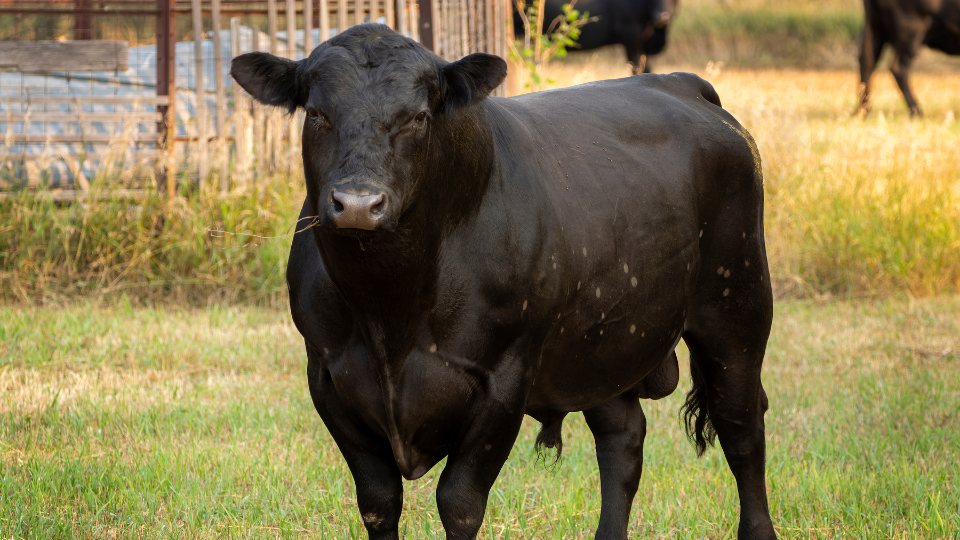
Looking through the latest issue of The Utah Cattleman, I see multiple ads for bull sales across the state and region. We have many excellent seedstock producers in Utah. In my experience, three topics of conversation can become uncomfortable quickly: religion, politics, and beef breeds. I am not going to pick a fight with any of you on these topics. First, I am not an expert on any of them (though I do have opinions), and second, there is probably no single correct answer, at least when it comes to which breed is best.
Throughout my career, I have attempted to consistently apply science alongside sound business principles to make decisions. In 2023, the USDA's Agricultural Marketing Service published a report on value indicators for feeder cattle, examining factors that affect cattle value. Among the findings, they determined that black-hided cattle command a higher average price at auction. They also concluded that cattle sorted for size and color bring a premium. We all know that black is no longer exclusive to one breed. There are also credible reasons that you may want a cow that isn’t black. However, uniform color and size command a premium, and black is preferred by many buyers at auction.
Beyond hide color, another genetic factor has been scientifically shown to add value. That factor is hybrid vigor or heterosis. Heterosis refers to the improvement demonstrated in many production traits for a crossbred animal relative to its straightbred parents. Heterosis tends to have its most significant effect on medium- to low-heritability traits. In other words, selecting bulls with impressive numbers on a lowly heritable trait may not make as much improvement as choosing a good quality bull from a breed that is different than your base cowherd. Low-heritability traits related to maternal ability and health respond strongly to heterosis. Heterosis can significantly improve even medium heritable growth traits, such as weaning weight and yearling weight.
Studies conducted at the Meat Animal Research Center (MARC) have identified improvements attributable to heterosis. For example, one can expect an improvement in the weaning weight of a crossbred calf of 3.8% relative to its straightbred parents. The greatest advantage comes from a crossbred cow bred to a bull of an unrelated breed. The calving rate increased by 3.7%. The cow’s lifetime productivity is increased by over 25%, meaning that she will produce over 25% more weaned calf weight in her lifetime than her straightbred counterparts. Perhaps unintentionally, a commercial operation that uses only one breed year over year is producing a straightbred female with little or no heterosis.
Crossbreeding programs built to maximize heterosis can be challenging to implement, depending on your operation-specific logistics. However, the improvements are too significant to ignore. Advantages from a well-planned crossbreeding program can be achieved by harnessing the power Mother Nature provides free of charge
The simplest program to execute for a ranch of any size is to purchase F1 cross heifers and breed them to a bull from a third breed. For example, an F1 Angus X Hereford cow could be bred to a Simmental bull. Those looking for more heat tolerance in their cow herd could find an F1 Santa Gertrudis X Red Angus female and breed her to a Charolais bull. (Please note that these are only examples, not intended to endorse any specific breed.)
Dr. Bob Weaber at Kansas State University has written an excellent article titled “Crossbreeding for Commercial Beef Production.” In the article, he describes several rotational breeding programs that may apply to your operation. I urge you to read it. You can find it online or email me, and I will send it to you.
In summary, I will quote Dr. Weaber from the article, “If you implement a crossbreeding system, do not be fooled into the idea that you no longer need to select and purchase quality bulls or semen for your herd. Heterosis cannot overcome low-quality genetic inputs. The quality of progeny from a cross-breeding system is limited by the quality of the parent stock that produced them. Conversely, do not believe that the selection of extremely high-quality bulls or semen or choosing the right breed will offset the advantages of an effective crossbreeding system. Crossbreeding and sire selection are complementary and should be used in tandem to build an optimum mating system in commercial herds.”
I wholeheartedly agree with Dr. Weaber’s comment. Hopefully, this article will give you something to think about. I also hope that I haven’t mashed anyone’s toes too hard!
On a final note, the next seminar in the Western Ranch Management series will be held on February 18 and 19 in Logan. We will be taking a deep dive into Cow-Calf Business Management. As a bonus, on the morning of the 18th (before the regular session), we will cover some basics of cattle marketing. This is a follow-up from November’s marketing meeting at the request of some participants. You can get more information and register online at www.wrma.usu.edu. See you there!
Happy bull shopping, and feel free to reach out anytime.
david.secrist@usu.edu
Contact
David Secrist, PhD
David.secrist@usu.edu