
What Should I Look for When Inspecting My Beehive?
Quick Answer
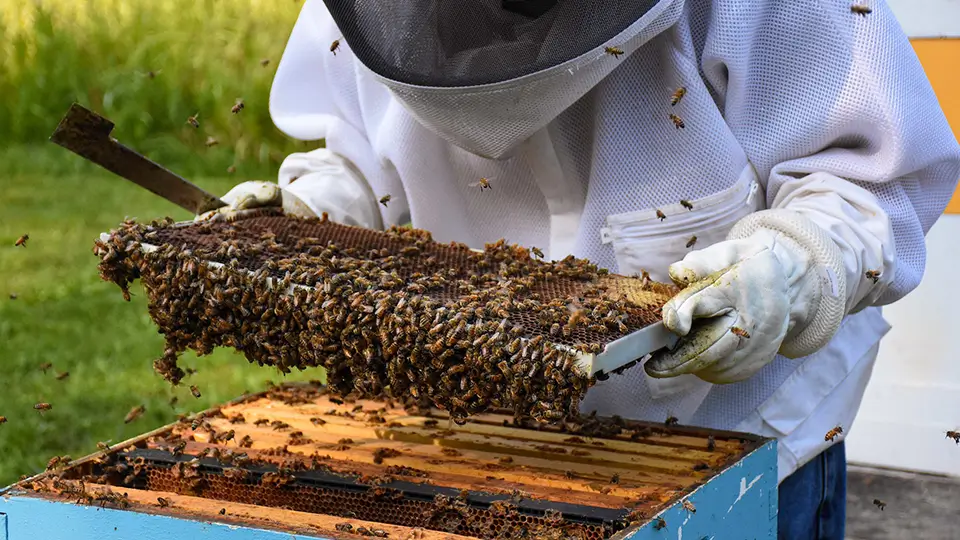
When inspecting your beehive, check five things: brood, food, space, pests, and the hive itself. Look for eggs and young bees, a steady brood pattern, enough honey and pollen, room to grow, and no clear signs of mites or disease. You do not need to find the queen every time because fresh eggs show that she is laying.
If brood is a new term, read What Is Bee Brood? for a guide to eggs, larvae, and capped brood.
Not sure when to open the hive? Read How Often Should I Inspect My Beehive?
Use This Beehive Inspection Checklist
| Check | What to look for |
|---|---|
| Brood | Eggs, young bees, capped brood, and a steady laying pattern |
| Food | Pollen, nectar, and capped honey |
| Space | Open cells or frames where the queen can lay and bees can store food |
| Pests and disease | Varroa mites, damaged brood, or other signs that do not look normal |
| Hive condition | Secure boxes and cover, dry equipment, and a clear entrance |
Start With the Brood Nest
Look for eggs, young bees, and capped brood. A steady patch of brood in different stages shows that new bees are growing. A brood pattern with many empty cells may be a warning sign, especially when the colony should be growing.
Do I Need to Find the Queen?
No. You do not need to see the queen during every inspection. Eggs and a steady brood pattern are good signs that she is laying. If you do not see eggs or young brood, check again soon and look for other signs of queen trouble.
Learn how to judge her laying pattern in How Can I Tell if My Queen Is Healthy?
Check the Hive Food
Look for pollen, nectar, and capped honey. Food needs change during the year, so use the USU Beekeeping Annual Calendar to plan seasonal checks. New colonies and colonies preparing for winter need close attention to their food stores.
Make Sure the Bees Have Space
Check that the queen has open cells where she can lay and that workers have room to store food. A crowded hive can be more likely to swarm, so add space when the colony needs it.
Look for Varroa Mites and Disease
Check for Varroa mites on a regular schedule and follow the label for any treatment you use. Watch for damaged or spotty brood and anything else that looks different from earlier visits. Utah beekeepers can request help from a county or state bee inspector when they are unsure.
Check the Boxes, Cover, and Entrance
Make sure the boxes and cover are secure and the inside of the hive is dry. Keep the entrance clear. Look for damage from wind, water, animals, or people before you close the hive.
Write Down What You Find
Record the date, weather, brood pattern, food, space, mite check, and any action you took. Short notes make it easier to see changes and know what to check next time.
For cold-weather preparation, read How Do You Winterize a Beehive?
For a simple guide to nectar, pollen, honey, and feeding, read What Do Bees Eat?
If you want to find the adult queen during this check, see How Can I Identify a Queen Bee?.
References
Adapted from USU Extension beekeeping and honey bee biology resources.
Authors

Andreé Walker Bravo
Director of County Operations
Agriculture and Natural Resources