
How Often Should I Inspect My Beehive?
Quick Answer
You should inspect your beehive about every two weeks during spring, summer, and early fall. Check it sooner if the hive is new or you see a problem. In winter, do not open the hive unless the weather is calm and above 55°F.
If you are new to the term, read What Is Bee Brood? before checking eggs, larvae, and capped brood.
Use This Simple Inspection Schedule
| Time | When to check | What to look for |
|---|---|---|
| New package | Day 3 or 4 | Check that the queen has left her cage. |
| New package | Day 7 to 10 | Look for eggs. Eggs show that the queen is laying. |
| Active season | Every 10 days to 3 weeks | Check brood, food, space, pests, and hive health. |
| Late fall | One last warm-weather check | Check food, brood, disease signs, and the winter setup. |
| Cold winter | No routine full checks | Watch the entrance, clear snow, and check hive weight with little disturbance. |
Check a New Hive at Key Times
After you install a package of bees, make a short check on day 3 or 4. Make sure the queen has left her cage. Check again 7 to 10 days after installation and look for eggs. Once the queen is laying and the hive is doing well, move to the normal schedule of every 10 days to 3 weeks.
What Should I Check in the Hive?
Use the short checklist below, or read What Should I Look for When Inspecting My Beehive? for a full step-by-step guide.
Use the same short checklist each time you open the hive:
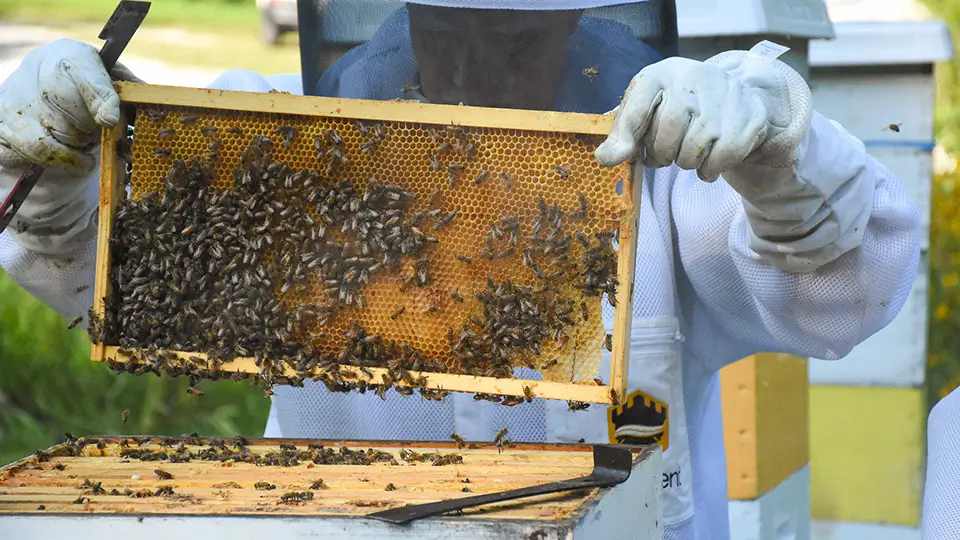
- Brood: Look for eggs, young bees, and capped brood.
- Queen activity: Look for a steady laying pattern. You do not need to find the queen on every visit.
- Food: Check for pollen, nectar, and capped honey.
- Space: Make sure the bees have room for brood and food.
- Pests and disease: Watch for mites, damaged brood, or other signs of trouble.
- Hive condition: Check the boxes, frames, entrance, cover, and airflow.
If eggs are missing or the brood pattern stays poor, read How Can I Tell if My Queen Is Healthy?
Choose a Warm, Calm Day
For a full spring inspection, choose a calm day above 55°F. Work with care and close the hive when you are done. Cold or windy weather can chill or kill bees.
Inspect Sooner When You See a Warning Sign
Do not wait for the next planned visit if you notice:
- A fast drop in bee activity during warm weather
- A swarm or many queen cells
- Very light food stores
- Damaged or spotty brood
- Signs of mites or disease
- Damage from wind, animals, or water
Utah beekeepers can request help from a county or state bee inspector.
Do Not Do a Full Winter Inspection
In cold weather, leave the hive closed. Watch the entrance, clear snow, and check the hive weight with as little movement as you can. If you must lift the lid, choose a calm day above 55°F and work fast.
Keep a Short Hive Record
Write down the date, weather, food stores, brood pattern, mite check, available space, and any action you took. A short record helps you spot changes and plan the next visit.
For cold-weather preparation, read How Do You Winterize a Beehive?
For a simple guide to nectar, pollen, honey, and feeding, read What Do Bees Eat?
Use calm, planned inspections to practice spotting the queen. See How Can I Identify a Queen Bee? for the key body features.
References
Adapted from USU Extension beekeeping and honey bee biology resources.
Authors

Andreé Walker Bravo
Director of County Operations
Agriculture and Natural Resources