
UPCOMING EVENTS
View full calendarHomeowners and Your Water
SOURCES OF DRINKING WATER
 There are two types of drinking water systems in the United States: public water systems and privately owned water systems. Public water systems are subject to EPA regulations, while privately owned water
systems are not.
There are two types of drinking water systems in the United States: public water systems and privately owned water systems. Public water systems are subject to EPA regulations, while privately owned water
systems are not.
PUBLIC WATER SYSTEMS
Public drinking water systems provide water to multiple people through a series of connections. In Utah, a public water supply must include 15 connections, or supply water to 25 or more people, for at least 60 days out of a year.
These systems are regulated in multiple ways, including a requirement to meet EPA’s safe drinking water limits. Water is tested every year and an annual Consumer Confidence Report is provided to all. This report discloses any contaminants, possible health effects, and information about the water’s source.
- Utah’s ~1,000 public drinking water systems provide safe drinking water to almost all (over 99%) of Utah residents.
- Across the country, approximately 155,000 public water systems serve around 286 million people.
For more information about the regulation and protection of public drinking water systems, See Frequently Asked Questions here.
- Accessing local and national water information (annual public water system statistics and data on individual water systems)
- Current Drinking Water Regulations
PRIVATE WATER SYSTEMS
 Approximately 15% of Americans get their drinking water from private wells. These
wells, which tap into local groundwater, are designed to provide clean, safe drinking
water. Improperly constructed, or poorly maintained wells, can create a pathway for
fertilizers, bacteria, pesticides or other materials to enter the water supply. Once
in the groundwater, contaminants can flow from your property to a neighbor's well,
or from a neighbor's property to your well. This means that well owners need to take
precautions to ensure that their drinking water is safe for human consumption.
Approximately 15% of Americans get their drinking water from private wells. These
wells, which tap into local groundwater, are designed to provide clean, safe drinking
water. Improperly constructed, or poorly maintained wells, can create a pathway for
fertilizers, bacteria, pesticides or other materials to enter the water supply. Once
in the groundwater, contaminants can flow from your property to a neighbor's well,
or from a neighbor's property to your well. This means that well owners need to take
precautions to ensure that their drinking water is safe for human consumption.DRINKING WATER LINKS

National Water Program Guidance
Possible Pollutants Fact Sheets
Montana State "Well Educated Program"
RECORD KEEPING
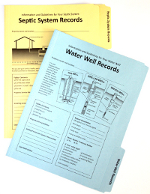
Good record keeping is essential to help protect the health of your household and the environment. The folders attached below provide an easy, practical way to keep records of private wells and septic tanks. The folders also contain a description of typical systems (e.g., septic systems), suggestions for maintenance, tables for critical dates, and other important information to help keep systems operating efficiently.
ADDITIONAL RESOURCES
If you own a small acreage you may want to visit the Small Acreage Water Quality page. If you own a large acreage you may want to visit the Agriculture & Water Quality page.
- Water Quality Interpretation Tool
- Best Management Practices (BMPs)
- Testing Your Well Water Brochure
- Drinking Water Treatment Systems
- Drinking Water Test Labs
If you have any further questions, please contact us at (435) 797-2580.